A LongForm
The Republic by Plato
Justice is not a rule you keep for other people. It is the order inside your own soul, and losing it is the worst harm you can do to yourself.
September 13, 2026
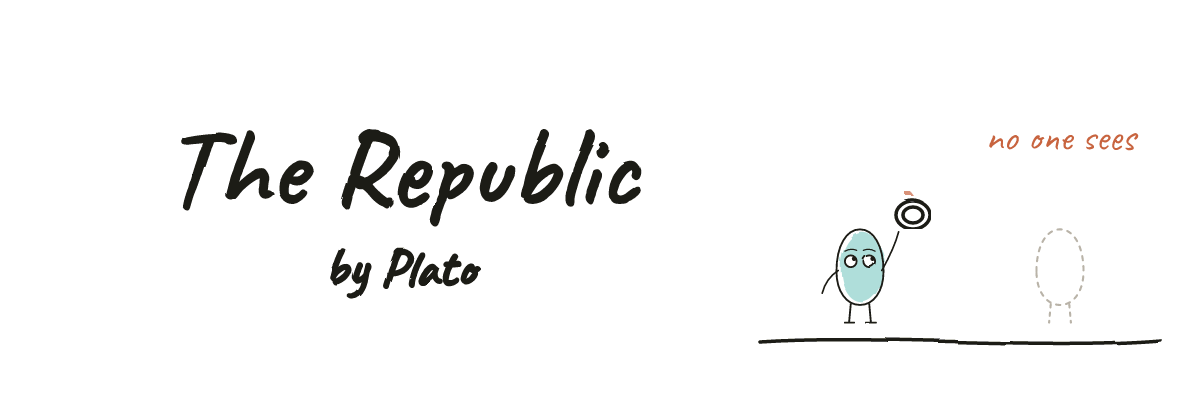
A shepherd is out with his flock when a thunderstorm and an earthquake split the ground open. He climbs down into the crack. Down there he finds a hollow bronze horse with little windows. Inside the horse lies a dead body, larger than a man, wearing nothing but a gold ring. The shepherd slips the ring off and climbs out.
Some days later he sits with the other shepherds, waiting to give the king their monthly report on the flocks. He plays with the ring and twists its top toward the inside of his hand. The men around him start talking about him as if he had left. He has become invisible. He twists it back, and he is there again.
He tests it until he is sure. Then he gets himself sent to the palace as a messenger. He seduces the queen, kills the king with her help, and takes the throne. The tale is known as the ring of Gyges.
Now imagine two such rings. You give one to the most honest person you know and the other to a crook. Would they act differently? Glaucon, the young man who tells this tale, bets they would not. Give anyone the power to take what they want with no risk, and sooner or later they take it.
The tale comes from The Republic, Plato's book about justice. It is one long conversation at a friend's house, where two brothers, Glaucon and Adeimantus, push Socrates to prove that being just is worth it even when no one is watching. His answer starts inside you, in your soul, meaning the part of you that thinks, feels and wants.
By the end, you will discover:
- what the shepherd's magic ring really tests, and why honesty may depend on being watched (1)
- how you can want a drink and refuse it at once, and what that shows about the three forces inside you (2)
- why justice is an order inside you before it is a rule between people (3)
- why people take shadows for the real thing, and why education turns your eye instead of filling your head (8, 9)
- how a city slides from honor to money to freedom to tyranny, and why the tyrant is the least free person in it (10, 11, 12)
- how, in the last tale, each soul chooses its next life (15)
The strongest case against justice: you are honest only when watched
Glaucon does not believe this himself. He makes the case as hard as he can so that Socrates has to beat its strongest form.
His story of where justice comes from runs like this. On this view, doing wrong to others is good for you. Suffering wrong is bad for you, and the bad is bigger than the good. So people who are too weak to get away with wrongdoing make a deal: no one does wrong, so no one suffers it. The deal becomes law, and the law gets called justice.
The best thing would be to do wrong and never pay. The worst is to be wronged and not be able to hit back. Justice is the deal in the middle, a compromise for the weak. Anyone strong enough to do wrong safely would never sign it. The ring is his proof: hand it to anyone, and they will end up like the shepherd.
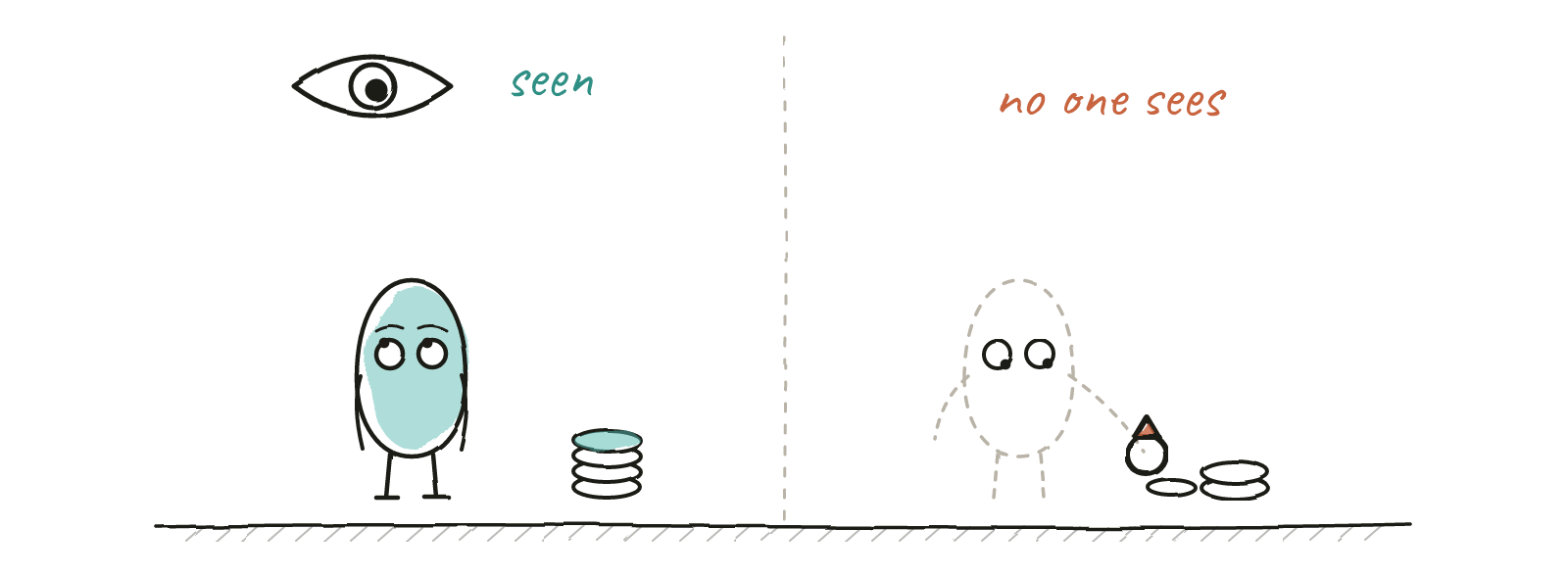
Then Glaucon sets a test. Picture the perfectly unjust person. They do great wrongs and are never caught, because "the extreme of injustice is to seem to be just when one is not." Everyone thinks they are good. Now picture the perfectly just person, who does no wrong but has the worst name in town. Take away every reward that comes from looking good. Let them be whipped, tortured, blinded and, at the end, crucified.
Which of the two is happier?
Adeimantus explains why the question bites. Parents tell their children to be just, but they only praise what justice brings: a good name, a good marriage, gifts from the gods. So a bright young person concludes that the smart move is to look good and be bad. Earlier in the talk a guest, Thrasymachus, had put it more bluntly still: justice is "the advantage of the stronger," rules that the powerful write for themselves.
The brothers ask Socrates for one thing. Forget the rewards and the reputation. Show what justice does to the soul of the person who has it, whether gods and people notice or not.
Your soul is three forces, not one
Socrates' answer starts with a plain fact about you. You can want something and refuse it at the same moment.
You are thirsty. A drink is right there. And you don't drink it. Part of you is pulling toward the glass, and part of you is holding you back.
One thing cannot push and pull the same object at the same time with the same part of itself. An archer does not push the bow away and pull it close with the same hand. One hand pushes, the other pulls. So when you are pulled two ways at once, there must be two different things in you.
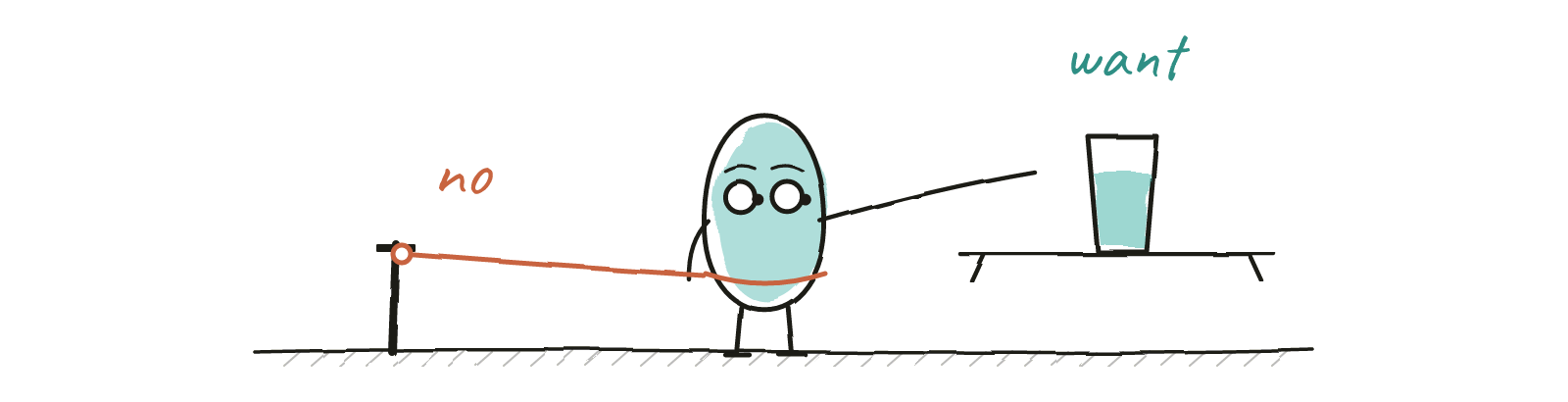
One is appetite: the part that hungers, thirsts and craves, and simply wants. The other is reason: the part that works things out and says no.
Then there is a third force. A man named Leontius was walking back toward the city. He saw dead bodies lying by the public executioner. He wanted to look, and he was disgusted. He fought himself and covered his face. In the end the desire won. He ran to the bodies with his eyes wide open and shouted at his own eyes:
Look, you damned wretches, take your fill of the fair sight.
That burst of anger was not appetite, because it fought appetite. It took reason's side. This is spirit: the part of you that gets angry, wants respect and fights back. When you give in to a craving you are ashamed of, spirit turns on you. When you feel treated unfairly, spirit boils and won't quit. Then reason calls it back, the way a herdsman calls back a dog.
Spirit is not reason either. Little children are full of spirit from birth, while reason comes late to most people, and to some never.
So you are three, not one: reason, spirit and appetite. And the biggest of the three is appetite. It is "most of the soul in each and by nature most insatiable for money." It never has enough.
Justice is an order inside you
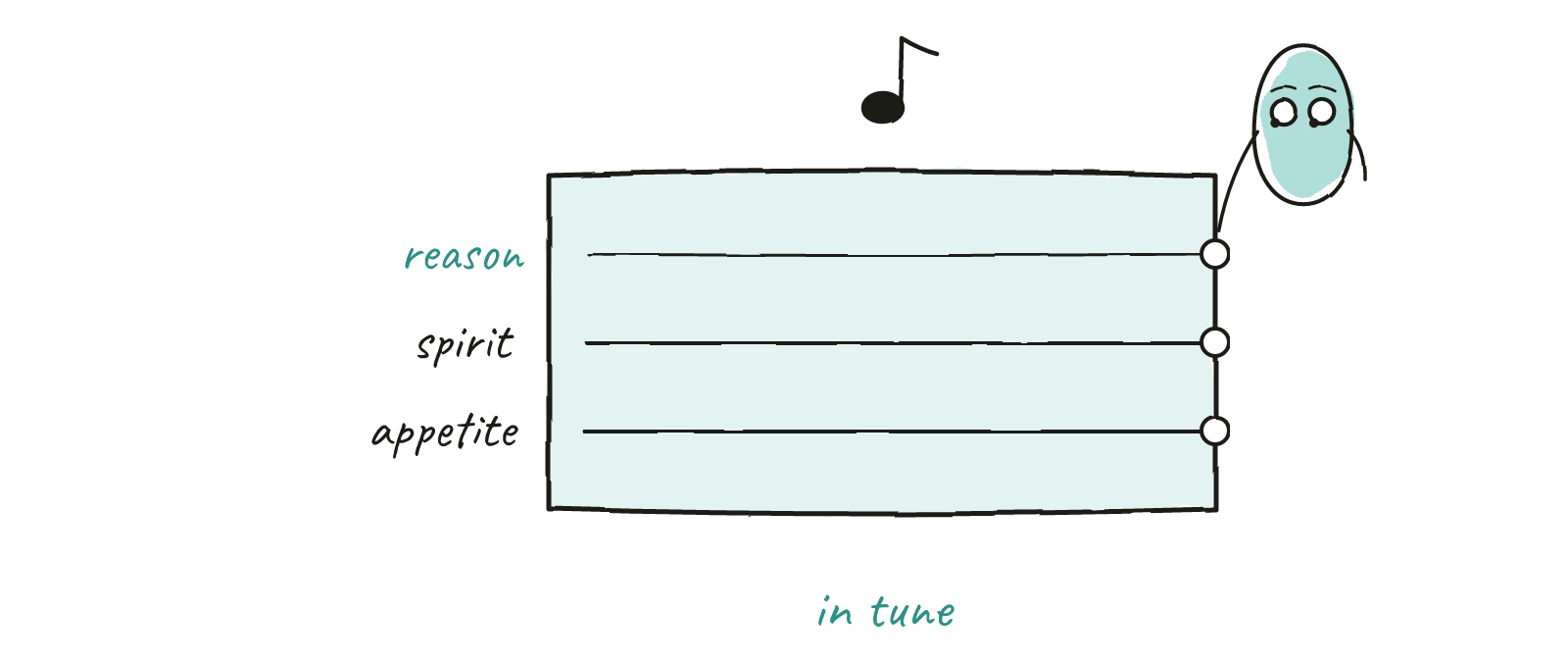
You are just when each of the three parts does its own job. Reason rules, because it can see what is good for the whole of you. Spirit backs reason up, like a loyal soldier. Appetite, the biggest part, obeys and does not try to run things.
When that happens, you become your own friend. The three parts fit together like three notes in a chord, low, high and middle, and you become "entirely one from many." Only then are you ready to act well, whether you are earning money, caring for your body or dealing with other people. A just act is any act that keeps this inner order. An unjust act is one that breaks it.
Injustice is the opposite: a civil war inside. A part that should serve tries to rule.
Even criminals show it. Earlier, Socrates asks Thrasymachus whether a gang of robbers could pull off a job if they cheated each other. They could not. Thieves need some justice among themselves, or they fall into fights and get nothing done. One person works the same way. Injustice inside you leaves you "not of one mind" with yourself. You cannot act well, because you are busy fighting yourself.
So justice works like health. A healthy body has its parts in their natural order, with the right part in charge. Sickness turns that order upside down. Justice is the health of the soul, and injustice is its sickness.
When Glaucon hears this, he calls the original question ridiculous. Life with a ruined body is not worth living, even with all the food and money in the world. So how could life be worth living with a ruined soul, the very thing you live by?
This picture of three parts is a shortcut, Socrates warns. A precise answer needs "another longer and further road."
A city is a soul written in large letters
How did Socrates find this? With a trick for weak eyes. If you had to read tiny letters from far away, it would help to find the same words written large somewhere else. A city is bigger than one person. So he builds a city in words and looks for justice there first.
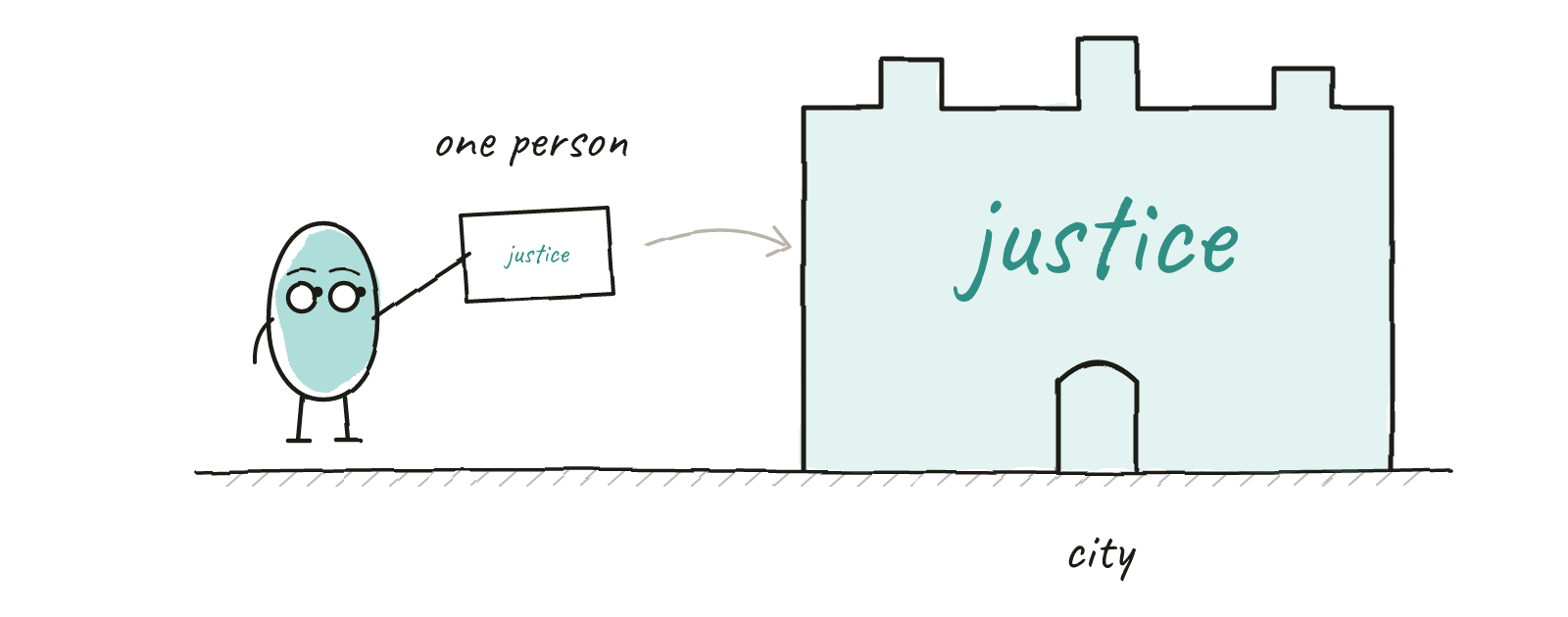
A city starts from need. No one can supply everything they want alone. So a farmer, a builder, a weaver and a shoemaker come together, and each does one job, the one they are best suited for by nature. One person doing one craft does better work than one person doing many.
His first city is simple: bread laid out on reeds, wine, songs to the gods, no more children than they can feed. Glaucon mocks it as "a city of sows." So Socrates lets it grow rich, with couches, perfume, cakes and painters. That city needs more land, takes some from its neighbors, and so finds the origin of war. Now it needs an army of guardians, people who are gentle to their own and fierce to enemies, like good dogs.
The finished city has three groups, matching the three parts of the soul. Rulers think for the whole, like reason. Soldiers defend it, like spirit. Farmers, craftsmen and traders make and sell, like appetite.
The city is wise because of its few rulers. It is brave because its soldiers keep believing what they were taught to fear and not to fear. Their beliefs hold, the way wool dyed with care stays purple through every wash. Pleasure, pain, fear and desire are the harsh soaps that wash a badly dyed soul pale. It has self-control when all three groups agree on who should rule. And it is just when each group does its own work and does not meddle in the others' work.
The model city asks its rulers to own nothing
This city is a model, a pattern to look at. Glaucon later doubts it exists "anywhere on earth," and Socrates does not argue.
Its rulers and soldiers own no land, no house that others cannot enter, no gold and no silver. They eat together and are paid only what they need. The moment guardians own private wealth, Socrates warns, they turn from guard dogs into wolves, "masters and enemies instead of allies" of the people they guard.
To hold the city together, its founders tell everyone a story, which Socrates calls "some one noble lie." All citizens are brothers, born from the same earth. But the god mixed gold into those fit to rule, silver into the soldiers, and iron and bronze into the farmers and craftsmen. A golden child born to bronze parents moves up. A bronze child born to golden parents moves down. Your place depends on your nature, not your family.
Women guardians get the same training as men and share the same work. Socrates asks whether bald men and long-haired men have different natures. In a way they do, but that has nothing to do with making shoes. In the same way, a man and a woman whose souls suit medicine have the same nature for that job. Talents for every task are "scattered alike among both." Socrates still holds that women, as a group, are weaker.
The guardians also live without private families. Marriages are picked at festivals by a draw, like names drawn from a hat, but the rulers secretly fix the result. Children are raised in common, and no parent knows their own child. The aim is one city that feels joy and pain together, the way your whole body feels it when you hurt a finger.
When Adeimantus objects that the guardians will not be happy, Socrates answers that the city is built for the happiness of the whole, not of one group. You don't paint a statue's eyes purple because purple is the finest color. You paint them so they look like eyes.
What you take in young becomes who you are
The whole model rests on upbringing. It is the one thing the rulers must guard above all.
"The beginning is the most important part of every work," especially with the young. What a child takes in early tends to stick for good. So the stories told to children matter more than almost anything. In the model city, the founders even supervise the poets: no tales of gods fighting gods, no great heroes wailing in fear of death.
Surroundings work the same way, slowly. Young people who take in ugly things a little every day are like animals grazing "on bad grass." Slowly, without noticing, they build "some one big bad thing in their soul." If they live among fine, well-made things, it is like a breeze blowing in from a healthy place.
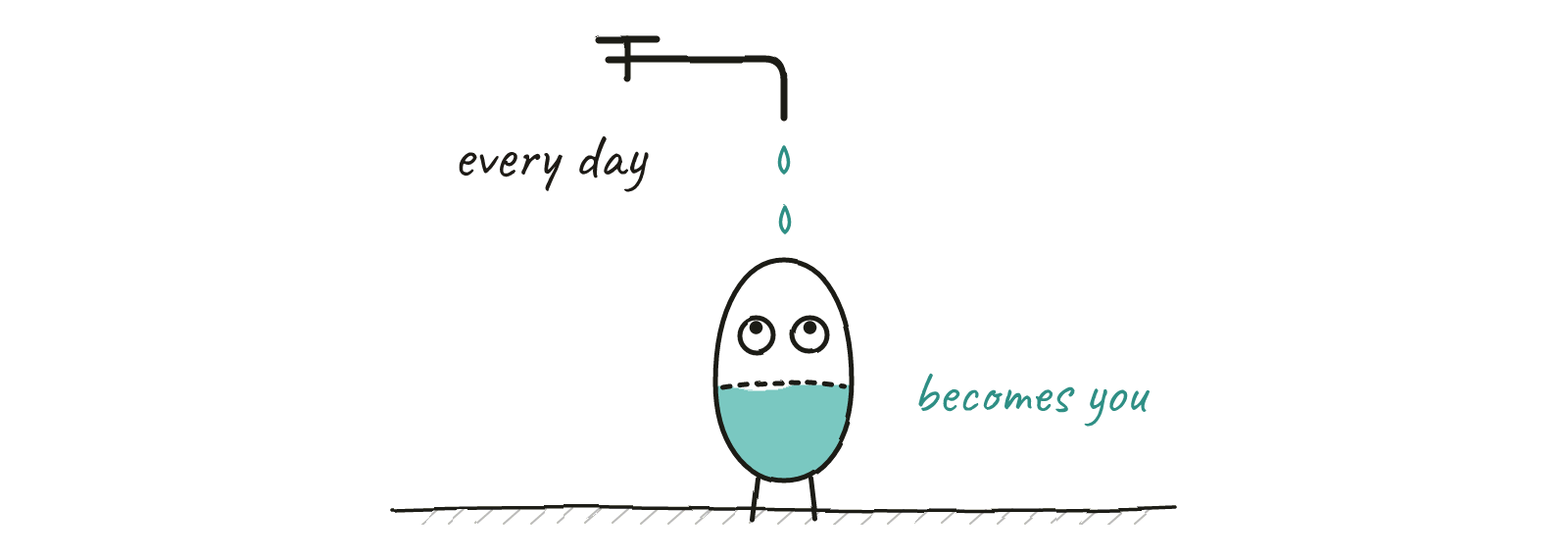
Habits work like this too. Whatever you imitate again and again from childhood settles into your "habits and nature," into your body, your voice and your thinking.
A child raised well learns to love what is fine before they can explain why. When the reasons arrive later, the child greets them like old friends.
Even judges follow this rule. A good judge should be old, "a late learner of what injustice is." They know injustice from watching it in others, not from having it in their own soul.
Ships are steered by people who never learned to steer
Then Socrates says the line he fears will get him laughed out of the room. Cities will have "no rest from ills" until philosophers rule as kings, or kings truly take up philosophy.
By a philosopher he does not mean a clever talker. He means someone who loves the truth itself. Most people love beautiful sounds, colors and shapes, but cannot see what beauty itself is. They live as if in a dream, taking a likeness for the real thing. They have opinions. A philosopher wants knowledge of what does not change.
Adeimantus objects that in real life, people who spend years on philosophy turn out either odd or useless. Socrates agrees, and answers with a picture.
A ship's owner is taller and stronger than everyone on board, but a little deaf, a little short-sighted, and he knows little about sailing. The sailors fight over who should steer. None of them ever learned how. They even claim steering cannot be taught, and they are ready to cut down anyone who says it can. They drug the owner, take the ship and feast on the cargo. They praise as a great sailor whoever is best at grabbing the wheel. The real pilot studies the seasons, the sky, the stars and the winds. The sailors call him a useless "stargazer."
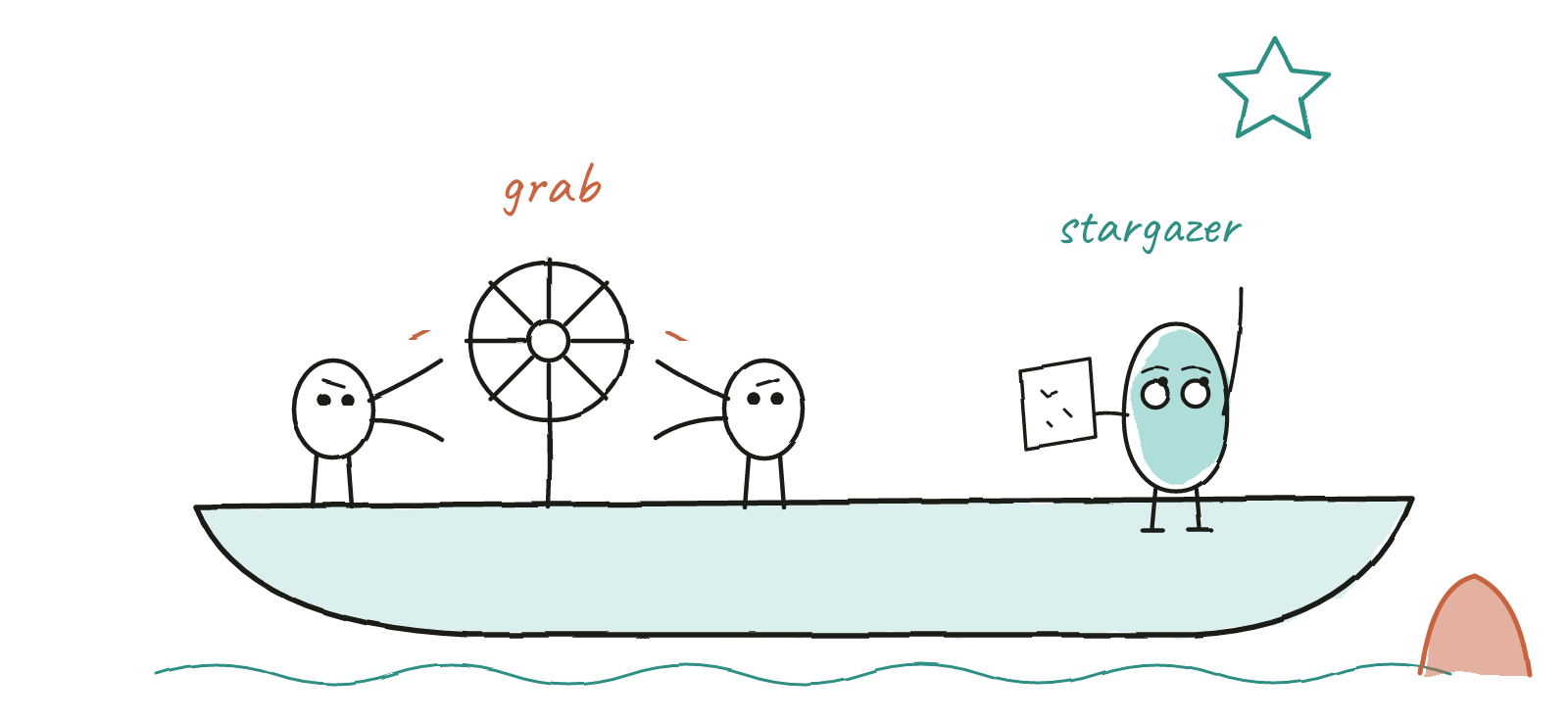
That is how cities treat their wisest people. The fault lies with those who will not use them. A sick person goes to the doctor's door. The doctor does not beg.
Crowds do the real teaching. When people pack into assemblies, courts and theaters, shouting and clapping, a young person gets swept along by the noise. The paid teachers of the day only study the crowd the way a keeper studies "a great, strong beast." They learn what calms it and what angers it, then call whatever pleases it good. The best young people suffer most from this, because a great nature raised badly does great harm. "No little nature ever does anything great."
Most people take shadows for the real thing
First, a smaller picture. To see, your eyes need light, and light comes from the sun. In the same way, your mind needs a kind of light to understand by, and Socrates calls its source the good. He never says exactly what the good is. The sun is only a picture of it, a "child of the good."
Now picture a cave. People have lived in it, underground, since childhood. They are chained by the legs and neck, so they can only look at the wall in front of them. Behind them, higher up, burns a fire. Between the fire and the prisoners runs a wall, like the screen in a puppet show. People walk behind it carrying statues and objects that stick up above it. The prisoners see only the shadows these things cast on the wall. When a carrier speaks, the echo seems to come from a shadow.
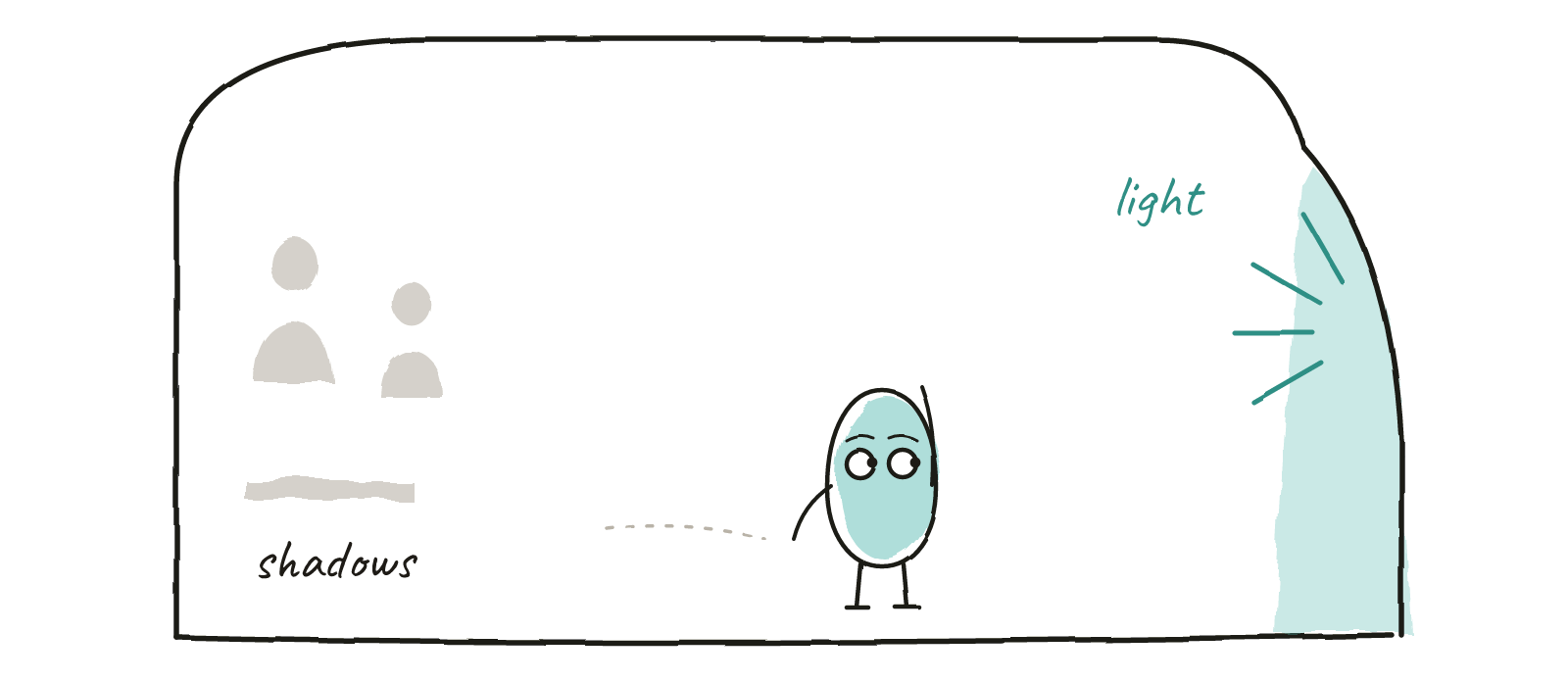
"They're like us," Socrates says. Such prisoners would believe the shadows were all there is.
Now free one of them. Make him stand, turn around and look at the fire. It hurts. He is dazzled. Told that what he sees now is more real than the shadows, he won't believe it. Drag him up the steep path into the sunlight, and at first he can see nothing. Slowly his eyes adjust. First shadows, then reflections in water, then the things themselves, then the stars at night, and at last the sun. He understands that the sun makes the seasons and is, in a way, the cause of everything he used to see.
He pities his old friends. Down there they hand out prizes to whoever is best at guessing which shadow comes next. He would rather do anything than live that way again.
But suppose he goes back down. Coming out of the sun, he is blind in the dark. He loses the shadow-guessing games. The prisoners laugh: going up ruined his eyes, so it is not even worth trying. And if he tried to free them and lead them up, they would kill him if they could get their hands on him.
The cave is the world your eyes show you. The climb is the mind's way up to what is truly there. The last thing it sees, with great effort, is the good, the source of everything right and fine. Anyone who wants to act wisely, in private or in public, has to see it.
Education turns your eye around
Most people think teaching means putting knowledge into an empty head, "as though they were putting sight into blind eyes." The cave says otherwise. The power to learn is already in every soul. What it needs is to be turned, with the whole soul at once, away from what keeps changing and toward what is truly real and does not change. Education is the art of that turning.
Turning matters more than sharpness. Think of a clever crook. Their mind sees very sharply. It is simply aimed at the wrong things, so "the sharper it sees, the more evil it accomplishes." Turn the same mind around and it would see the truth just as sharply.
The ones who make the climb must come back down. In the model city, the founders tell them: we raised you, so in your turn you must go down and get used to the dark. You will see ten thousand times better than the people there, because you have seen the real things. Most cities, Socrates says, are run "in a dream" by people who fight each other over shadows.
The best rulers are the ones who least want to rule. When greedy people go into public life to grab what they can, ruling turns into a fight. The fight destroys them and the city. Only someone who has a better life than ruling will rule well. They are rich "not in gold" but in a good and wise life.
Learning should also feel like play, because "no forced study abides in a soul." In the model city, numbers and shapes come in childhood. The hardest study of truth starts at thirty and lasts five years. Fifteen years of public work in the cave follow. At fifty, the best are ready to see the good and take their turn at ruling.
Cities decay the way souls decay
Even the best city would not last, because everything that comes into being decays. One day its rulers would pair the wrong parents at the wrong time. Children of gold, silver and bronze would get mixed up, and the slide would begin. It has four steps. For each city he shows the matching person, because cities grow out of the characters of their people, not "from an oak or rocks."
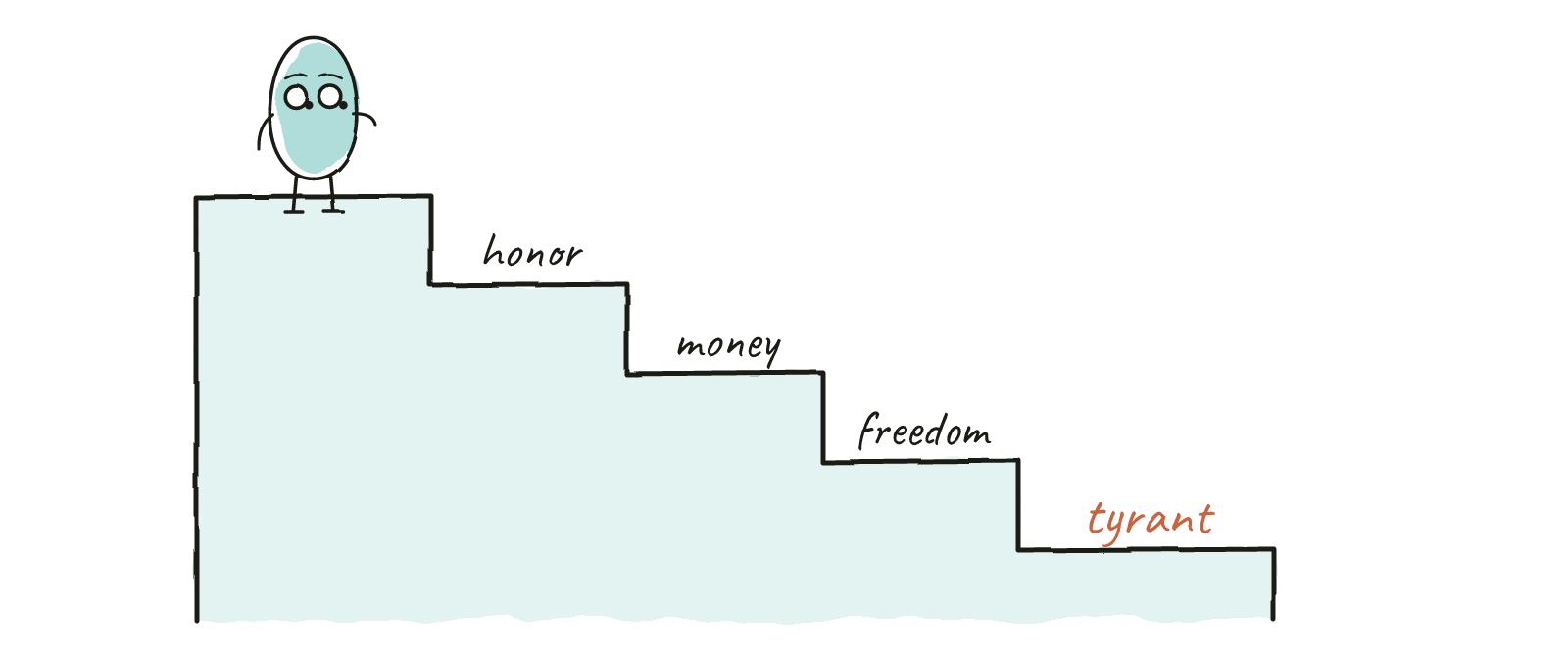
First comes rule by the lovers of honor. Spirit takes over the city. People prize winning and war, and they are afraid to put wise people in charge. In secret, they start to love money. The matching person is the son of a good, quiet father who keeps out of public life. His mother complains that her husband has no drive. The servants tell the boy to be more of a man than his father. Pulled both ways, he hands the rule of his soul to the middle part, spirit, and grows proud and hungry for honor.
Next comes rule by the rich. The gold piling up in private homes ends the honor-loving city. Once wealth is honored, virtue loses honor, as if the two sat on opposite sides of a scale. A new law says only people with enough money can hold office. That is like picking a ship's pilot by how rich he is.
The city splits in two, "the city of the poor and the city of the rich," always plotting against each other. People who lose everything stay on as idle "drones," like the bees that live off the hive without working. Some become beggars, some criminals.
The matching person watched his proud father fall and lose everything. Frightened, he puts the love of money on the throne of his soul and makes reason and spirit sit at its feet like slaves. He lives stingy and mean, holding his worse desires down out of fear, not wisdom.
Then the poor win, and democracy begins. It is full of freedom and free speech, and most offices are handed out by random draw. Socrates calls it "probably the fairest" city, like a cloak of many colors.
Its matching person is the stingy man's son, who gets a taste of every pleasure. New desires storm the fortress of his soul and rename the good habits he was raised with. Shame gets called simplicity. Self-control gets called cowardice. Lawlessness gets called freedom, and shamelessness gets called courage. He treats all his desires as equal. One day he drinks to music, the next he diets. He exercises, then idles, then dabbles in philosophy. There is "neither order nor necessity" in his life, and he calls it sweet and free.
Too much freedom turns into slavery
Each city dies of greed for the very thing it calls good. The rich city dies of its hunger for money. Democracy dies of its hunger for freedom.
Freedom spreads into everything. Fathers fear their sons. Teachers flatter their students. The old copy the young so they won't seem bossy. Even horses and donkeys walk the roads as if they owned them, bumping into anyone who doesn't step aside. In the end, people stop obeying any law, written or unwritten, so as to have no master at all.
Then the swing comes. Anything pushed too far tends to flip into its opposite, in the seasons, in plants, in bodies and in cities.
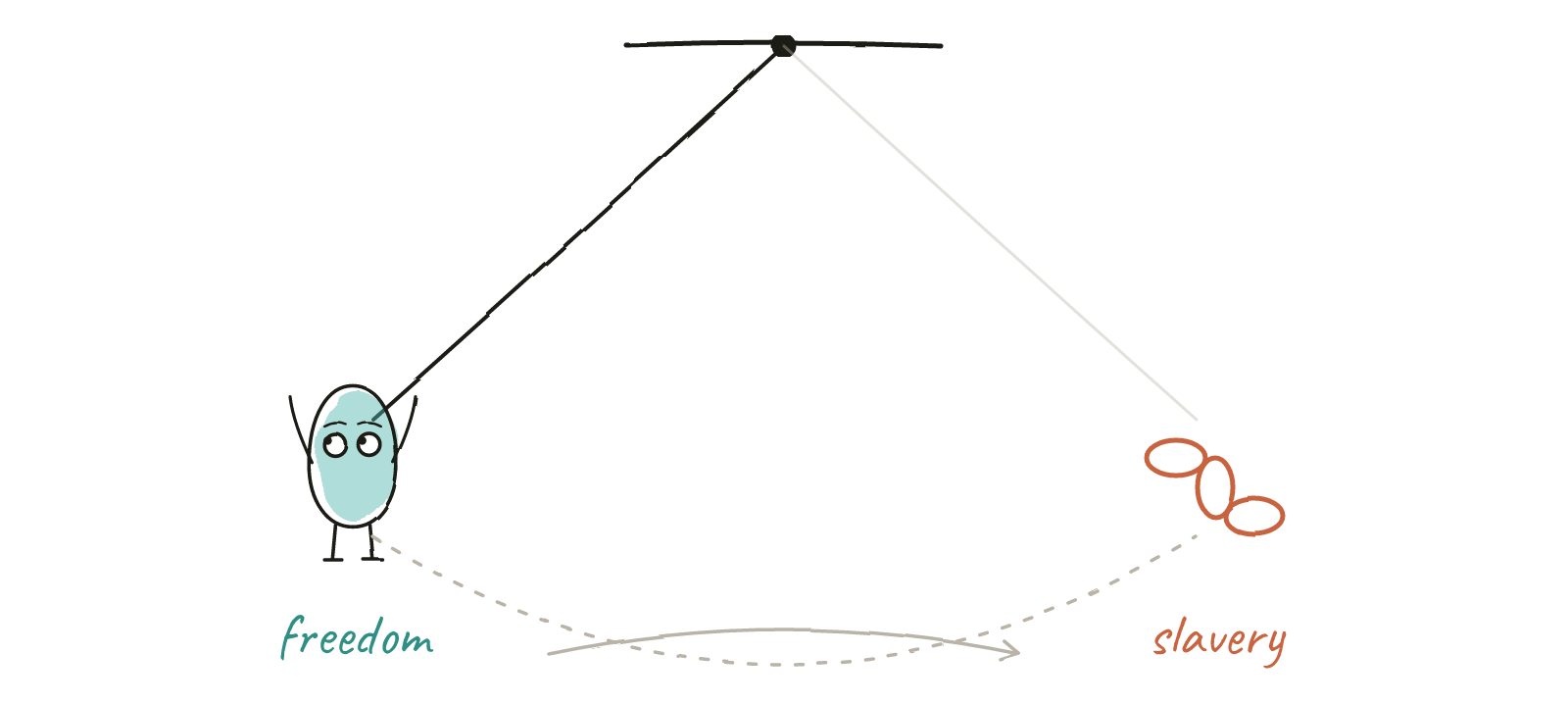
Too much freedom seems to change into nothing but too much slavery, both for private man and city.
Idle, loud drones lead the crowd. They take from the rich and pass a little to the people, keeping most for themselves. The rich defend themselves and get called enemies of the people. The people pick one champion and make him great. Soon he asks for bodyguards "to save the people's defender" for them.
At first he smiles at everyone, cancels debts and hands out land. Then he starts wars, so that the people will need a leader and stay too poor to plot. He watches for anyone brave, high-minded, wise or rich, and gets rid of them. It is a cleansing, Socrates says, the opposite of a doctor's: a doctor takes out the worst and leaves the best. His guards are freed slaves and hired foreigners. When the money runs out, he lives off the people who raised him up. The people ran from the smoke, serving free men, and fell into the fire: being ruled by slaves.
The tyrant is the least free person alive
The tyrant starts inside one person. Socrates points to your dreams. When reason sleeps, a wild part of you wakes up, and in dreams it will try anything, any crime, any shameless act. This lawless part is in everyone, "even in some of us who seem to be ever so measured." Most people keep it down.
The tyrant-to-be is the son of the man who lives for every pleasure. People who want to use him plant one huge ruling desire in him. Picture it as a great winged drone, with madness for its bodyguard. It drives out every trace of shame. He spends, borrows, steals from his parents, then from strangers and temples. What most people are only in dreams, he is while awake.
He has no friends, only masters and servants. "The tyrannic nature never has a taste of freedom or true friendship."
Look past the palace and the show of power, Socrates says, instead of staring at it like a child. Inside, the tyrant's soul is like a city under a tyrant: the best parts enslaved, the maddest part in charge, poor, afraid and full of regret.
Worse still is the tyrannical person who actually gets to be a tyrant. Picture a rich man who owns fifty or more slaves. A god sets him down in a desert with his family, far from anyone who could help. He would have to flatter his own slaves to stay alive. Surround him with neighbors who hate all masters, and he is a prisoner. That is the tyrant: stuck in his house, afraid to travel, "a flatterer of the most worthless men."
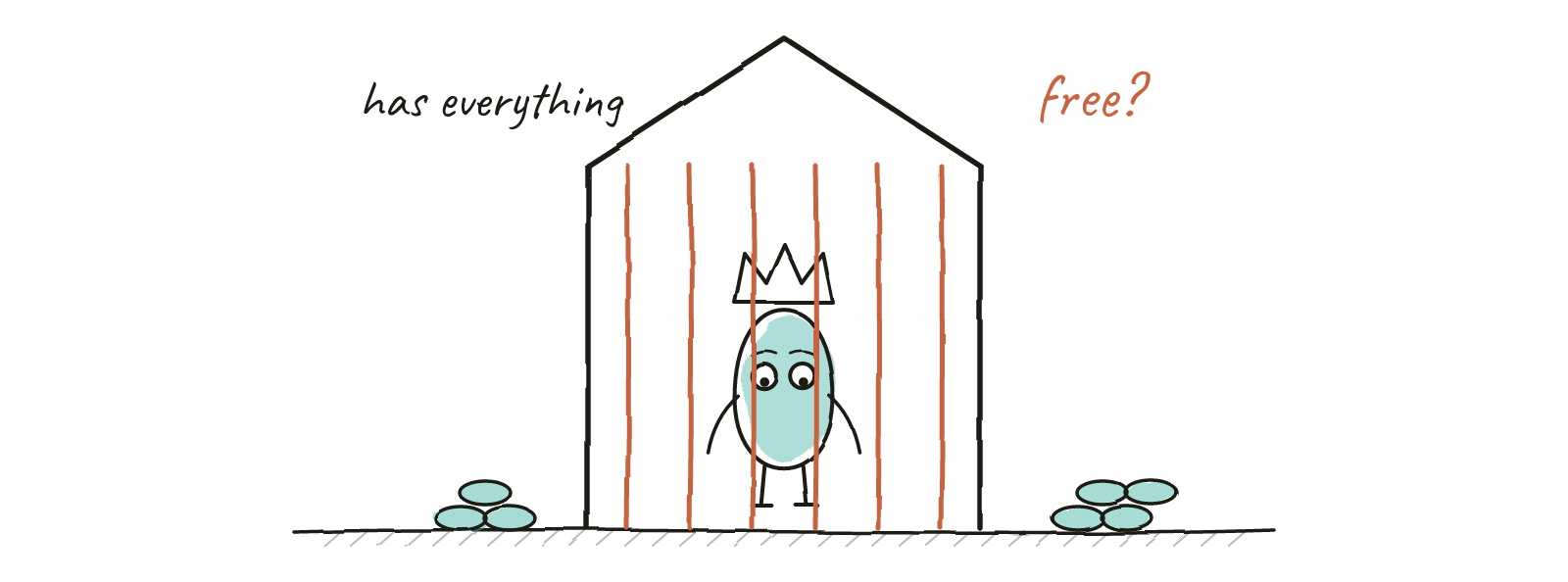
So Glaucon gives his verdict. The most just person is the happiest, the one who is "king of himself." The most unjust is the most wretched, whether or not gods or people ever find out.
The just life is also the more pleasant one. Each part of the soul loves its own pleasure: learning, honor or money. Only the lover of wisdom has tasted all three, so theirs is the judgment to trust. And much of what people call pleasure is only relief from pain, like a sick man's joy at being well. Many people live like cattle, heads bent to the table, feeding and fighting for more, never filled with anything real.
Inside you live a beast, a lion and a human being
One last picture of your soul sums up the argument. Picture a many-headed beast, with tame and savage heads that it keeps changing and growing. Next to it, a lion. Next to that, a human being, the smallest of the three. Wrap all three in the outer shape of one person, so that from outside you see only a human.
To praise injustice is to say it pays to feed the beast and the lion and starve the human. Then they bite, fight and swallow each other. To praise justice is to let the human inside take charge "like a farmer." It feeds the tame heads, holds back the savage ones and makes the lion an ally.
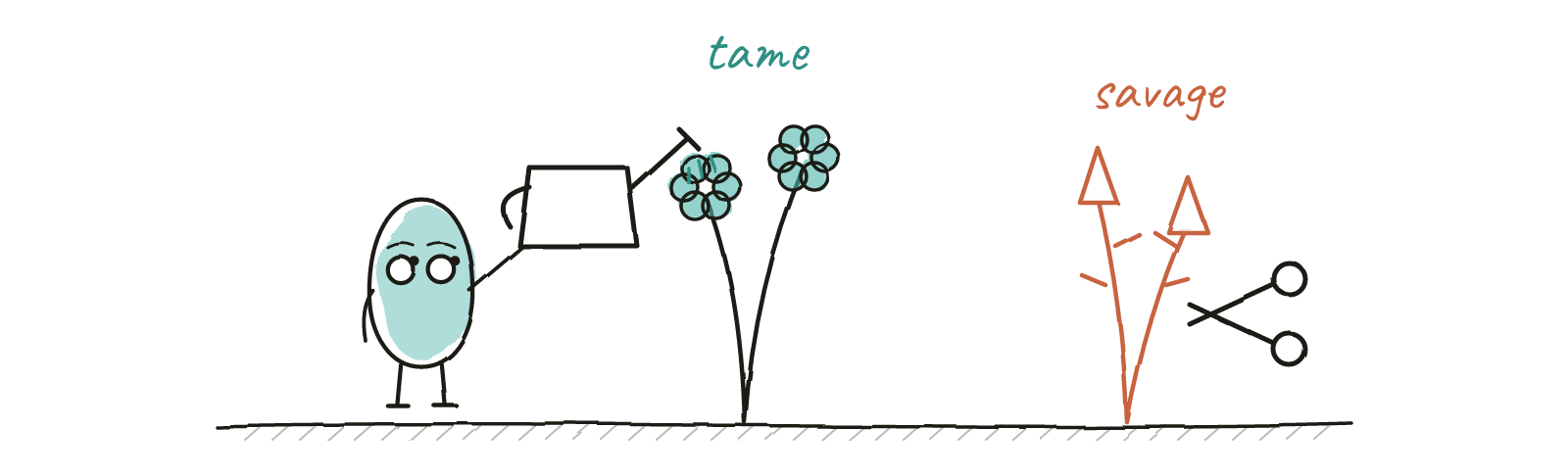
The image explains old kinds of blame. Giving in to every craving gives the beast free rein. Bad temper strains the lion. Softness makes it a coward. Fawning on others for money trains the lion to be "an ape instead of a lion."
It also explains why getting away with a wrong is no win. If you take gold unjustly, you sell the best part of yourself into slavery to the worst. The person who is caught and punished at least gets the beast tamed.
So would a wise person go into politics? In the city they have built, yes. In the cities that exist, perhaps not. Glaucon points out that their city exists only in words. Socrates answers that perhaps "a pattern is laid up for the man who wants to see and found a city within himself." It makes no difference whether such a city ever exists. You can still live by it.
Poets feed the part you are trying to starve
This is also why the model city keeps out most poetry, even Homer, the poet whom Socrates has loved since childhood. A painter paints a couch. A carpenter made that couch by looking to the idea of a couch. So the painting is a copy of a copy, "third from a king and the truth," two steps away from the real thing. A good painter can paint a carpenter well enough to fool a child from far away without knowing anything about carpentry. Poets do the same with war, ruling and virtue. Ask Homer which city he made better governed, or which war was won with his advice. No one can name one.
The bigger charge is what poetry does to you. When a hero weeps on stage, even the best people give in, cry along and praise the poet who moves them most. Yet in their own grief, they are proud to bear it quietly. The pity fed at the theater does not stay there. It is "not easily held down in one's own sufferings." The same goes for jokes, desire and anger. Poetry waters what should be left to dry up.
Socrates leaves the door open. There is "an old quarrel between philosophy and poetry," he admits. If poetry or its lovers can show that it is useful as well as pleasant, it may come back.
You choose your next life with the habits of this one
Socrates ends with a story. A soldier named Er dies in battle. Ten days later, when the dead are collected, his body has not decayed. On the twelfth day, lying on his funeral fire, he wakes up and tells what he saw.
The dead are judged. The just go up into the sky and the unjust down under the earth. The unjust pay for every wrong ten times over, on a journey that lasts a thousand years, and the just are rewarded in the same measure. Some tyrants never get out: the mouth of the underworld roars when they try to climb up.
Then the souls come to choose their next lives. A spokesman draws lots so each soul knows its turn. Then he lays out sample lives on the ground, like cards to pick from, far more than there are souls: tyrants and beggars, the famous and the unknown, even animals. Then he speaks.
The blame belongs to him who chooses; god is blameless.
The soul with the first pick grabs the greatest tyranny at once, without looking closely. Only later does he see that the life includes eating his own children. He beats his chest and blames chance, the spirits, anything but himself. He had come down from heaven. In his last life he was good by habit, without philosophy. Most souls, Er says, choose by the habits of their former life.
The very last soul to choose belongs to Odysseus, a hero from the old poems. Remembering his long labors, he is cured of loving honor. He searches a long time and finds a life everyone else passed over: the life of a private man who minds his own business. He says he would have picked the same with the first lot, and he takes it gladly.
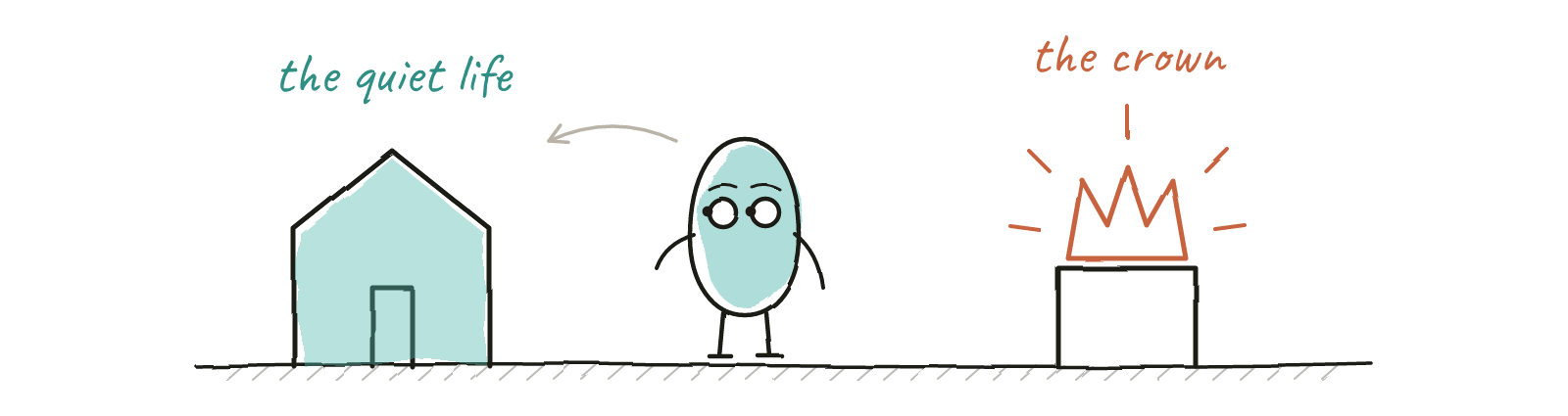
"Now here, my dear Glaucon, is the whole risk for a human being." The study that matters most is learning to tell a better life from a worse one. The better life is the one that makes your soul more just, and the worse life is the one that makes it less just. Even the last to choose, if they choose with care and live in earnest, will find a good life waiting.
That is the answer to the shepherd's ring. Justice is worth having for what it does inside you, so the soul must do just things "whether it has Gyges' ring or not."
The ring only hides you from other people. It never hides you from yourself.
Get the next one on Sunday.
A free weekly LongForm, in your inbox.