A LongForm
Master Your Emotions by Caroline Empathy
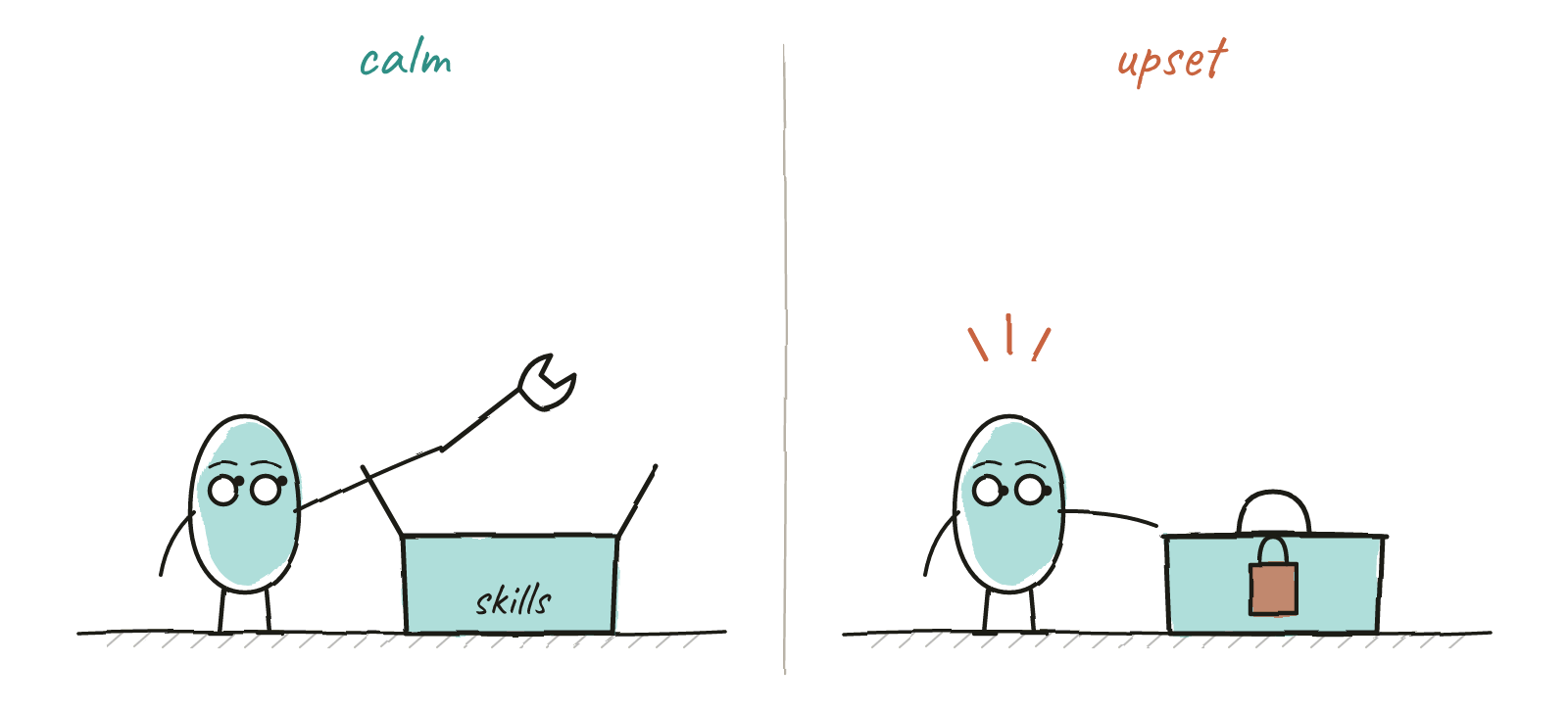
A strong feeling can lock away skills you already have, most of all with the people closest to you. The answer is not to push the feeling down. It is to feel it fully, so it can pass, and then choose what to do.
October 25, 2026
You can stay calm with a stranger, explain yourself clearly at work, listen patiently to a friend. Then someone in your own family says one small thing, and all of that is gone.
Caroline Empathy wrote Master Your Emotions after years of therapy with couples, families and individuals, and saw this again and again. People who talked well with everyone else could act like different people with their own partner or family.
They had not lost their skills. They were upset.
When a feeling takes over, it cuts off your ability to think clearly and act sensibly. You know what you should say. You simply cannot get to it in the moment. So the first job in mastering your emotions is getting past the reaction that blocks the skills you have.
The way out is not to feel less. Many people meet a hard feeling by pushing it away, or by escaping into some habit that distracts them from it. There is a third way: feel it fully, in your body, until it passes, and then choose what to do.
By the end, you will discover:
- why a strong feeling feels like the truth, and why your inner alarm was never meant to ring all day (1, 2)
- why a feeling needs to be felt, and how to stay with one until it changes (3, 4)
- how avoiding feelings shrinks your life, and how small risks win it back (5, 6)
- how to catch a feeling in your body early enough to choose what you do, and how to practice calm before you need it (7, 8)
- how to separate the facts from the story your mind adds, and four thought loops to watch for (9, 10)
- how to change the situations that set you off, and how to hear the feelings of the people close to you (11, 12, 13)
A strong feeling feels like the truth
When a feeling grows strong, it narrows your attention. Clear thinking slips into the background, and the feeling moves to the front of your mind. The wish to be rid of the hurt can become so pressing that it overrides reason and closes your mind to other points of view.
That is why, inside a strong feeling, you feel sure. The person afraid of flying cannot weigh the high chance that the flight will land safely. The jealous person is completely sure their partner is thinking of someone else. The insecure partner feels certain they are not really cared for.
That certainty is part of the emotion itself.
Even so, some part of you still weighs the odds. The nervous flyer usually stays on the plane. And when conditions are right, reason can help you see other possibilities and the long-run results of what you are about to do.
Emotions follow rules. They are not logical, but they can be understood, and the more you know them, the better your chances of handling the feelings you do not want. The first rule lives in your body.
Your alarm was built for short emergencies
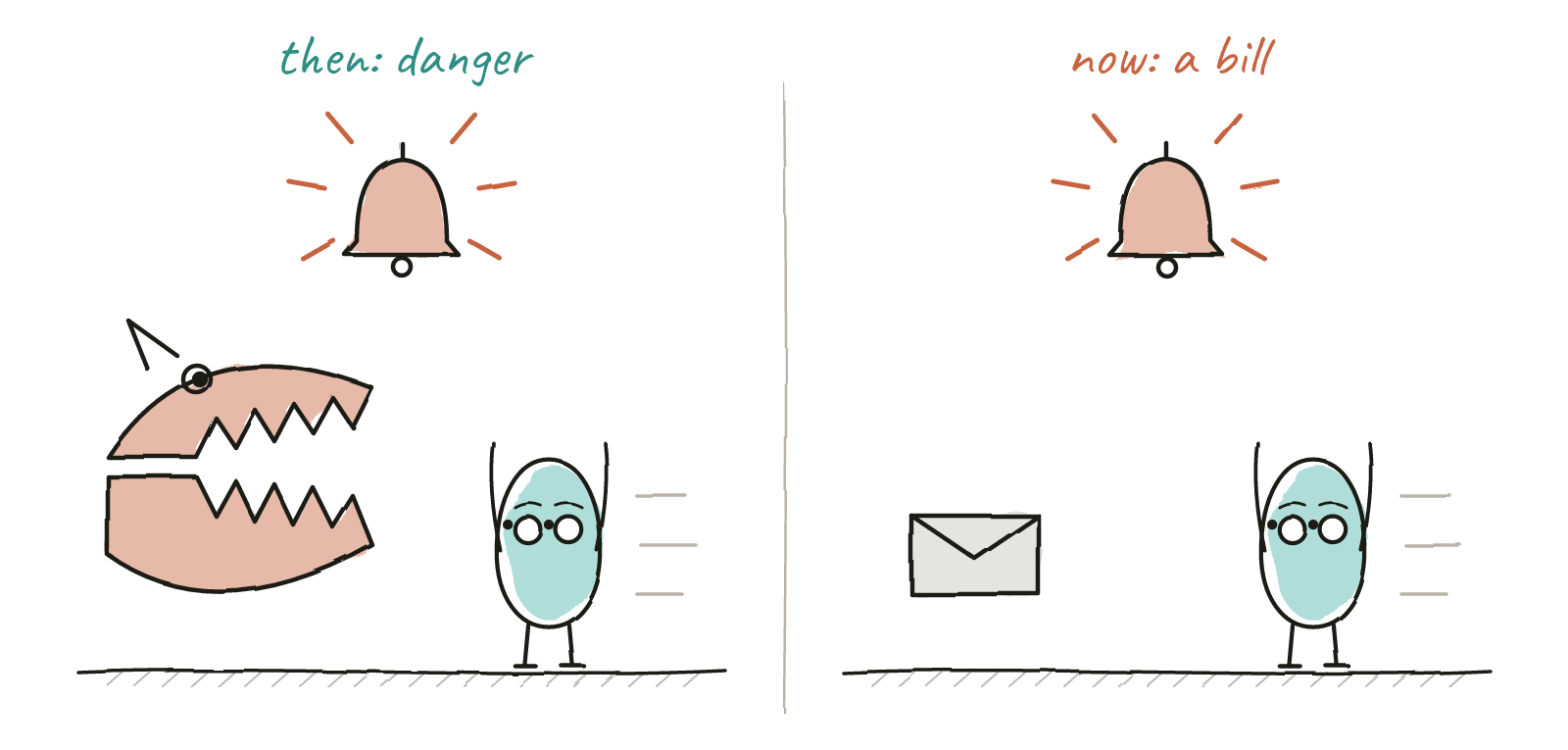
Some moments call for a response with no thinking at all. Long ago, when an angry animal wandered into a camp, people had to fight or run, fast.
The body still does this. In a threat, it floods your blood with stress hormones, chemicals that get you ready to fight or run. Blood moves away from your organs to your limbs and muscles. For a short while you can do things you never could on a normal day. Ask people who escaped danger whether they could have done the same on an ordinary day, and most say no.
The catch is that this alarm was designed to be brief. While it is on, it holds back other chemicals your body needs for growth and for fighting illness. The body cannot run both at once.
Today, plenty of people never fully switch the alarm off. Too much information, too much speed and too much coffee keep their bodies stuck in that ready-to-fight-or-run mode. People with the highest steady stress also tend to be in the poorest health.
The same system can be calmed on purpose, and the shift can happen quickly. When you feel appreciation, gratitude, compassion or caring, your body releases a very different set of chemicals. The stress hormones drop, and the chemistry that supports your immune system rises.
The alarm follows two more rules. First, how strong a feeling is depends less on the situation than on how much it changes, or is expected to change. A spider fifteen feet away is not as scary as a big one suddenly six inches from you.
Second, you get used to good things, but fear and anger do not fade the same way. A kind, loving partner soon feels normal. A worry keeps nagging you to act. The human mind seems to have been built for survival, not for happiness. Happiness takes thought and effort. Anger, grief, insecurity and jealousy arrive on their own.
A feeling needs to be felt, not fixed
Most people run from an uncomfortable feeling. It seems negative, so they try to stop it, change it into something nicer, or think about something else.
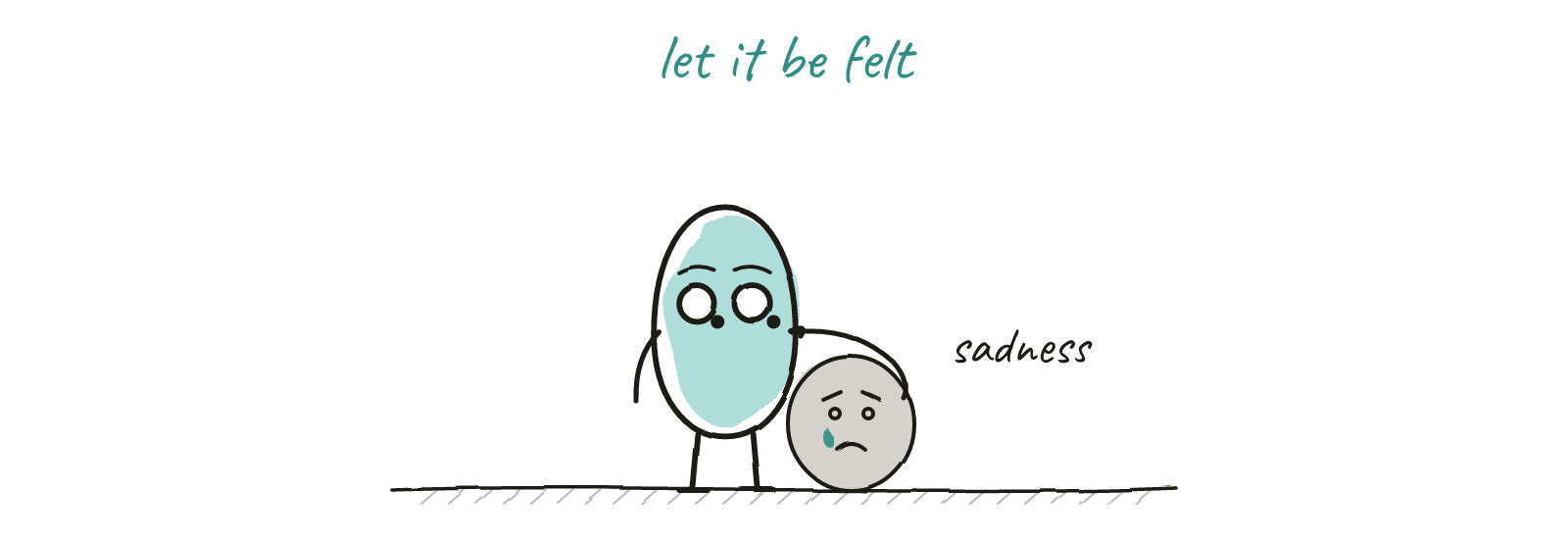
The healthy response is the opposite. Do not push the feeling away. Bring your full attention to it, as it is.
That sounds backward until you see where the damage really comes from. The feeling is not what harms you. What harms you is what you do to avoid it. Someone sad about losing a friend may drown the sadness in drink. The drinking is the destructive part. Allowing the grief is what slowly changes it.
Over a lifetime, everyone builds habits for dodging painful feelings, mostly without knowing it. One person avoids hurt by getting angry. Once the hurt is felt and allowed, the anger has no job left to do.
It helps to know what a feeling actually is. It is a set of sensations in your body: blood flow changes, adrenaline rises, nerves fire. A feeling is you noticing those sensations, and sensing whether they feel good, bad or neither. On its own, a bad feeling is unpleasant, not horrible. The horror comes from your beliefs and thoughts about it.
So the trouble with emotions lies in how you read a situation, not in the feelings themselves. Feelings have one basic need. They need to be felt.
Think of a small child who is upset and runs to her mother. The mother only needs to hold her and pay attention to her. Within a few minutes the child may be laughing and smiling. Your feelings need the same care. You hold the feeling and stay with it until it calms.
This skill, soothing yourself, is learned from the people who raise you. Those who never learned it stay in distress longer, and they often reach for unhealthy habits to escape. Once you can stay with a feeling and soothe it, the pull toward those habits loses much of its power. The habit may remain for a while. The urge behind it weakens.
Turn toward the feeling, and watch it change
Move your attention toward the feeling, not away. Keep it there without getting distracted. Explore it: what does it feel like? If pictures come to mind, notice them, but stay with the feeling.
Find where it sits in your body. Is it your chest, your stomach, your throat? Try to break it into smaller sensations. Then let your breathing relax. Take a deep breath and imagine breathing straight into the place where you feel it.
Watch whether it changes. Anger or sadness, it is just energy. Stay with it and see what happens.
This should feel soothing. If it does not, some fear or memory may be holding the feeling in place.
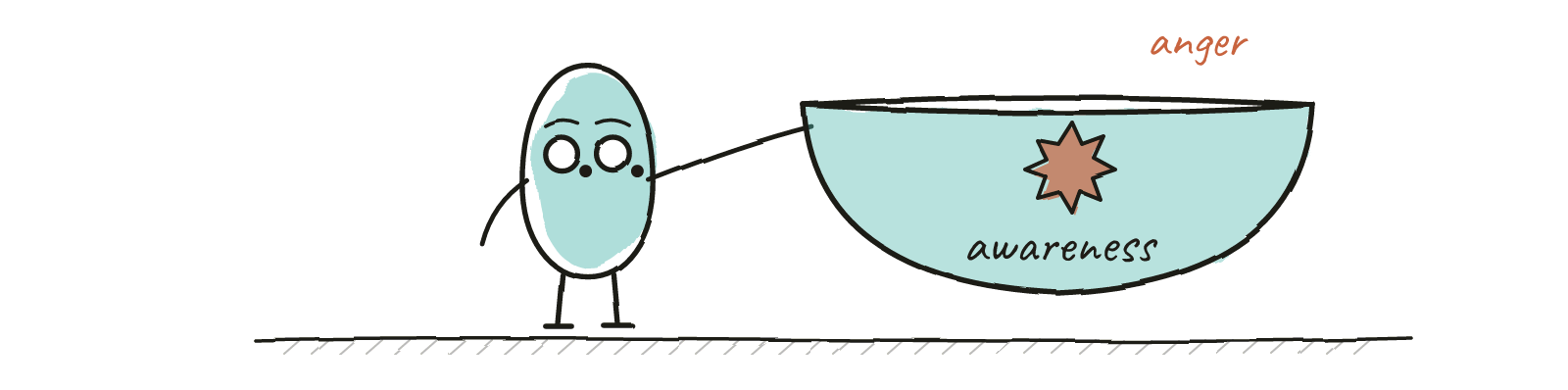
When you do this, you hold the feeling, so it no longer holds you. Your awareness is bigger than the emotion. You may feel anger in every cell, and still see the trees and the sky, which have nothing to do with your anger. The anger stops feeling like a wave that carries you off. It shrinks back to its true size.
And when a feeling has been felt, it has done its job. It can move on to calm, as long as you do not keep feeding it with untrue thoughts.
Your beliefs change too. You notice that you felt the most intense feelings, and nothing terrible happened. Your mind stops expecting that a strong feeling means something bad will happen, the way it did in the past.
Calm can be a way of running
Emotional reactions show up in three main ways: fighting, taking care of everyone else, and avoiding. All three keep feelings at a distance in some way. The avoiding kind can look like no reaction at all.
Some people avoid strong feelings so well that it becomes part of their personality. They look calm and peaceful. But the calm comes from staying away from anything that might stir them up, not from real peace of mind. The avoiding itself is their reaction.
It is hard to spot, because the excuses for it are so complete. A person can drift so far from their feelings that they no longer feel them, even when something should hurt. Some people describe serious abuse in their childhood as if it happened to someone else. Many people who lived through something overwhelming become numb like this.
Take Mary. She found it hard to stand up for herself, and she had a run of bad relationships with men who did not treat her well. When someone asked her out, she could not say no, even when she sensed the person was not good for her. She feared hurting someone's feelings or causing conflict. Once she was involved with a man, she found reasons not to break up: he had potential, he would change, she could not find anyone better. Every excuse kept her from facing conflict or loneliness.
Everyone avoids sometimes, not only people like Mary. Someone who fights a lot may be avoiding the feeling of being easy to hurt. Someone who always looks after others may be avoiding the fear of being left, or the fear of trusting loved ones to look after themselves.
Grow by small risks, not big leaps
A fear is best faced a little at a time, so it never overwhelms you. Therapists have used this method, called gradual exposure, for decades.
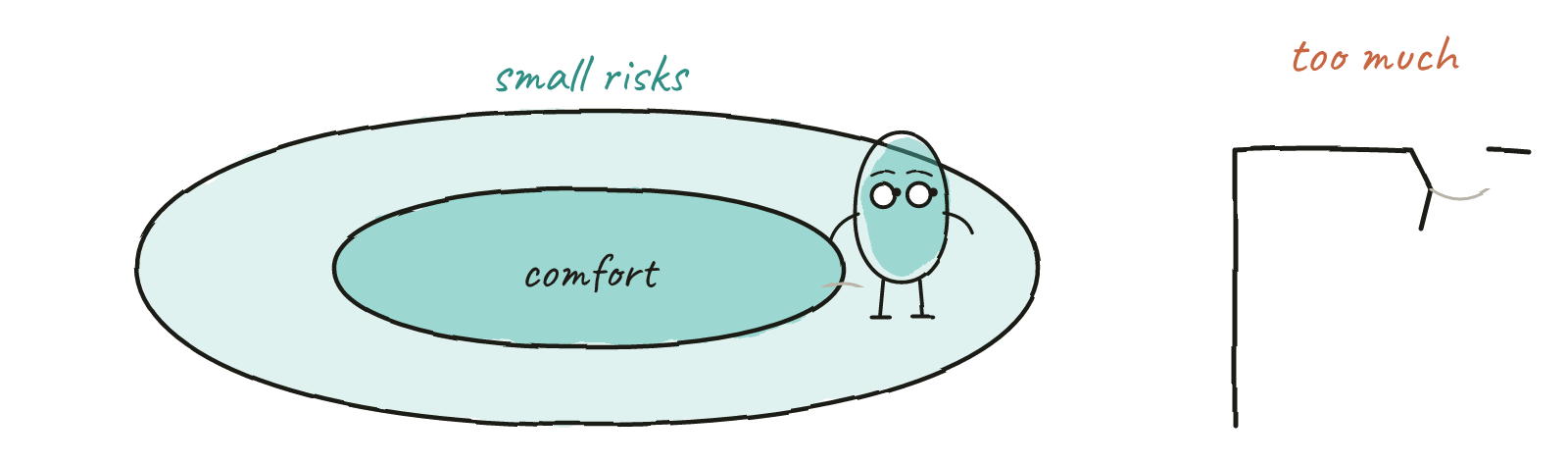
Picture a circle around you. Inside is everything comfortable. An avoiding person lives inside that circle and stays away from everything outside it.
Some of what lies outside really is too much for now. A woman with agoraphobia, a fear that keeps her inside her comfort circle, her own home, gets tired of her limits and goes shopping at the mall. She has a panic attack, a sudden wave of fear, runs home, and vows never to try again. A risk that overwhelms you can easily backfire.
Small risks work wonders. Draw a second ring just outside the comfort circle: a ring of small risks. Things in it stretch you without flooding you. Keep taking those small risks, and over time the comfort circle grows out to the edge of the ring. Then you draw a new ring and keep going.
Jerry found it hard to admit mistakes at work. He defended himself even when he was wrong. So he started small. He admitted mistakes to Al, a friend at work he trusted. At first it was uncomfortable, because he felt ashamed of not being perfect. But he noticed the feeling was uncomfortable, not overwhelming. That was the start of a road that made admitting mistakes easier, with good results in many parts of his life.
Each small risk brings you face to face with a feeling you have been avoiding, and gives you a chance to feel what you buried.
Your fear can show you where to go. There are two kinds. Physical fear keeps you safe: you fear heights because you could fall. Psychological fear, like speaking in front of a group, puts you in no real danger. Notice that second kind as it comes up, and it points to the risks worth taking.
Catch the feeling in your body, while you still have a choice
Most of the time your attention is stuck in your thinking. Some thinking is practical, like remembering to buy bread on the way home. That kind causes no trouble.
The trouble comes from thinking that circles around yourself: worry, comparing, judging. "I wonder how I'm doing compared to Joe." "I really need to have more money to be happy." "I can't stand that guy at the gas station." This kind of thinking causes stress and puts distance between you and the world.
Mindfulness means paying attention to what you sense right now. It moves your attention away from that stream of thoughts and onto your senses. Right now you can feel the chair against your back, the air on your face, your feet on the floor. Those sensations are always there. You just stop noticing them.
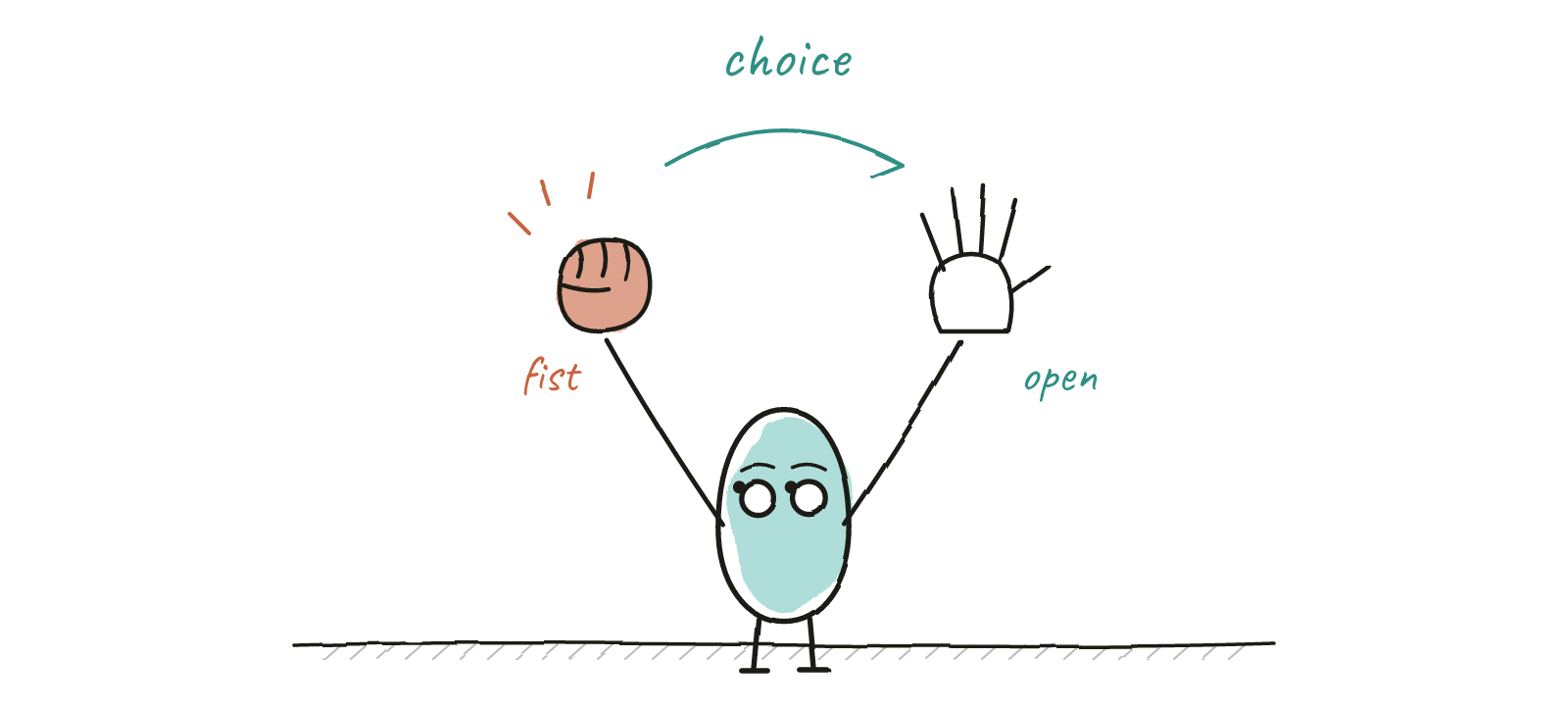
Your breath is a good place to start. You feel your strongest emotions in the stretch between your nose and your stomach: a sinking stomach, a tight chest, a heavy heart. To control an emotion, people often tighten those areas and cut their breathing short. Noticing your breath brings that hidden habit into view, and then you have a choice.
You can practice anywhere: in a line at the grocery store, at a red light, on a walk. Practice when you are calm, and you will be ready when a strong feeling comes.
The payoff is timing. Many people cannot tell they are getting angry until the anger is already huge, and a huge emotion is much harder to handle. If you know your body well, you feel the emotion rising while it is still small. That gives you room to calm yourself, and to check whether your reading of the situation is accurate.
Jeff and Sue had lots of small fights about redecorating their house. Jeff found the fights painful and a waste of time. So he began paying attention to his body and noticing when he was getting angry. That helped him change how he spoke when they disagreed. Sue found this harder. But she noticed Jeff was learning, and she snapped back less because he did.
Imagine a friend walks into your room talking loudly, with his fists clenched. If you ask why his fists are clenched, he may only then notice them. Now he can choose to unclench them or not. Before, he had no choice, because he did not know.
How you react when you are upset was learned long ago and runs on its own. Noticing your body gives you the choice to act on what is happening now, instead of on what you learned as a child.
Practice calm before you need it
Most people can learn to relax at will, and there are many ways to do it. No single method is best for everyone, so find one that works for you.
A simple one is to tense and release your muscles. Pick a small group, like your hand. Make a tight fist and hold it for five to ten seconds. Then tell yourself "relax," let go completely, and notice the difference between tense and loose. Work through the body this way.
You can also teach yourself a cue. Most people relax easily in a quiet, familiar room, but that is not where the stress is. So pair a silent word, "relax," with actually relaxing, for example each time you breathe out. Do it thousands of times, and the word starts to bring the relaxation on its own. It is no cure, but it does help.
Every method needs practice in advance. You cannot wait until a crisis hits and then expect instant calm. One caution: several therapists have seen panic attacks in very anxious patients when they tried relaxing in therapy. For most people, this is not a concern.
Separate the facts from the story
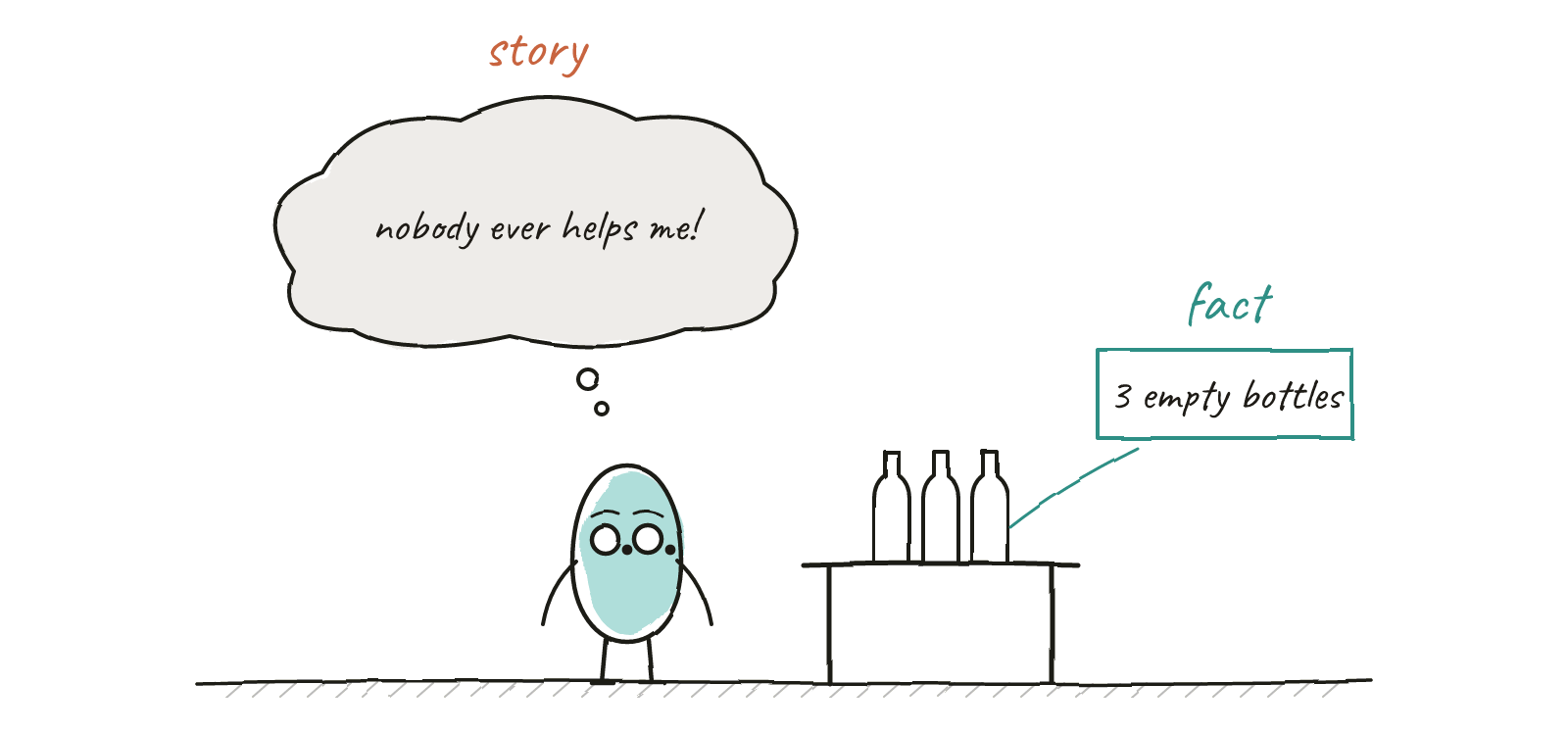
Some thoughts feel like facts. They are not. They are thoughts in your head, and often they are not even an accurate picture of reality.
You can step back from a thought like this. When you are stuck inside a thought, you obey it and take it as true. When you step back, you can see the thought, see what it is doing to you, and decide whether it deserves your attention.
Picture this. You walk into a room and see several empty bottles on the table. At once you think: the house is a mess, everything is terrible, nobody ever helps me clean.
Now step back. The only fact in front of you is a few empty bottles on a table. Everything else came from inside you.
If you just cleared the bottles without noticing the story, you might stay in a bad mood all day, still stewing in conclusions that were never true. Notice the story, see that you are not stuck to it, and you can let it go, tidy up and get on with your day.
This does not mean every negative thought is wrong. There are bad things in the world, and it is natural to react to them. The skill is to tell which thoughts are untrue, drop those, and pull yourself out of a low mood after a reasonable time.
Four loops your thoughts get stuck in
Some negative thoughts come back again and again. Knowing which loop you are in is the first step out of it.
Worry. You picture everything that could go wrong, or replay how badly a conversation went. You lose sleep over your health, your money or your job, even though nothing bad has actually happened.
Harsh self-criticism. You blame yourself so hard it becomes cruel. It can trap you in a circle. To make up for feeling not good enough, you chase praise and status from others. The lift from that praise is short, because the inner critic keeps talking. Whether you get the praise or not, you wear yourself out chasing it. This is different from aiming high. Self-criticism stops you from seeing the wins you do have.
Regret that never ends. You stay stuck on old mistakes until you start to feel you are bad for the people around you. Looking back to learn from a mistake is healthy. This is different: it drags you into the details and will not let go.
Problem stacking. Every idea meets a new problem. Charlie wants to buy a house and start a family. Her credit, the bank's trust in her to repay a loan, might not be good enough. Someone says her credit together with her partner's would do. Then maybe it is not a good time to buy. Then they cannot afford it. Then the economy is wrong. Soon the whole idea is dropped. Some of the problems may be real, but none is a wall. Knowing the risks is smart. Treating every one as a brick wall keeps you from anything you want.
Once you know the loop, a few questions help. Would you talk to a friend like this? If not, do not talk to yourself that way. You deserve the same kindness and the same second chance.
Then ask: Is this way of thinking helpful? Does it lead me to an answer? What should my next step be?
Writing the answers down helps. A journal gets thoughts out of your head and makes room for new ones. It also lets you look back and see how far you have come.
Change the situations that set you off
Some situations set off the same bad feeling again and again. The basic rule of managing them is cause and effect.
Start by naming the feelings you most want to change. Take a pen and paper. Which feelings lead to outbursts you regret? If you cannot name one, describe the situation and how it felt. If even that is hard, explain it as if to a five-year-old, in the simplest words, and build up from there.
Next, find what happens right before. Say you have an outburst every time you are stuck in traffic. The cause is traffic. The effect is the outburst.
You cannot change traffic. You can change how it reaches you. Play music that calms you. Take a quieter route. Leave fifteen to twenty minutes earlier, so a slow road does not make you late. Join a carpool or take public transport. Have less caffeine before you drive.
Then shift your focus. In traffic your attention is on the driver who never signals. Instead, think about why you are driving: the goal you go to work for. That brings a sense of purpose rather than hurry. And notice your mood before you leave. If you are looking for a reason to be upset, you will always find one. When the moment comes anyway, stop for a second and ask whether this is worth an outburst.
The same habit works for blame. If you are late because your alarm did not wake you, blaming the clock leaves you stuck. Asking what you can control, like an earlier bedtime or a second alarm, gets you out.
Listen for the feeling under the words
Every conversation runs on two levels: the words, and the feelings underneath. People notice the words. They react to the feelings far more than they think.
The people closest to you have the most power over your feelings, because they know you best and share your history. Often they do not mean to push you. They are caught in their own reaction and have no idea how it lands on you. And you may be so busy with your reasons that you miss what is happening underneath.
When a relationship leaves you confused, ask yourself:
- What pattern are we acting out right now? Has it happened before?
- Am I feeling pressure to feel a certain way, or to do something?
- What is the main feeling I have with this person: anger, fear, guilt, shame, hurt? What does it make me want to do?
- Can I stay aware of this feeling without doing what I always do?
In an argument, most people listen only to reply. They have an answer ready before the other person finishes. Try listening to understand instead. Then, to check you understood, say back in your own words what you heard.
When you need to speak up, talk about how you feel when something happens: "I feel really upset or disappointed that you didn't update me about the project." Avoid starting your sentence with the word you. The moment someone hears it, they slip into defending themselves and making excuses.
It matters at home as much as at work. One study, led by Nicola Schutte in the early 2000s, found that people who saw their partner as good with feelings were highly satisfied with their marriage. They also expected more satisfaction in the future.
Argue the other side for a minute
Empathy starts with something simple. When someone comes to you worried, stop what you are doing and listen.
Imagine you are playing a game on your phone when a colleague comes over looking worried. You ask what is wrong. She tells you a call with a client went badly. You go back to your game and answer with "hmm" and "oh." Will she come to you again when she needs someone to listen? No. You lost her trust.
For the harder cases, try two exercises.
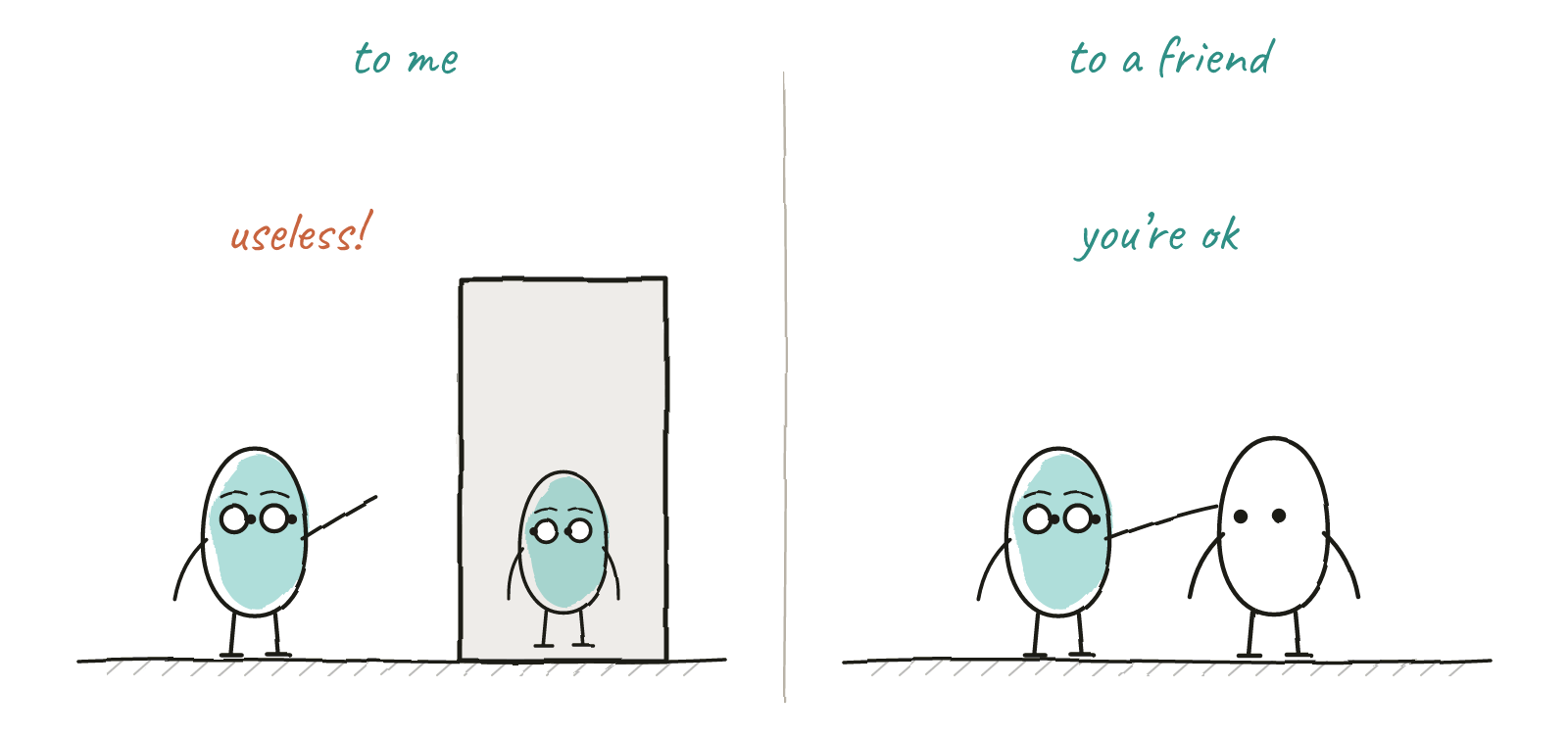
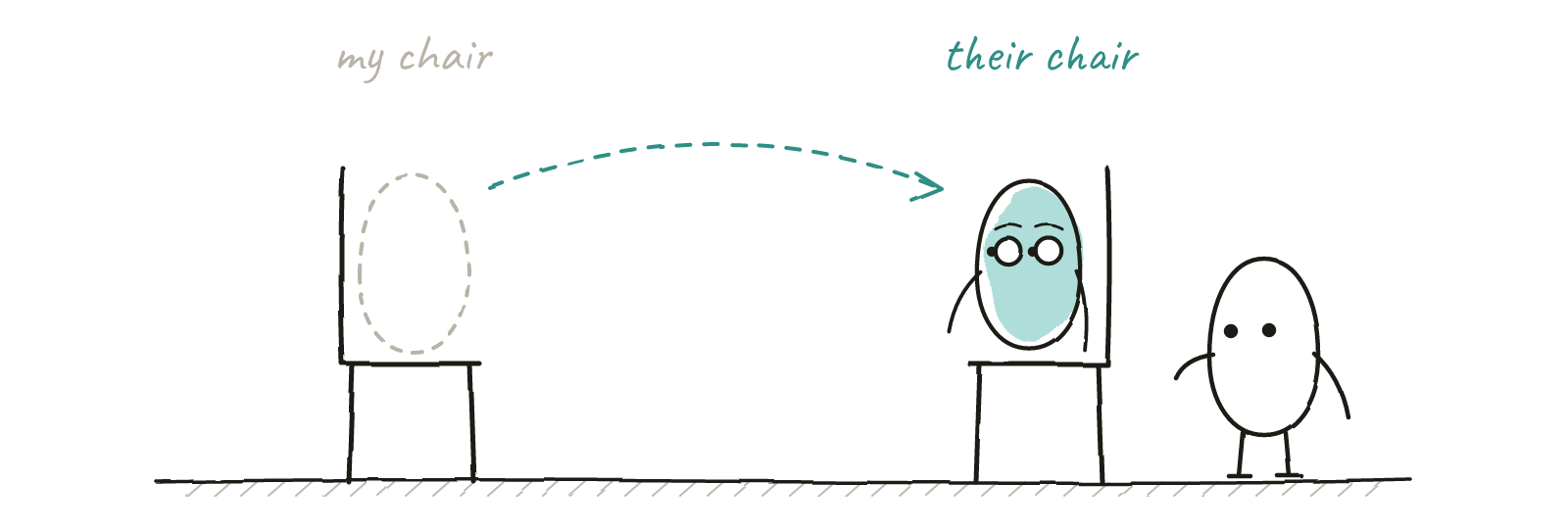
Swap roles with your opponent. Think of an ongoing fight, maybe with a team member or a family member. You likely assume whatever they say is wrong. Now imagine the whole thing from their side. They are not evil or a fool. How do they feel when you disagree? What are they afraid of, and how do you make that fear worse? Do they have good reasons, or good intentions toward you? Do this a few times, and your anger and irritation start to drop.
Be the third person. Complain about your opponent to a friend. Let it all out. Then switch sides and complain about yourself, from the other person's point of view. This makes you hear, and say, their case.
You can disagree with someone and still understand what they feel. Sometimes it matters more to listen without judging. And if someone signals they want to be left alone, respect that too.
Feelings come and go, but you stay
Expressing your feelings is healthier than bottling them up. Bottling up bad feelings adds to stress. And writing about feelings has been linked with better health in people who went through traumatic events. But expressing is not exploding. If you simply pop the top and let everything spray out, you never find the cause.
Do not try to fix everything at once. Pick one skill, like listening, and watch someone who does it well. How do they show they are listening? What words do they use?
And if the stress feels like too much to handle alone, get help. A psychologist, counselor or therapist can help you cope. Cognitive behavioral therapy, or CBT, is built to change patterns of thinking, and a professional trained in it is the best route. If you cannot reach one, there are books that teach it, and you can practice it on your own.
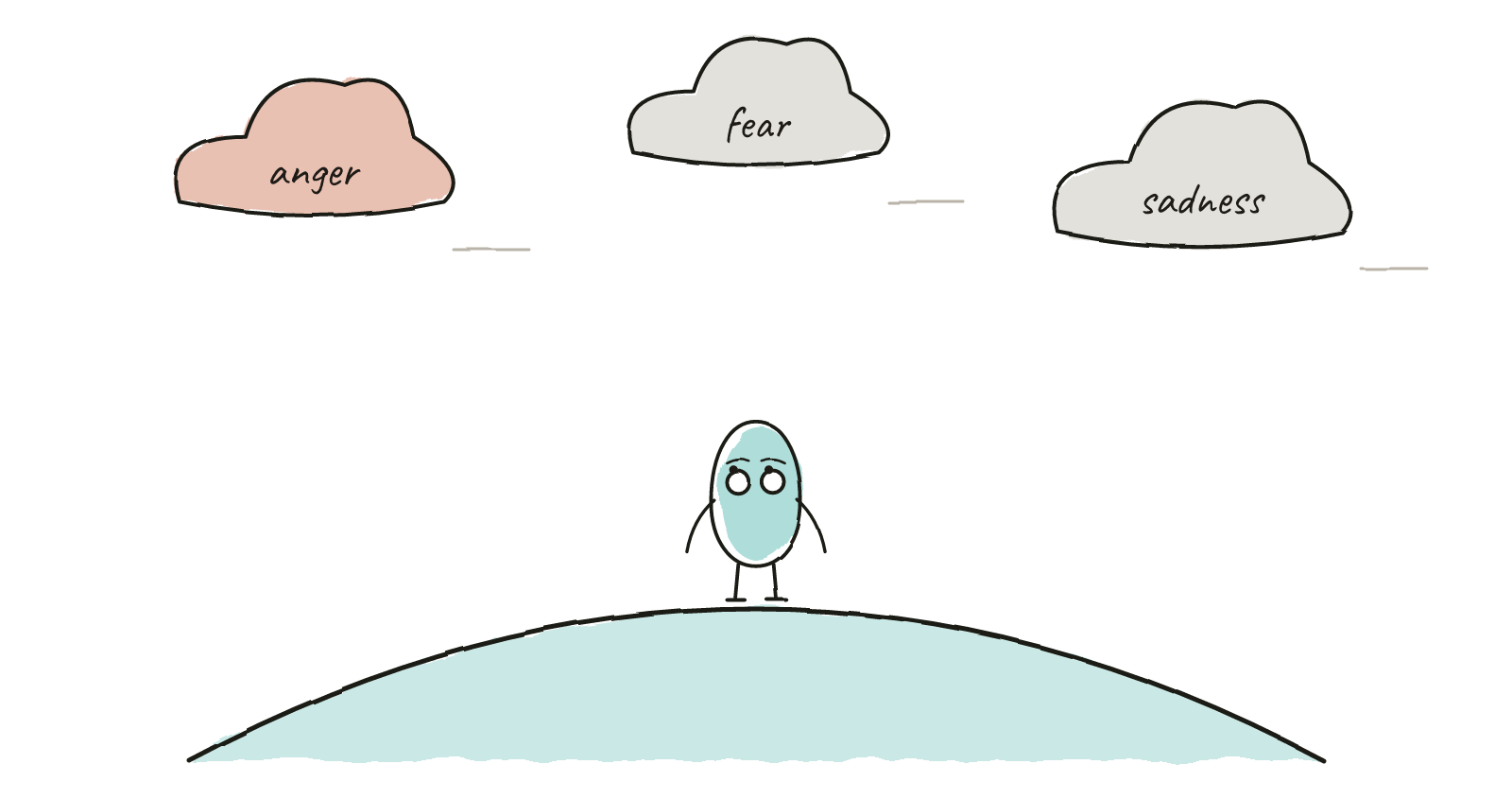
Your emotions are here to guide you. Learn what they have to teach, and then let them go. Do not cling to them, and do not mistake them for who you are. They come and go, but you stay.
Get the next one on Sunday.
A free weekly LongForm, in your inbox.