A LongForm
How to Influence People by Jack Skinners
People decide whether to trust you long before you finish your point. Most of what moves them happens around the words: in what you notice, how you listen and how close you stand.
October 4, 2026
Two people describe the same few seconds on a dark street.
The first was walking with friends. A large, muscular man came out of a bush and moved toward them as if to attack. At the last second he changed his mind and walked past.
The second was the man from the bush. He had dropped his keys in it. He searched until he found them. Then he jumped out onto the street, happy, and ran for home, because he had a date to get ready for. On the way he nearly bumped into a group of frightened teenagers.
Same street. Same moment. Two stories.
The first story dwells on the man's size, because size is what scared the teller. The second never mentions anyone's size at all. Each story tells you more about the teller than about the street.
People leak what they care about like this all the time, in their words, their faces and the distance they keep. Learning to notice it is where How to Influence People begins, and it is what this LongForm teaches. It works in two directions: it helps you earn trust, and it helps you spot the moment someone starts working on you.
By the end, you will discover:
- how a joke, a story or one small word can show you what a person is worried about (1)
- why a single gesture proves little, and which groups of signals are worth reading (2, 3, 4)
- what the distance someone keeps from you says about how safe they feel (5)
- why trust has to come before you show how capable you are, and how listening earns it (6, 7)
- where lasting influence comes from, and why changing a habit takes more than a good argument (8, 9)
- where influence turns into manipulation, and the everyday tricks that cross that line (10, 11)
- why a sudden change in someone's usual behavior deserves a closer look (12)
People tell you what they care about without meaning to
A friend greets you with, "Hey! Did you get taller overnight?"
It sounds like friendly teasing, and it may be. But look at what the speaker noticed first. Out of everything about you, they picked your height. People tend to notice what they care about. A person who notices height so quickly may be worried about their own.
Jokes work like this too. Two teenagers sit down in a restaurant, and when the waiter comes, one of them laughs and says, "I want anything that costs a million dollars." To most people at the table, that is just a silly line. To a careful listener, it may hint at a kid who worries about money. Maybe the family is going through a hard time.
A joke can carry a hidden message. So can a story, as the two tellers on the dark street showed. When someone tells you about their day, notice which details they stretch out and which they rush past. The stretched details are usually the ones that touched them.
Even one small word can be a clue. "I walked" is a plain fact. "I quickly walked" adds hurry, and hurry has a reason: a person who hates being late, a dark street, bad weather. A word gives you a guess to check, not a final answer. You check it against the situation and against what the person's body is doing, which is where the next skill comes in.
Your body speaks before you do
The first thing anyone learns about you is not something you say. Before the first hello, they have already seen your posture, your face and the way you walked into the room.
In a job interview, the person across the desk is reading those signals from the moment you come in. You can say all the right words and still lose them if your body says something else.
Your body can do five jobs alongside your words:
- Replace them, like a wave instead of "goodbye"
- Stress them, like a fist on the table on the key point
- Add to them, like a warm face while you say thank you
- Repeat them, like a nod while you say yes
- Contradict them, like saying "I'm fine" while you turn away
The last job is the one people notice most. When your words and your body disagree, the listener may start to think you are hiding something, even when you are not.
Your tone of voice does the same work. A friend asks how you are, and you say, "I'm fine." Said brightly, it means you really are. Said flatly, it can mean "I am not fine, but I don't want to talk about it." Said heavily, it may be asking your friend to keep going.
So before you work on what to say, notice what you are already saying without words. Some small habits send the wrong message all the time. Glancing around while someone talks to you can make them feel you are looking for someone better. Checking your phone does the same. Slumping in your chair reads as low energy. A frown you do not know you are wearing can make you look hostile. A handshake that is too weak can seem unprofessional, and one that is too strong can feel aggressive.
Even one word can work against you. "I am sorry that your product didn't get you on time, but you know how the weather is." That does not sound sorry. The "but" cancels the apology and blames the weather.
One signal proves little, so look for groups
Once you know the body talks, it is tempting to read every gesture like a dictionary. Crossed arms mean defensive. A smile means happy. Stop there.
Research suggests body language is subtler and less certain than people once believed. Crossed arms can show someone closing off, nervous or unsure. But crossed arms with a real smile and a loose, easy posture can mean the person is perfectly relaxed. The meaning comes from the whole picture, not from one piece of it.
So read signals in groups, and against the moment. A few groups are worth knowing.
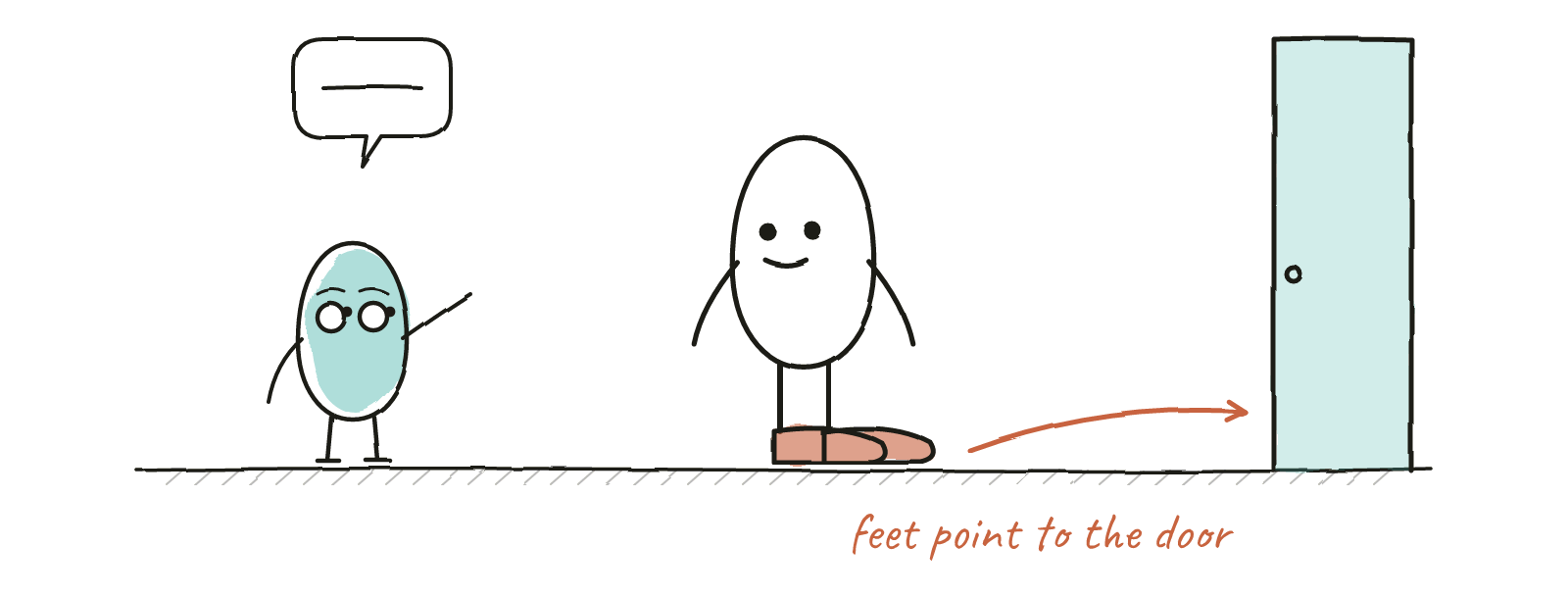
Where the feet point. People pay less attention to their feet than to their faces, so the feet can be more honest. The foot a person leads with tends to point toward whatever holds their interest. If you are talking and their foot is turned toward the door, part of them may want to leave.
Whether they copy you. People who feel close tend to copy each other's moves without noticing. This is called mirroring. If you rest an elbow on the table, wait about ten seconds and see if the other person does the same. Sipping a drink at the same time is another common one. Mirroring often means the person is trying to connect with you.
How fast they nod. Slow nodding while you speak often means they are interested and want you to go on. Fast nodding often means they have heard enough and want a turn to talk.
How they hold their hands. Holding a cup close with both hands, or gripping a pen, can be a way of comforting yourself. Wringing hands often means strong nerves. Someone who holds a stack of papers between you and them may be putting up a small wall.
None of these is proof. They are signs, and signs can mislead. The safest habit is to treat each one as a question. A foot pointing at the door should make you wonder whether they need to go, and maybe check. It should not convince you that they are bored of you.
Faces show the most when nobody is watching
The face is the first thing most people look at, often before they hear a word. It also carries feelings people are trying to keep in.
Lips pressed tightly together can mean someone is angry and does not want to show it. They can also mean the person is uncomfortable and forcing themselves to sit through it. A grimace, the twisted face of something that tastes bad, can mean strong dislike for what is being said.
But here, too, look for the other reason. Someone may grimace because the chair is hard, the room is stuffy or the person next to them is unpleasant. The face is real. Its cause may have nothing to do with you.
A real smile tends to use the whole face, not only the mouth, and it does not last long. A very wide smile held for a long time may be faked, or may be a smug half smile.
Fear can freeze a face. Picture a room listening to a talk about a frightening illness. Faces go still, as if someone pressed pause. Eyes and mouths stop moving while the scary part is described.
Most teachers know the look of a class when a surprise test is announced. Students may say they are ready. Their faces, with wide eyes, open mouths and lines across the forehead, often say otherwise.
Being watched changes faces too. When people know you are studying their faces, they tend to act the way they think they should, or freeze their reaction. Faces read best when people are simply being themselves.
The space between you is a message
Everyone carries an invisible bubble, and how close people let you come says a lot about how they feel. In the United States, people tend to use four distances when they talk face to face:
- Intimate (very close), from touching up to about two feet. Hugs, holding hands, private talk.
- Personal, from two to four feet. Family and close friends.
- Social, from four to twelve feet. Work, meeting new people, groups.
- Public, twelve feet or more. Two strangers on a park bench usually sit at opposite ends.
Culture changes these numbers. People from different places have different ideas of how much space is right.
Being let into someone's personal space usually means they trust you not to hurt them. Being let into their intimate space means they trust you a great deal. That is why a mother holds her baby close, and why two people in love lean in until their faces almost touch.
Watch what happens to the distance during a hard moment. If you argue with a partner or a child and they step back, they may no longer feel safe with you that close. If you sometimes lose your temper, the people you love may keep you at social distance as a habit. Your past behavior shapes the space people give you today. Partners who argue but stay close send a different message. Each feels sure they can handle the other's strong feelings.
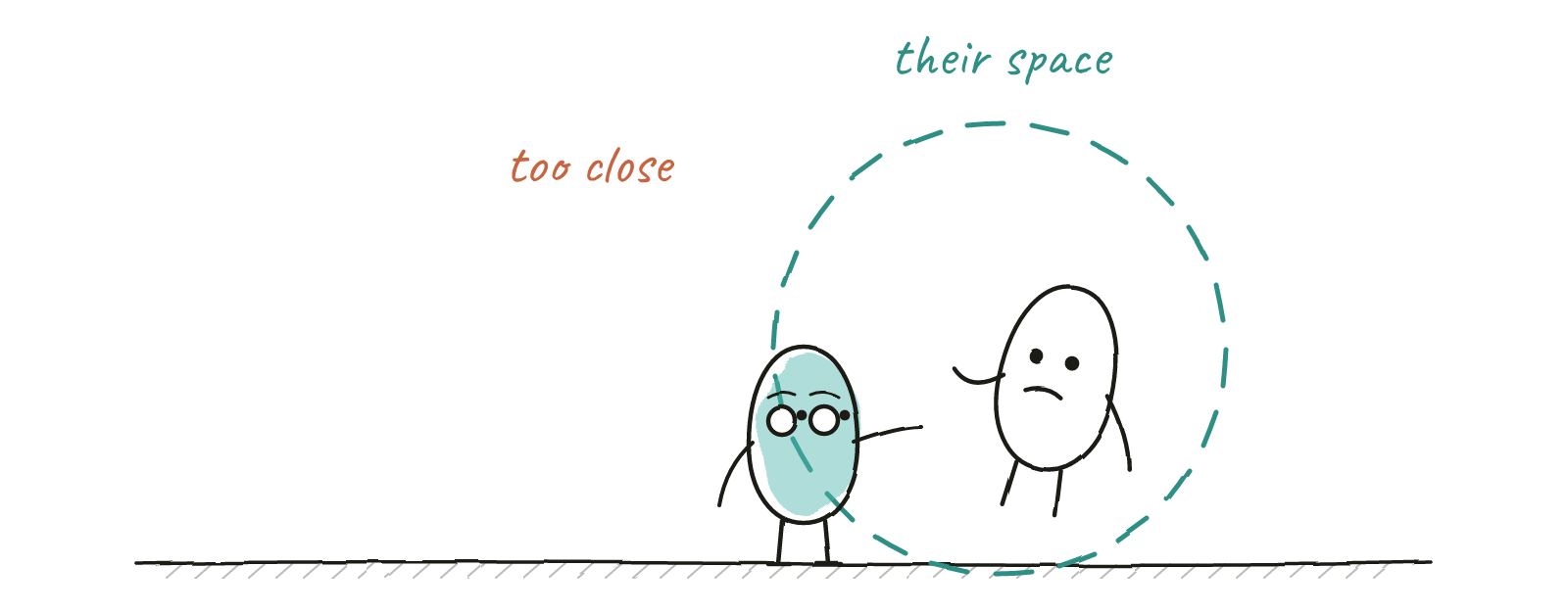
Distance has ordinary causes too. People step back from someone who is sweaty or has bad breath. They step closer to someone with a sore throat or poor hearing. And in a packed stadium or a cinema, nobody chose how close they sit. Read the space, then ask what else might explain it.
Trust comes before you look capable
When you meet someone new, it may take only seconds for them to decide whether you are trustworthy and capable. First impressions can be very hard to change. So the pressure feels high, and many people try to impress.
That is the wrong order. If you try to look strong before you have earned trust, it can backfire. People may respect you and still dislike you. And if someone does not trust you, you will get almost nowhere with them. You may even seem like you are trying to trick them.
A few habits put trust first.
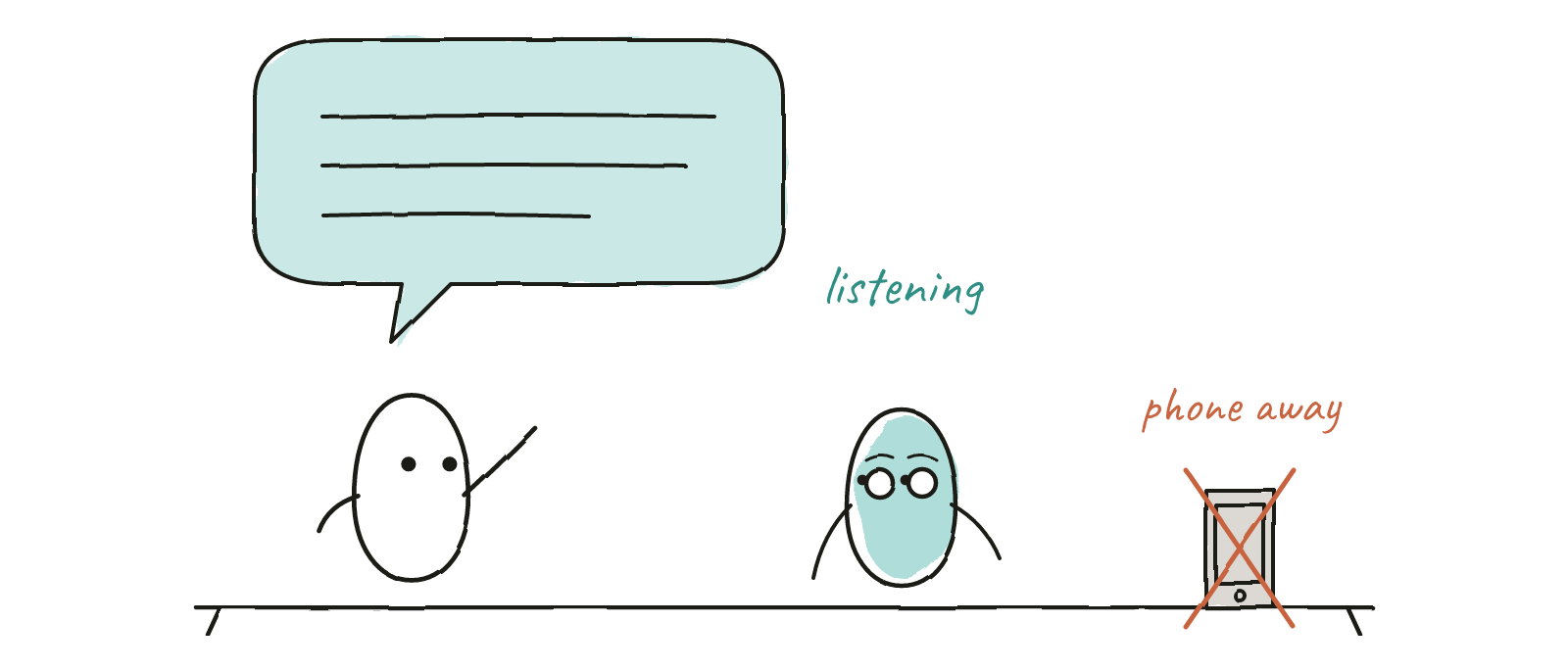
Let them talk first. Grabbing the conversation right away shows strength, and strength is not what builds trust. Warmth grows when people feel understood, and they need to do a lot of the sharing for that to happen. Good questions help them along.
Put your phone away. A glance at a screen in the middle of a talk turns people off fast.
Make time for small talk. It can seem like a waste of time. Starting a meeting with just five minutes of easy chat tends to improve the results.
Listen with your whole attention. That means following what the other person says, instead of planning your next line. It also means not jumping in with a fix. Wanting to help is natural. But an answer given too soon can make the other person stop talking, and the trust breaks.
Do your homework. Before a planned meeting, like a job interview or a first talk with a client, learn what you can about the person and their work. It shows you care enough to prepare.
Your body helps here too. An eager tone, open arms, steady eye contact and leaning in slightly toward the speaker draw people toward you.
Listening persuades more than talking
Many people think persuasion is about talking well. A lot of it is about knowing when to be quiet.
When you listen closely, the other person feels you value their time. They also tell you what matters to them, which is the only thing you can build on. Listening is one of the keys to persuading people. Even while you are quiet, your face and body keep showing that you care.
Connection matters next. The ancient Greek thinker Aristotle saw that people are moved by a mix of three things: trust in the speaker, reasons that make sense and something that touches their feelings. Leaning more on feeling tends to help you reach more people. One way to connect is to match the other person a little, in tone, pace and energy. When people sense you are alike, trust grows.
Praise helps, as long as it is real. If you fire your ideas at someone without ever showing you value them, they may feel small, and a person busy defending their pride is not listening to you. Find something genuinely good about them and say it. Empty praise does the opposite: it damages your effort.
A few other tools help an honest message land:
- Repeat it. People filter out most of what reaches them. A message usually has to be seen and heard more than once.
- Help them picture it. A line like "can you imagine how happy you'll feel by buying this product?" lets a person see the result for themselves.
- Start with a yes. Agreement on something small, even the weather, builds the feeling that you are on the same side.
- Believe in what you offer. If you doubt your own message, the other person will feel it.
Each of these can be used honestly. Each can also be bent.
Lasting influence comes from what you give
Influence comes in four kinds, and not all of them are good.
Negative influence makes a team worse. It often comes from people who lean on their position or title and think mostly about themselves. People may obey them, but they do not want to follow them.
Neutral influence adds nothing and takes nothing. The person has the role, but does little with it, so others end up motivating themselves.
Positive influence makes the people around you better and happier. It takes purpose, energy and effort.
Life-changing influence is rare. Its mark stays on people for the rest of their lives, even after you are gone from their team. It usually takes years, often a whole life, of giving your time and care to others. Mother Teresa, Oprah Winfrey and Abraham Lincoln are often given as examples.
You can grow influence even without any power over people. Knowing your field well gives your ideas weight. Sharing useful information, clearly and often, makes people come to you. Real relationships, built before you need them, carry you through hard moments.
Thank people, and praise their work in public. Few things lift a person more than being held up as a good example.
Help people avoid looking silly in front of others. If someone says something embarrassing, change the subject before anyone notices, or treat it as nothing. People rarely forget being rescued.
Stay consistent. Keep your words and actions in line, and keep the same rules for everyone. People trust what they can predict.
And bring solutions, not only problems. People are drawn to someone who can untangle a mess.
Authority, the power to give orders, is the most obvious kind of influence. Everything above works without it.
To change what people do, change more than their minds
Suppose you want a group to start doing something new. The natural move is to explain why it matters. Sometimes that is enough. Often it is not, because a missing reason is only one of six things that can stand in the way. Picture a hospital where nurses, at the end of each shift, are asked to tell the next nurse how each patient is doing at the patient's bedside instead of at the desk.
- Personal motivation. Do they want to? If the new report feels like it takes too long, a good reason has to be shown, such as better contact with the patient.
- Personal ability. Can they do it? Talking in front of a patient and their family is harder than talking to a colleague. A simple, standard way to give the report makes the change feel possible.
- Peer pressure. Every group has a few people others listen to. Bring them in early. Left out, they can quietly sink the change.
- Strength in numbers. You do not need everyone at the start. You need enough committed people to carry the rest.
- Rewards and checking. What gets measured gets noticed. If the new habit counts in the yearly talk where a boss judges your work, people pay attention to it.
- The environment. Is there anywhere to sit in the patient's room? Small changes to a space can change what people do in it.
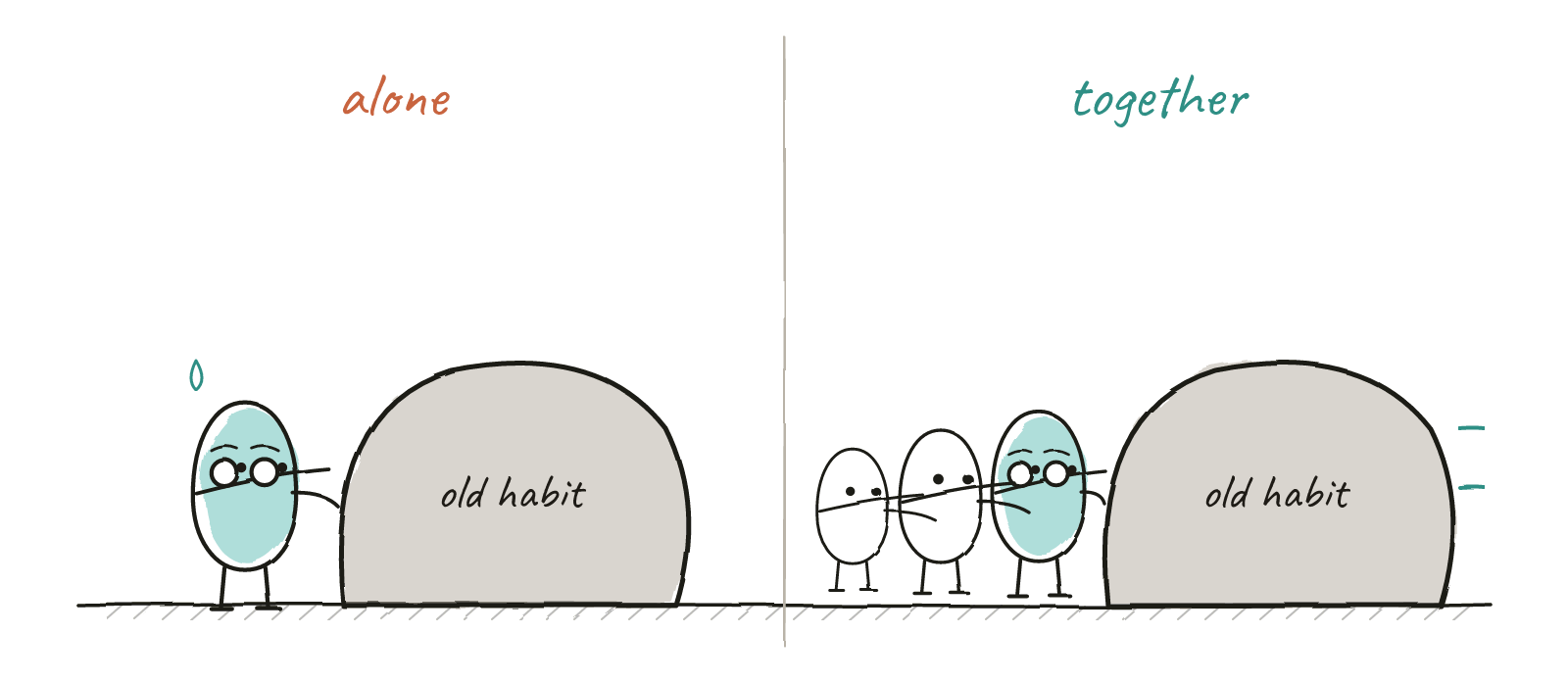
Underneath all six sits a simple fact about how people learn. Behavior that brings a pleasant result tends to be repeated, and behavior that brings an unpleasant one tends to fade. People also learn by watching and copying others. That is why children copy adults, and why ads so often show good-looking models. If you want a new habit to stick, make it rewarding, make it easy and let people see others doing it.
Influence works best when you set the stage for the change, not only argue for it.
Influence turns into manipulation when you can no longer say no
Every skill so far can be used to help or to take.
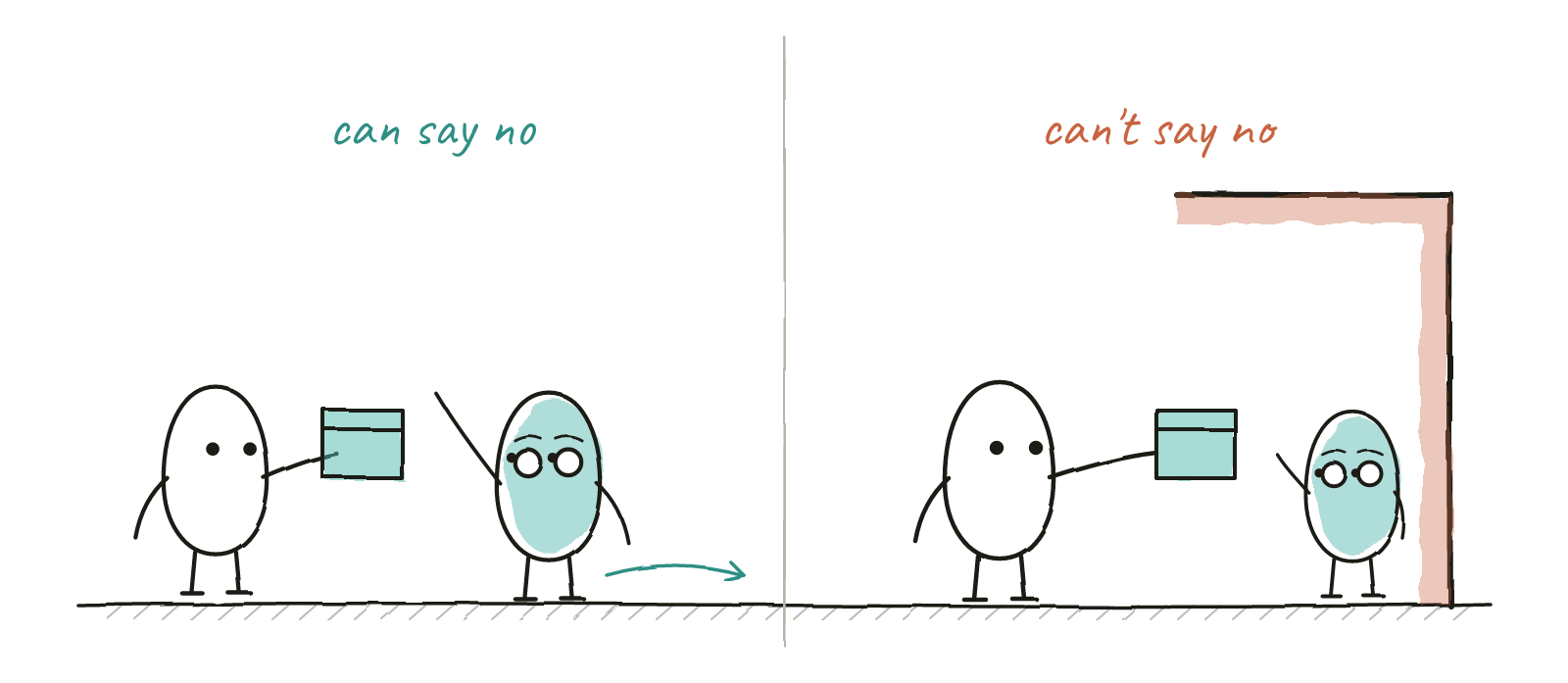
Manipulation is influence that uses hidden, lying or sneaky moves. It serves one person at another person's cost. Healthy influence leaves you free to choose. You can accept what is offered or turn it down, and nobody forces the decision. When that freedom is quietly taken away, the influence has turned dark.
People manipulate for different reasons. Some feel powerless in their own lives and need to feel in control. Some want power over others to feel better about themselves. Some are bored and treat hurting others as a game. Some barely notice what they are doing. Some have a hidden plan, such as getting at an older person's savings.
To succeed, a manipulator needs three things. A pleasant mask over what they really want. A sense of your weak spots. And no bad feeling about hurting you. That second point matters for you. Manipulators tend to look for certain people:
- people who find it hard to believe anyone in their life could be sly or cruel
- people so careful to be fair that they keep giving the benefit of the doubt, and take the blame themselves
- people low in confidence, who doubt their own experience and avoid causing trouble
- people who depend on others emotionally
- people who try so hard to understand the manipulator's reasons that they explain the harm away
If you see yourself in that list, it is not a flaw to be ashamed of. Kindness, fairness and a wish to understand are good traits. They simply need one guard beside them: the right to say no.
The tricks hide in ordinary places
Some manipulation lives inside relationships. You may already know a few of these moves:
- Love bombing: so much charm and attention at the start that it feels like the best friendship or romance you have ever had. When the person has what they want, they drop you.
- Minimizing: playing down what they did, and calling you oversensitive for reacting.
- Playing the victim: turning their wrongdoing into their suffering, so you feel responsible for fixing it.
- Diversion: changing the subject whenever the talk gets close to what they are doing.
- Guilt trips: telling you that you do not care about them, that you are selfish or that your life is easy, until you rush to prove otherwise.
- Isolation: keeping you away from friends and family, the people most likely to see through them.
Other tricks show up when someone wants you to buy or agree:
- A decoy. A shop sells a cheaper product and a more expensive one, and the expensive one is not selling. So a third option appears at the same high price, but clearly worse. Next to it, the expensive original suddenly looks like a deal.
- Fast talk. Speaking quickly in an argument gives you less time to think, so you are more likely to agree.
- Confusing numbers. A price of 400 pennies instead of 4 dollars makes you stop and do the math. And if you argue over the price, you argue in pennies, not dollars.
- The tired moment. A request made when you are mentally drained is harder to think through.
- Price last. Every benefit is laid out first, so by the time the number arrives, you already want the thing.
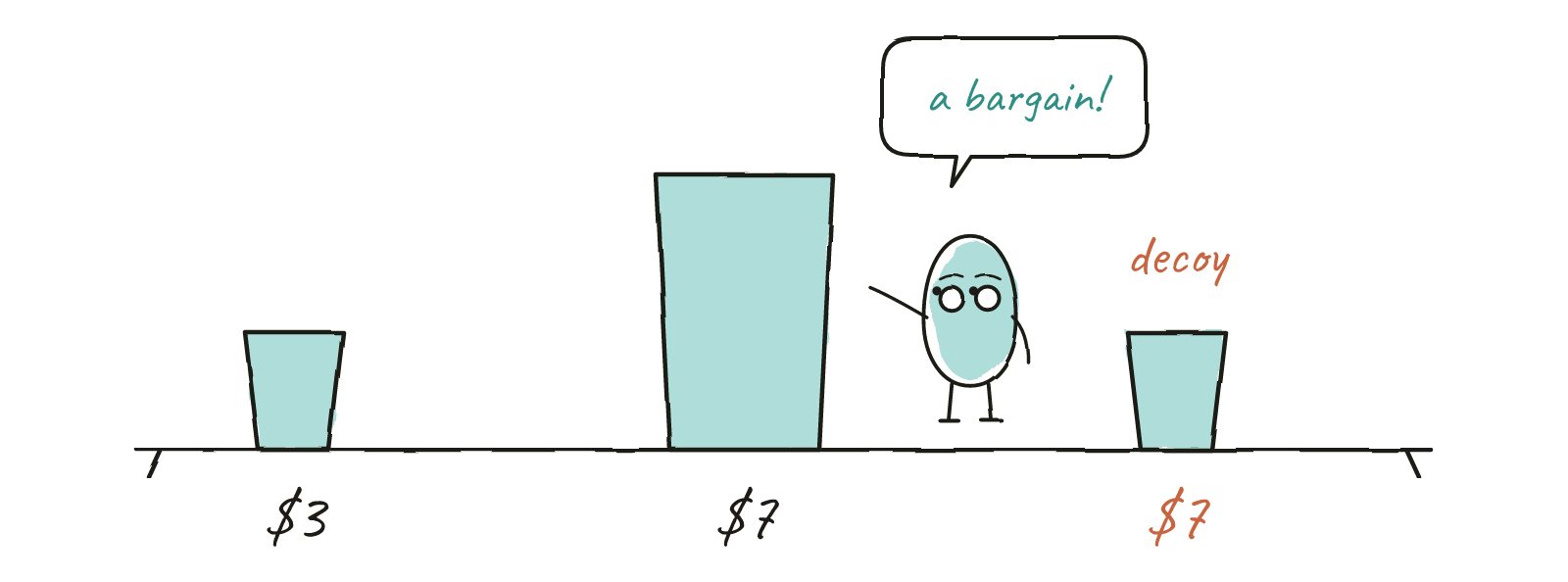
Seeing these written down does not make you safe from them, but it gives you something better than suspicion: a name. Once you can name a move, you can slow it down. Our own rule of thumb: "Let me think about it overnight" defeats fast talk and the tired moment. "What would this cost on its own?" defeats the decoy.
In romance, the best guard is set up before anything starts. A charming person who arrives right after a breakup, and seems to be exactly what you need, is not always a soulmate. Before your next relationship, decide what you want from it, how you want to feel in it and where your limits are. A clear picture lets you notice when things drift away from it, while you still have the strength to leave.
Notice when someone stops being their usual self
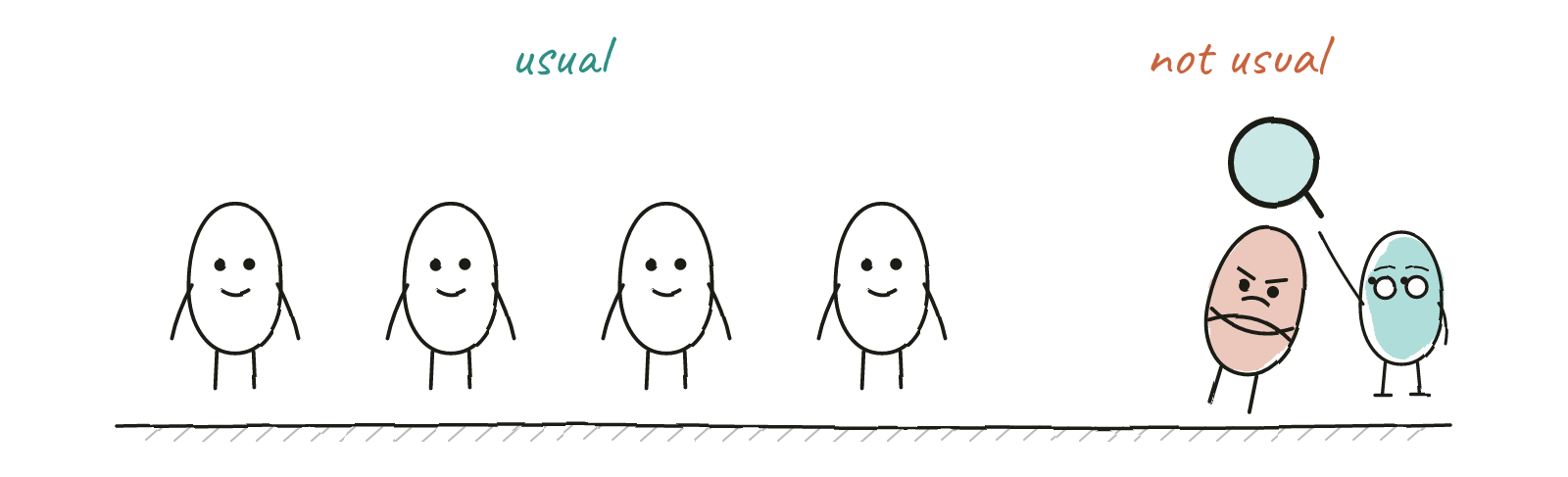
The most useful reading skill is not a list of gestures. It is a picture of how a person normally behaves, so you can see when that changes.
Picture a manager who always arrives early and leaves right at the end of the day. Then, suddenly, they start arriving late. Something has changed. You do not know what yet, and you should not guess. But the change is your cue to look more closely. When the moment is right, ask. Does it happen on certain days, in certain places or with certain people? Does it happen when money is involved?
A break from someone's usual pattern tells you far more than any single signal on its own.
Your gut helps too. Often you sense that something is off before your thinking mind can explain why. That feeling is worth listening to, especially when someone is pressing you to decide.
Mood matters as well. People in a good mood tend to be open and willing to help. People in a bad mood tend to close off. That is useful to know when you have a real request to make. It is also worth remembering when someone asks you for something big at your lowest moment.
And remember your own limits. Attention is limited. When you focus hard on one thing, you can miss what is right in front of you. Someone can even walk into the room without you noticing. Reading people well means slowing down enough to actually look.
The influence worth having is the kind people would choose
Everything here points the same way. Influence lasts when it is built on strong relationships. People go along with you because they want to, and they could walk away if they chose. That is also the clearest test of manipulation, used on you or by you.
So use what you notice to understand people, not to corner them. And when you notice someone using it to corner you, you will know what you are looking at.
Get the next one on Sunday.
A free weekly LongForm, in your inbox.