A LongForm
Flow by Mihaly Csikszentmihalyi
The happiest hours of a life are rarely spent resting. They are spent completely absorbed in something hard, and that kind of absorption can be learned.
November 8, 2026
Rico Medellin's job on an assembly line took forty-three seconds. Then he did it again. Almost six hundred times a day, for more than five years.
Most people would grow tired of a job like that very soon. Rico did not. He treated it the way an Olympic runner treats a race: how can I beat my record? He worked out a private routine for his tools and for every move of his hands. His best average for a day came down to twenty-eight seconds a unit. He rarely told anyone he was ahead. At top speed, the work held him so completely that slowing down was almost painful.
"It's better than anything else," Rico said. "It's a whole lot better than watching TV."
Rico is not a strange exception. He is a clear case of a state the psychologist Mihaly Csikszentmihalyi spent a quarter of a century studying, with thousands of people around the world. Many of them said it felt like floating, like being carried along by a flow, so that is what he called it. His book Flow answers the question Rico raises: why would a job most people find dull beat an evening of rest?
By the end, you will discover:
- why your best moments come when you are stretched, not when you rest, and why pleasure alone never makes you grow (1, 2)
- how your small supply of attention decides what your life feels like, and how worry steals it (3, 4)
- the exact point where flow happens, and what it feels like from the inside (5, 6, 7)
- how to turn a walk, a commute, a dull job or an empty Sunday into something you enjoy (8, 9, 10, 11)
- how to bring flow into love, friendship and even disaster (12, 13)
- how one purpose, sometimes born from a wound, can tie a whole life together (14, 15, 16)
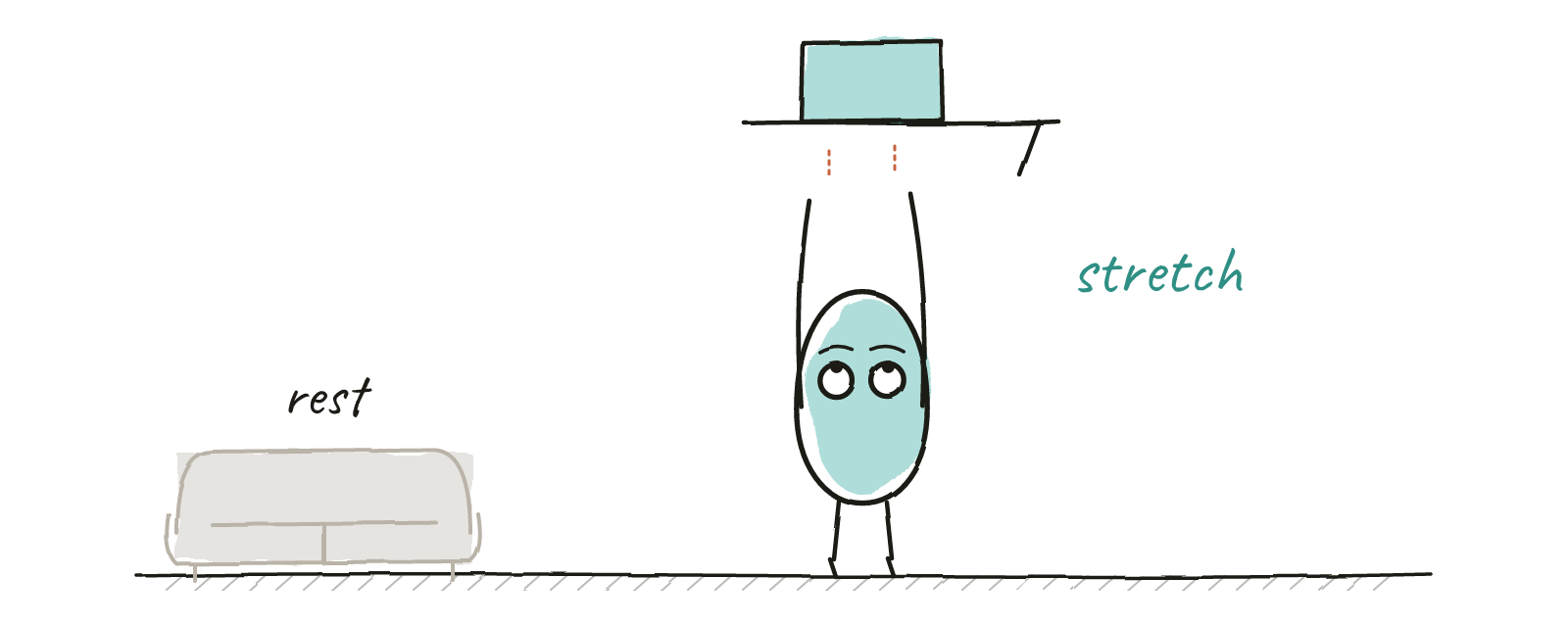
Your best moments come when you are stretched, not resting
A swimmer's muscles ache. His lungs feel ready to burst. And that race may turn out to be the best moment of his life.
Moments like that rarely come on a beach or a sofa. They come when you choose something hard and worth doing, and push your body or mind to its limit. A child places the last block on a tower, with trembling fingers, higher than any tower she has built before. A violinist finally masters a difficult passage. Moments like these do not land on you. You make them happen.
That is flow: a state where you are so involved in what you are doing that nothing else seems to matter. It feels so good that people will do it even at great cost, just for the sake of doing it.
It is not a quirk of a few lucky people. Experts, from surgeons to chess masters, described it. So did thousands of ordinary people, from old women in Korea to factory workers in Chicago, in almost the same words. Researchers even gave people a pager, a small beeper, that went off at random about eight times a day, and had them write down what they were doing and how they felt. Those snapshots turned up a surprise you will meet later: people were in flow far more often at work than in their free time.
You cannot get there by chasing happiness head on. "Ask yourself whether you are happy," the philosopher J. S. Mill said, "and you cease to be so." You get there by throwing yourself into the details of what you are doing, until happiness shows up on its own.
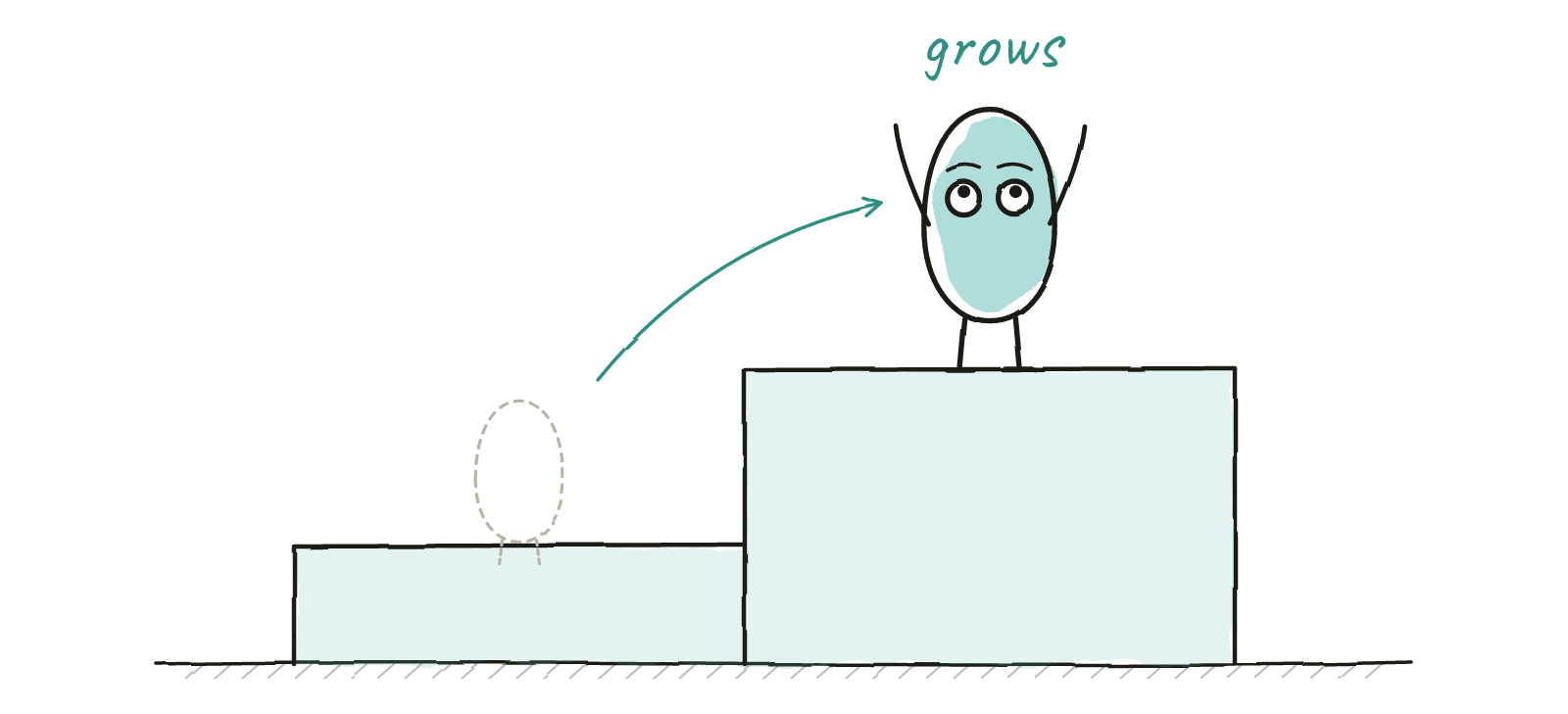
Pleasure refills you, but enjoyment makes you grow
There are two kinds of good feeling, and they are easy to confuse. Pleasure is what you feel when a need is met. Food when you are hungry. Rest after a long day. An evening on the sofa with a show and a drink. Pleasure matters. It puts you back in order when your body or your day has pulled you apart.
But pleasure does not make you grow. It refills the tank. It does not build a bigger one.
Enjoyment is different. It comes when you go past what you expected of yourself and do something new. A close game of tennis that stretches you. A book that shows you something in a new light. A conversation where you hear yourself say ideas you did not know you had. These may not feel pleasant in the middle. Afterward you think, "That really was fun." And you have changed a little. You can do more than before.
Here is a simple test. Pleasure needs no attention. A drug or a drink can give it to you while your mind is elsewhere. Enjoyment needs all of your attention. Everybody takes pleasure in eating. To enjoy a meal, you have to notice it: the tastes, the textures, the way the dish was made.
Small children enjoy things all day long; every new word is a challenge. For many people that joy fades, perhaps because school turns learning into a duty, and pleasure becomes the only good feeling left.
Some people refuse to let that happen. In a run-down suburb of Naples, an old man, Mr. Orsini, kept an antique shop his family had owned for generations. One morning a rich American tourist asked the price of a pair of carved wooden angels. He named an outrageous price. She got out her money, ready to pay at once.
He walked her out of the shop. He would not sell.
"If I were starving, I would have taken her money," he explained afterward. "But since I am not, why should I make a deal that isn't any fun?" What he loved was the bargaining, the clash of wits. She had not even flinched at the price.
Money also matters less than people think. In one study, very wealthy people, taken from a list of the four hundred richest Americans, said they were happy 77 percent of the time. People of average wealth said 62 percent. A real difference, but not a large one. And not one of the very rich believed that money by itself guaranteed happiness.
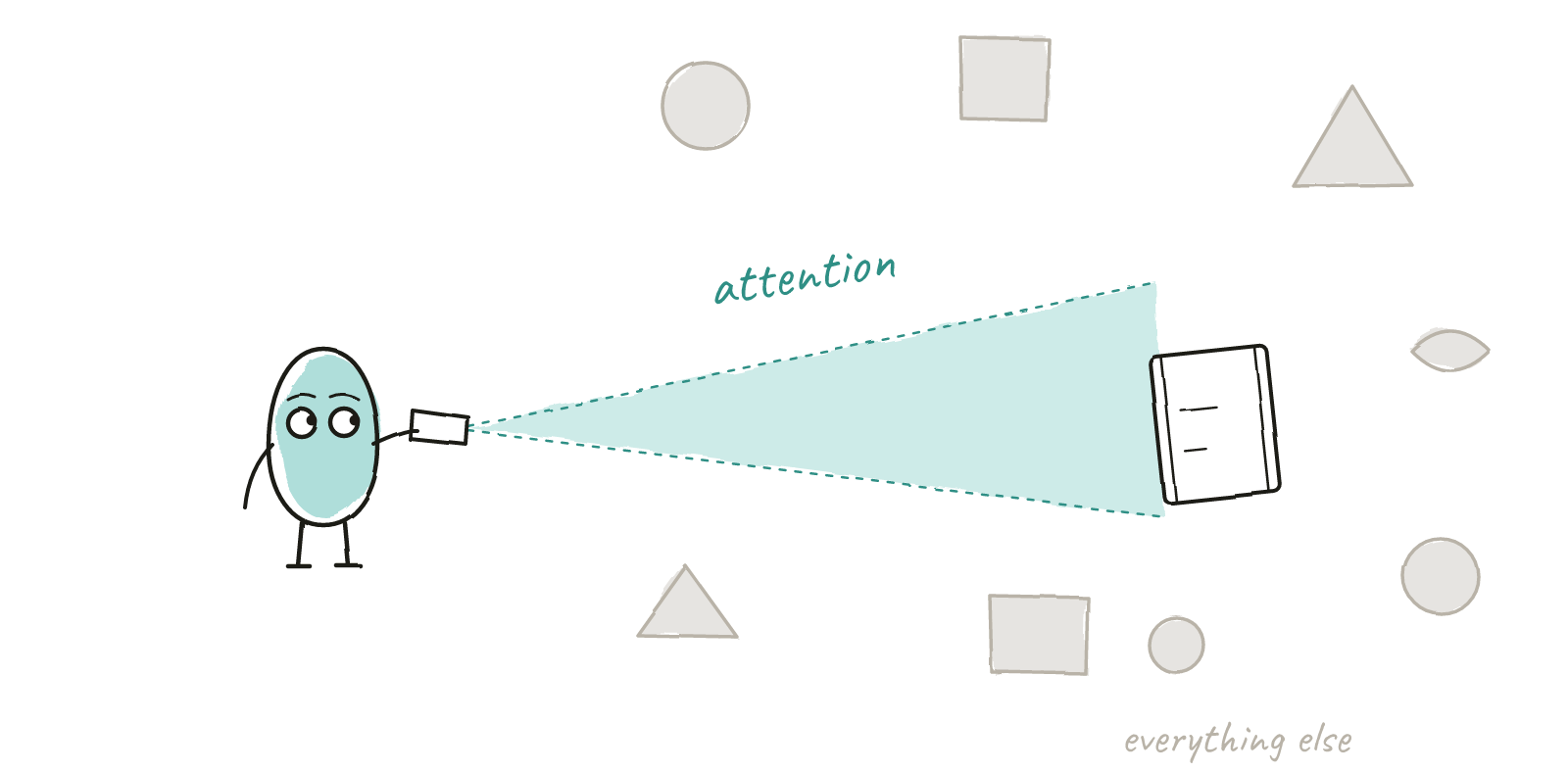
Your attention is small, and where you spend it becomes your life
Your mind can only take in so much at once. By one rough estimate, it handles at most about 126 small pieces of information a second. Just following one person who is talking to you takes about 40 of them. So at best you could follow three people talking at once, and only by noticing nothing else at all: not their faces, not their clothes.
Over seventy years, with sixteen waking hours a day, that adds up to about 185 billion pieces. The numbers are rough guesses, but every thought, memory, feeling and action of your life has to come out of that one limited supply.
So what you let into your mind is not a small matter. It decides what your life is like.
The tool that chooses is attention. Think of it as energy. Without it, no mental work gets done, and every bit of work uses some of it up. You decide where it goes, and by deciding, you shape who you become.
Watch three people walk into the same party. The outgoing one finds people to talk to. The ambitious one finds useful business contacts. The fearful one finds signs of danger. Same room, three different parties.
Attention can be trained to astonishing levels. Some sailors from Pacific islands could be taken blindfolded far out to sea, up to several hundred miles from home. After floating for a few minutes, they could tell where they were from the feel of the currents.
Attention also shapes the self over time. At fifteen, a boy named Sam Browning had no idea what he wanted to do with his life. On a Christmas trip to Bermuda, his father took him diving on a coral reef. Sam could not believe his eyes. He took biology classes, then more, and was on his way to becoming a marine scientist. First, a chance sight caught his attention. Then his new goals told his attention where to look.
People in control of their minds share one skill. They can focus at will, ignore distractions, and concentrate for as long as a goal requires, and no longer.
Most people spend their spare attention cheaply. About a third of the day is free time. For American adults, almost half of it goes to television, where people report some of their lowest levels of concentration, skill and clear thinking.
A worry is information that fights your goals
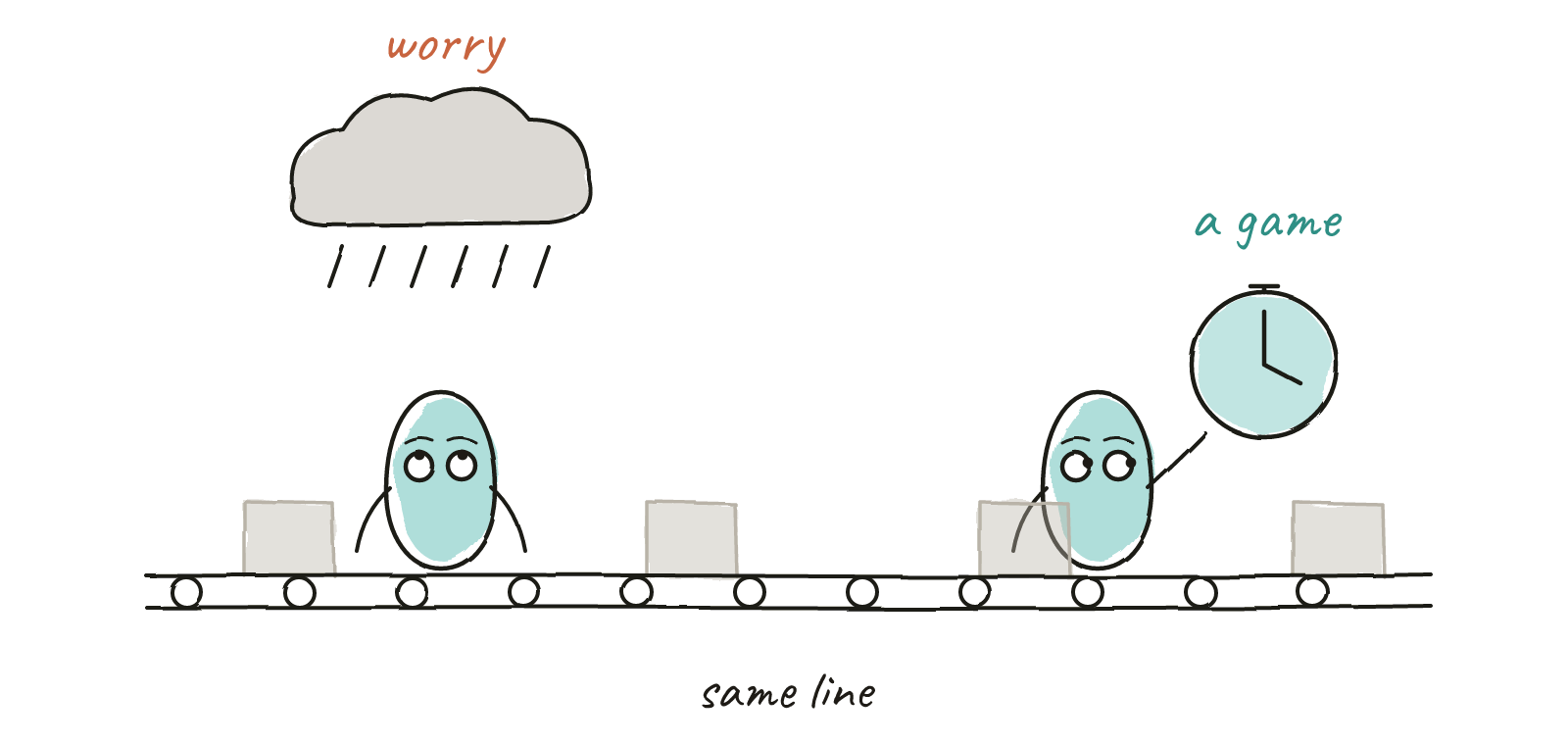
Rico was not the only worker studied in that factory. Further down the same line stood Julio Martinez, joining wires on movie projectors as they passed.
One evening Julio noticed that one of his tires was low. By morning it was nearly flat. Payday was not until the end of the following week, and he could not afford to fix it. The factory was about twenty miles away, and he had to be there by 8:00 in the morning. So each day he drove gently to a gas station, filled the tire, drove fast to work, and filled it again before driving home.
After three days of this, the tire was so flat he could barely steer. All day the same questions kept breaking in. Will I make it home tonight? How will I get here tomorrow? He fell behind on the line. When a coworker teased him, he snapped back.
This is what disorder in the mind looks like. Some piece of information fights one of your goals, and your attention rushes off to defend it. The more the goal matters, the more attention it takes. Pain, fear, anger, anxiety and jealousy all work this way.
But the tire itself was just information. It was Julio's mind that decided how much of a threat it was. With a little money, or a way to borrow some, the problem would have been trivial. With a friend at work, he could have asked for a ride. With more confidence, he would have trusted himself to sort it out.
Flow is the opposite state. Everything coming into your mind fits your goals, so attention moves freely. That was Rico. He and Julio worked the same line, with very different minds.
Flow lives between boredom and anxiety
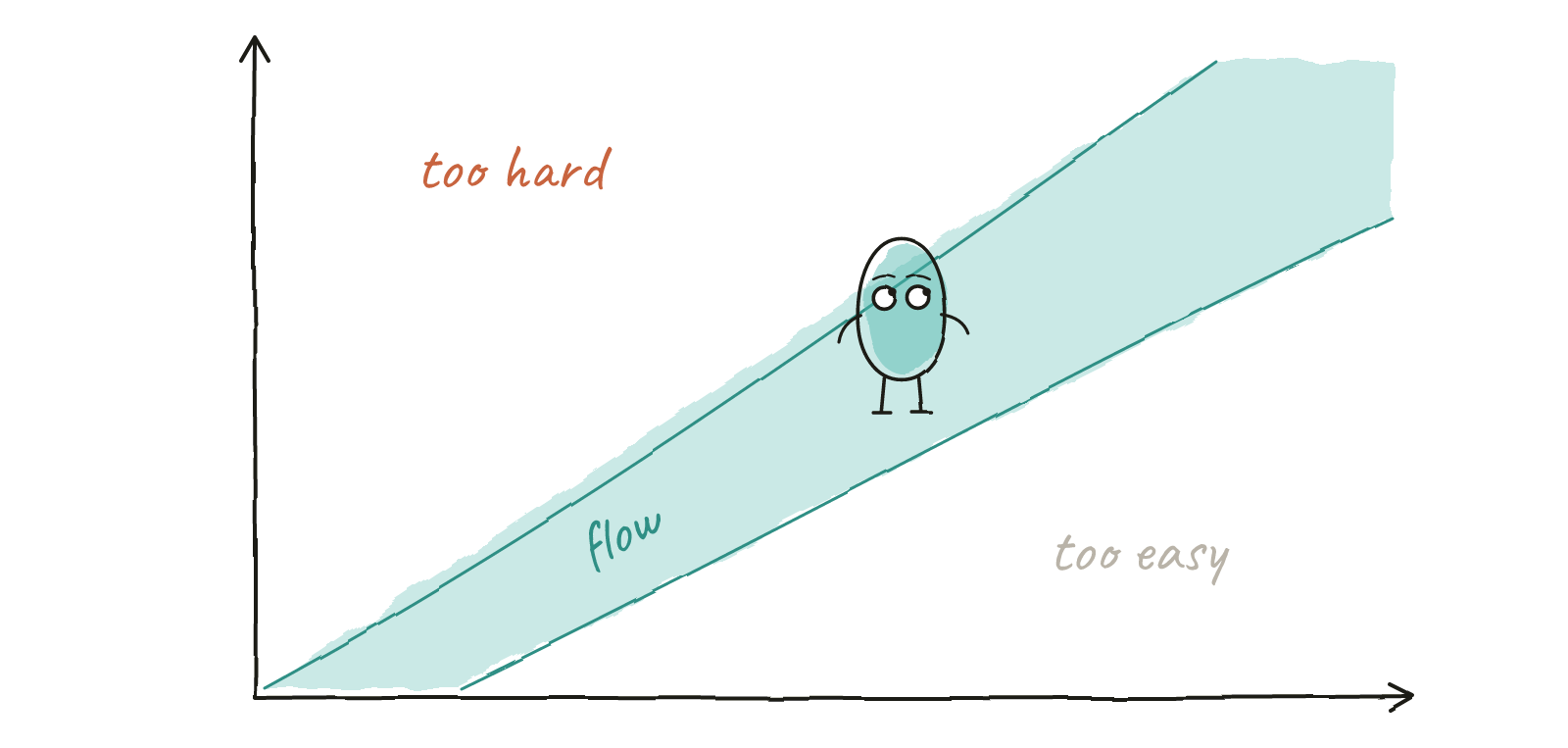
Flow appears at a very exact point: when the challenge in front of you matches what you can do. Think of tennis between a strong player and a weak one. The weaker player feels anxious. The stronger one feels bored. Neither is in flow. Music too simple for your ear bores you. Music too complex frustrates you. Enjoyment lives on the line between boredom and anxiety.
Even animals seem to know this. A hunting dog named Hussar loved to run circles around his owner in a field, daring him to catch him. When his owner was tired, Hussar ran tighter circles, so he was easy to touch. When his owner was fresh and willing to stretch, Hussar ran wider. The game stayed exactly hard enough for both of them.
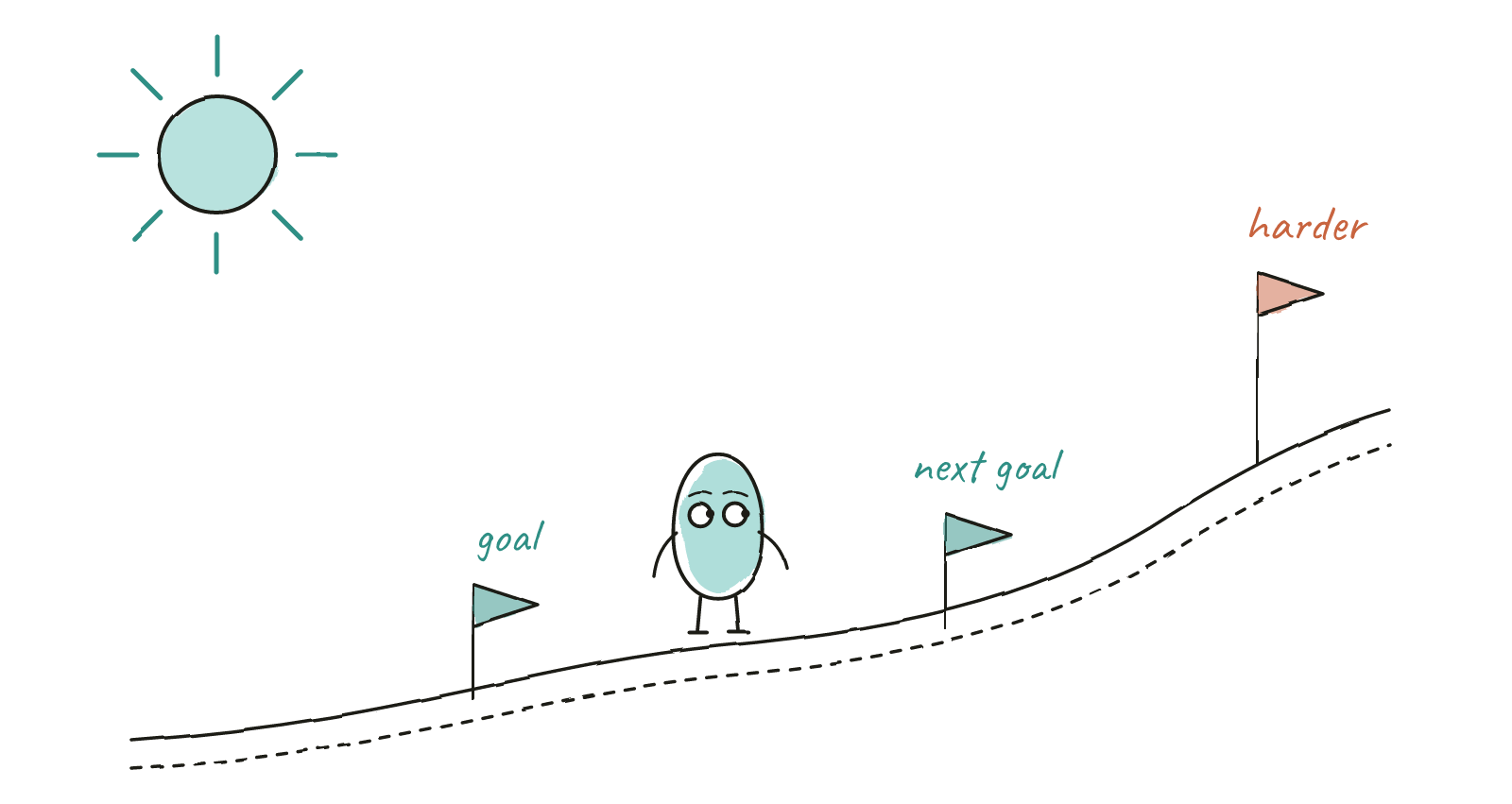
Now picture a boy named Alex learning tennis. At first he can barely hit the ball over the net. That alone is a fine challenge for him, so he is in flow. But he keeps practicing. Soon hitting it over is too easy, and he gets bored. Or he plays a stronger opponent and sees how much he cannot do, and he feels anxious.
Both feelings push him back toward flow. If he is bored, he needs a harder challenge, like an opponent a little better than he is. If he is anxious, he needs more skill. In theory he could go back to easier challenges, but once you have seen a harder game, it is hard to pretend you have not.
Each time he climbs back into flow, he is at a higher level than before. And he cannot stay there either. Soon he will be bored or anxious again, and the climb repeats.
This is the engine inside flow. You cannot enjoy the same thing at the same level for long. Boredom or frustration pushes you to stretch, and stretching makes you grow.
One warning. What counts is not the real challenge in front of you, but the challenge you see. And not the skill you have, but the skill you think you have. A professional athlete can play a whole game bored, worried about his contract. A parent can find more flow in raising a child than in playing a game, because they see challenges in it that others miss.
In flow you forget yourself, and come back stronger
When people describe flow, the same parts keep coming up. The task is one you have a chance of finishing. You can concentrate on it. Its goals are clear. You know at once how you are doing. Daily worries drop away. You feel in control. Your sense of self disappears. And time changes shape.
Clear goals and quick feedback make the deep focus possible. A tennis player always knows what to do: get the ball back over the net. Each shot tells her how she did. Creative work has vaguer goals, so you have to build your own sense of good and bad. A painter who enjoys painting can say after each stroke: "Yes, this works; no, this doesn't." Without that inner judge, flow cannot happen.
With that kind of focus, there is no room left for anything else. A climber said that while climbing, he remembered only the last thirty seconds. He thought ahead only to the next five minutes.
The control you feel is of a special kind: the sense that you can handle what comes, even though things could still go wrong. Climbers believe a famous Alpine peak, the Matterhorn, is safer than a busy New York street, because on the mountain their own skill counts for more. What people enjoy is using control in a hard situation.
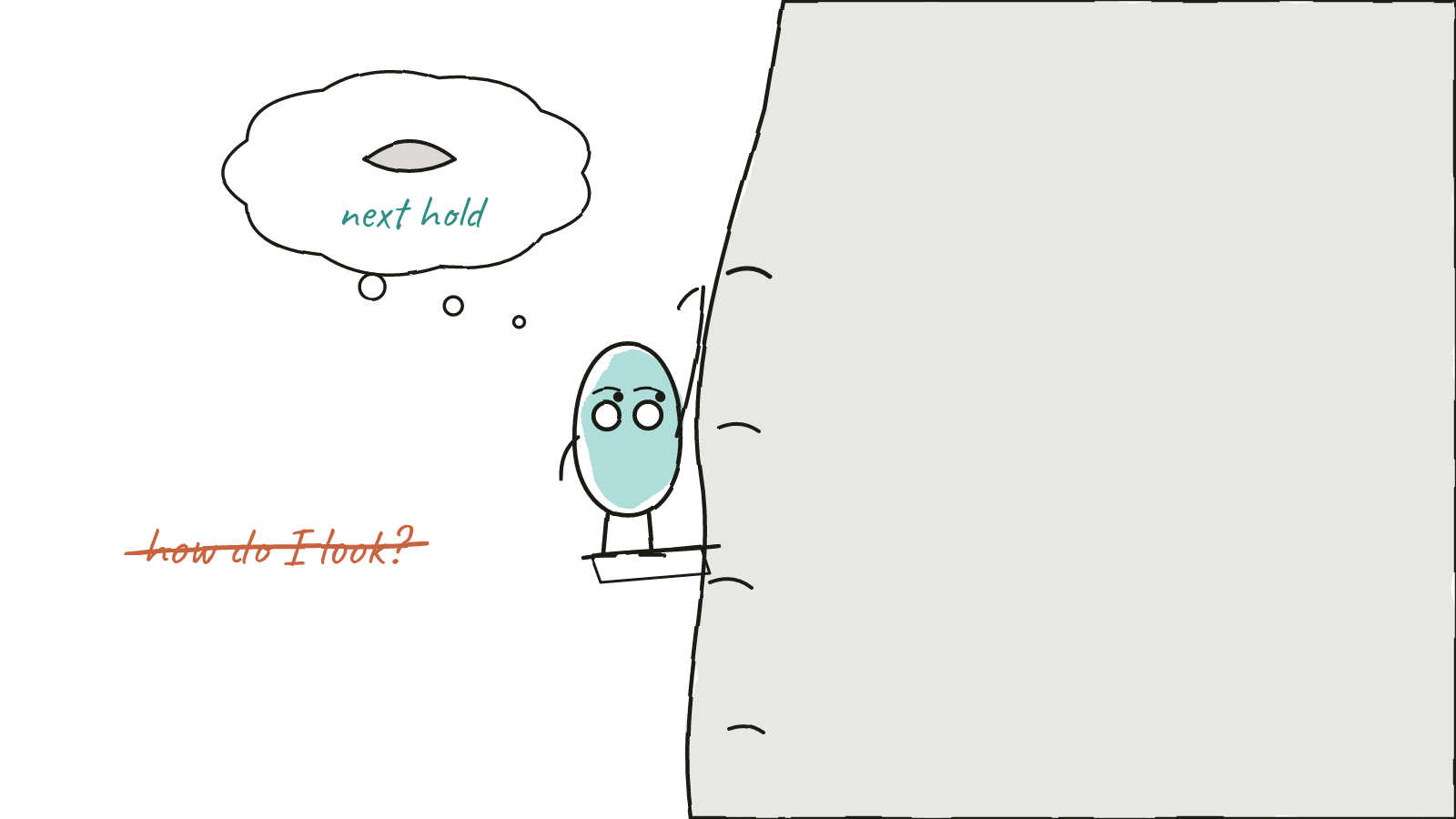
Then the self disappears. In everyday life you keep checking it. Walk down a street, see a few people turn and grin at you, and at once you worry. Is something wrong? Do I look funny? Is my face smudged? That happens hundreds of times a day, and each time it costs you attention.
In flow there is no room for those checks. A climber on a hard route is a climber and nothing else. Whether his face is smudged makes no difference at all.
This is not a dreamy, passive drift. A violinist in flow is aware of every movement of her fingers. What slips away is only your picture of yourself, the worry about who you are and how you look.
And afterward, that self comes back bigger. While you were lost in the task, you were stretching and learning. When you think about yourself again, you find someone with new skills.
Even time behaves differently. Most people say hours pass like minutes. A dancer looks up, sees it is one in the morning, and thinks it was eight just a few minutes ago.
When the doing is the reward, you stop living for later
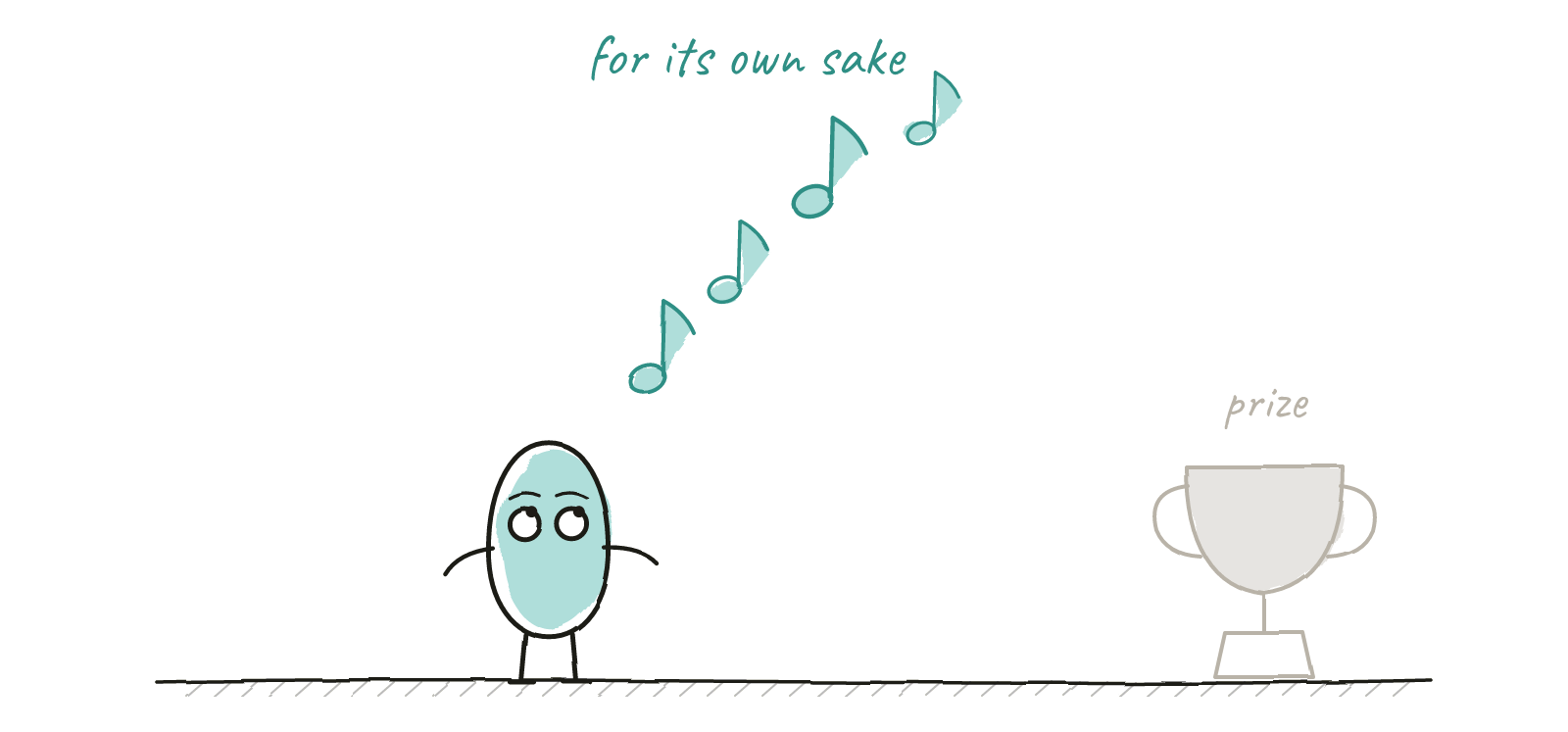
The heart of flow is that the activity becomes its own reward. The word for this is autotelic, from two Greek words: auto, self, and telos, goal. You do it not for what it will bring later, but because doing it is the point.
The same action can be either kind. Playing the stock market to make money is not autotelic. Playing it to test your skill at reading the future is, even if the money comes out the same. What changes is where your attention goes: to the activity itself, or to what it will get you.
Sometimes the love comes only after years of being forced. Picture a man who could hum an entire symphony, imitating each instrument in turn, whenever the work got dull. From the age of three, his father had dragged him to classical concerts. He was bored to tears, and sometimes a slap woke him in his seat. He grew to hate concerts.
Then one evening, at about seven, during the music that opens a Mozart opera, he suddenly heard how the music was built. A whole new world opened up in front of him. Those years of painful listening had quietly been building the skill he needed.
Most activities worth enjoying are not natural at first. They demand an effort you do not feel like making. But once they start to give feedback on your skill, they begin to reward you on their own.
So much of what people do, they do only because they must, or for some reward later. In flow, boredom turns into enjoyment, and helplessness into control. Your life feels worthwhile now, not held hostage to some later payoff.
Flow has a dark side, though. Like fire, it is energy, and energy can warm or burn. It can become an addiction: the chess champion Bobby Fischer grew so at home in the neat rules of chess that he turned his back on the messy real world. And it can serve harm: some burglars say nothing is as much fun as a break-in. Flow makes your life richer. Whether it is good for others is a question you still have to ask.
You can turn almost anything into a game
You do not need a mountain or a chessboard. Almost any activity can become flow if you give it the shape of a game. The steps are always the same:
- set an overall goal, and as many smaller goals as make sense
- find a way to measure your progress
- keep your attention on what you are doing, and notice finer and finer details
- build the skills the activity asks for
- make it harder when it gets easy
Take walking, the simplest use of the body there is. You can choose a route and the landmarks to see on it. You can work on a smooth, easy way of moving. You can measure how fast you went, how many interesting things you saw, how many new ideas came to you.
In a city, you can try the shortest route one day and the most interesting one the next. You can stay on the sunny side of the street in winter and the shady side in summer. You can time your crossings so the light turns green just as you arrive. Without goals like these, walking is just a chore.
The same holds for exercise. Many people feel they must work out, join an expensive gym, and have no fun at all. Enjoyment does not depend on what you do. It depends on how you do it.
In one study, free time that used costly gear or energy, like power boating, driving or watching TV, made people less happy than free time that cost little. They were happiest talking with each other, gardening, knitting or working on a hobby. Those cost little money but ask a lot of attention.
Your senses offer the same chance. A man who rode the elevated train to work in Chicago loved to look over the rooftops of the city. "Coming to work this morning was like coming through a Sheeler precisionist painting," he said, after a painter of rooftops in a crisp, clean style. He had trained his eye, and now even his commute was a pleasure.
With music, the difference is between hearing and listening. You hear background music in a shop. You rarely listen to it. People who get the most from music set aside time for it, dim the lights, choose what to play, and listen for something: a feeling, a picture, or how the piece is built.
A mind with its own rules is hard to push around
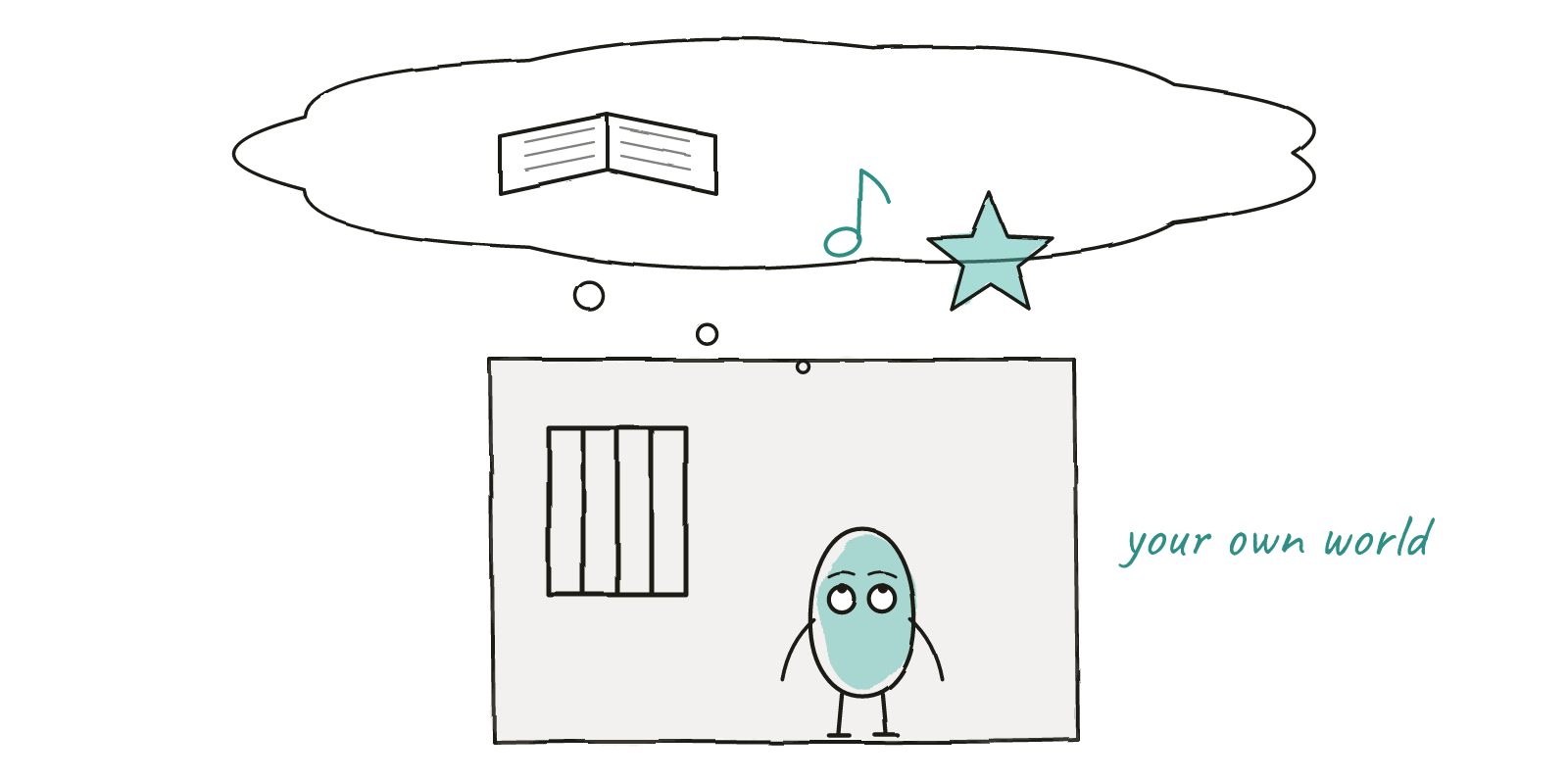
The mind left alone is not calm. Its normal state is chaos. Without training, and with nothing outside to hold it, most people cannot focus their thoughts for more than a few minutes. Left with nothing to do, attention drifts to whatever hurts: a pain, a grudge, an old frustration.
That is why so many hours go to television, even though people rarely enjoy it. The screen gives attention something to hold, at almost no effort, and keeps the worries out. You spend a lot of attention and have little to show for it.
The better answer is to carry your own rules inside your head. Memory is the oldest of these tools. One man, at seventy, could still recite passages of the Iliad, an ancient Greek poem about a war. He had learned three thousand lines of it by heart to finish high school. A mind stocked with poems, songs, sports statistics or formulas can always entertain itself. Pick a subject you love and learn the facts that matter to you. Learned because you chose to, they feel like yours.
Words work the same way. Do a crossword, or better, write your own. Read a few lines of poetry each night, the way you would work out to stay in shape. Keep a journal. Writing is not only for passing on information. It is how you create it, how you find out what you think.
Science is open to amateurs too. Gregor Mendel laid the foundations of genetics through a gardening hobby. Einstein wrote his most influential papers while working as a clerk in a patent office.
The word amateur comes from the Latin amare, to love. Dilettante comes from delectare, to find delight in. Both once meant someone who did a thing for the joy of it. Today they mean someone not quite good enough, because people now prize the performance over the experience.
Many people stop learning the day they leave school, glad to be free of it. But someone who stops using their mind is not free at all. Their thinking comes from the neighbors, the papers and the TV. Learn a body of knowledge well enough to use it, and you carry a whole world in your head that no one can take away.
Work gives more flow than free time, yet you wish you were elsewhere
In one pager study, over a hundred men and women with full-time jobs carried a pager for a week. Over 4,800 answers came back. Each time, people rated how big the challenges were and how much skill they were using.
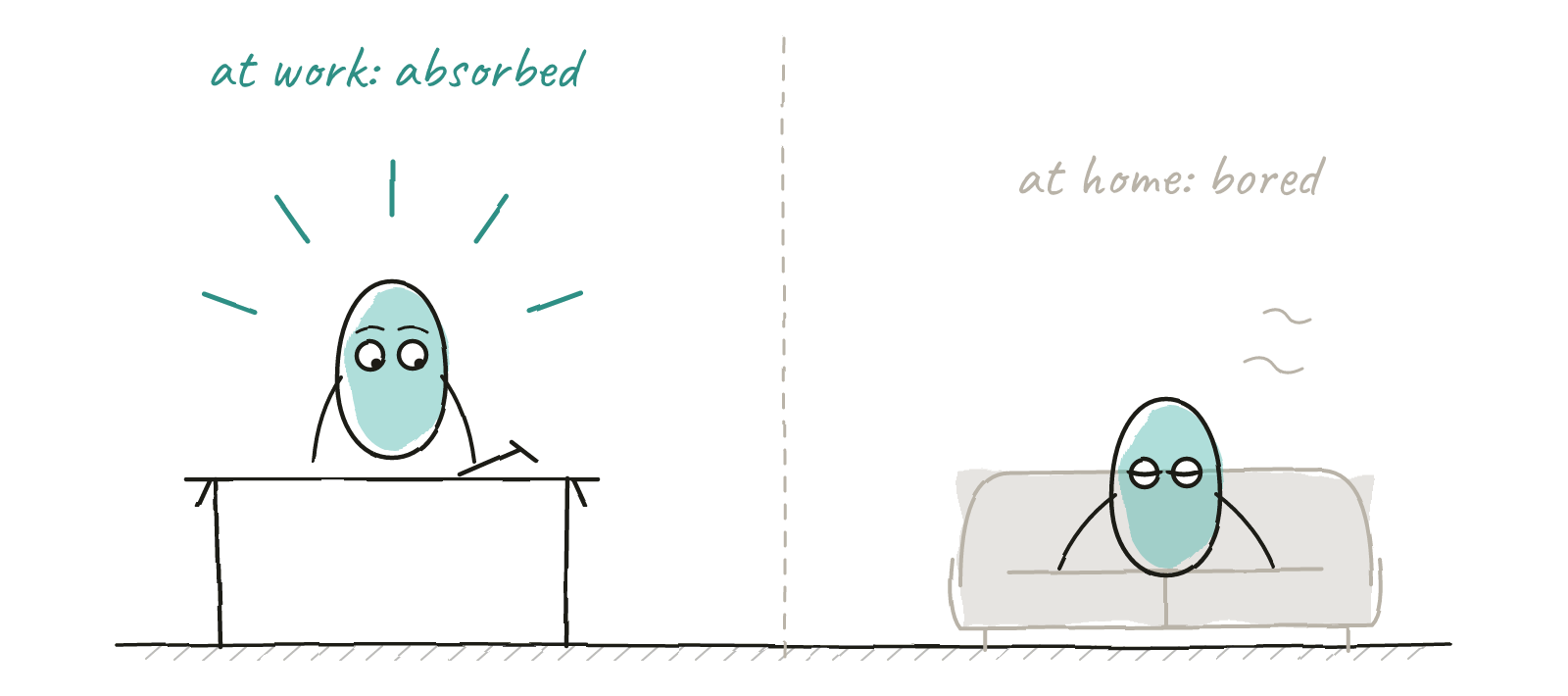
When people were actually working, they were in flow 54 percent of the time. In their free time, reading, watching TV, seeing friends or eating out, only 18 percent. Even assembly-line workers were in flow more than twice as often at work as in their free time, 47 percent against 20.
Yet the same people, asked whether they wished they were doing something else, said yes far more often at work. Even when work was giving them flow.
People do not trust the evidence of their own senses. They judge work by an old story: work is a burden, and time at work is time taken from life. So they count the good moments at work for less than they were.
Free time is actually harder to enjoy. A job has goals, feedback, rules and challenges built in. Free time has none, so it slides into passive watching unless you shape it.
Some people never split the two at all. In a tiny village in the Italian Alps, Serafina Vinon, seventy-six, still got up at five to milk her cows. She tended the orchard, combed wool for spinning, and carried hay on her head down from the high pastures. Asked what she would do with all the time and money in the world, she laughed, and named the same things again.
Or take Joe Kramer, a welder in a railroad car plant in South Chicago. Joe had left school after fourth grade. Over thirty years he had learned every job in the plant and could fix any machine in it. He turned down several promotions. As a boy, when his mother's toaster broke, he asked himself: "If I were that toaster and I didn't work, what would be wrong with me?"
At home, Joe built a rock garden and wondered whether his sprinklers could make rainbows. No sprinkler head made a fine enough mist, so he made one himself on a metal-shaping machine at home. Later he added lights, so he could make rainbows at night.
Most of his coworkers headed straight for the bars after work, then home to beer and television.
There are two ways to get more flow from work. One is to change the job so it looks more like a game, with variety, clear goals, quick feedback and challenges that can grow. The other is to change how you see it, as Serafina and Joe did: spot chances to act that others miss, build skills, and give the task your full attention.
What you do alone is the real test
The average adult spends about a third of waking time alone. Most people dislike it. Their worst moods come when they are alone with nothing they need to do.
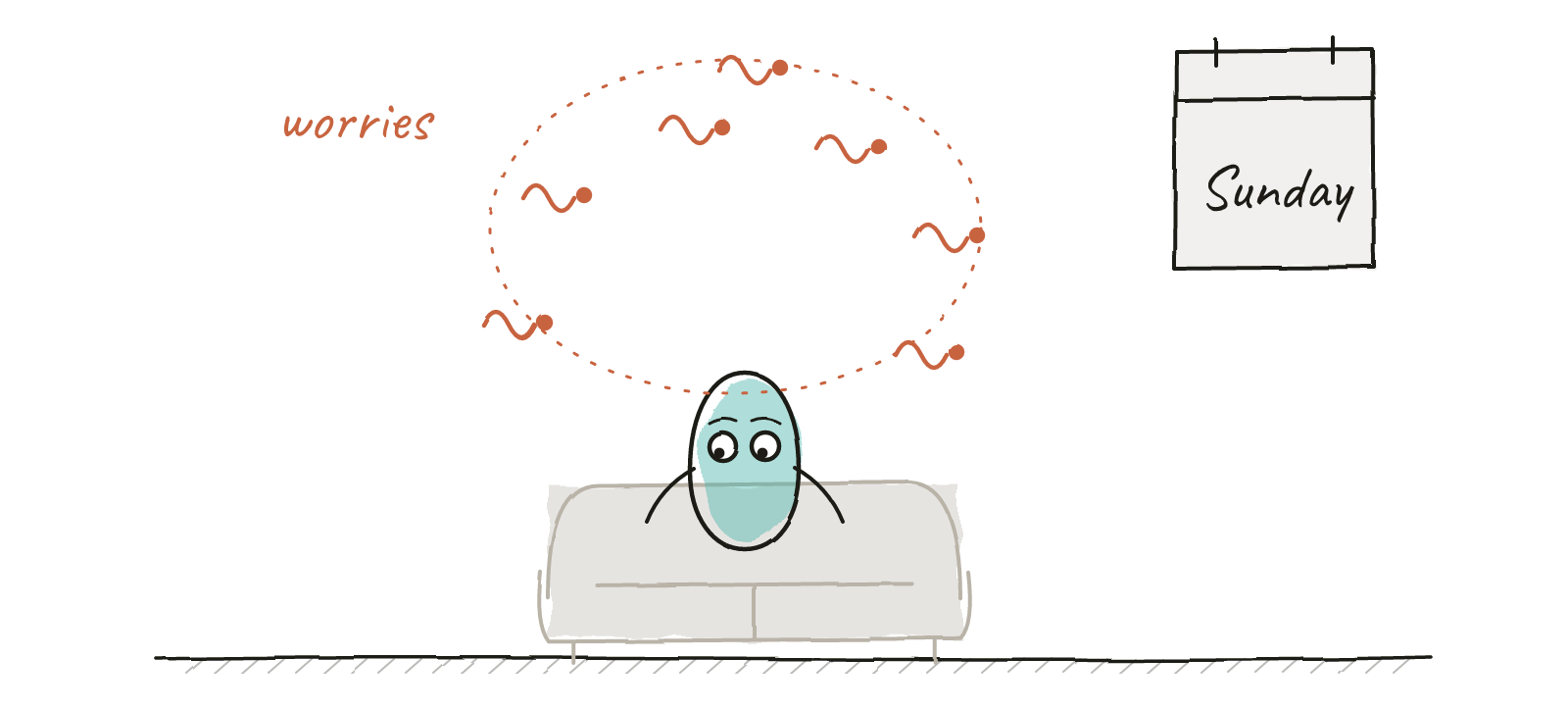
For people who live alone and do not go to church, Sunday morning is the lowest point of the week. Breakfast is over, the paper has been read, and nothing tells their attention where to go. By noon most decide something. Mow the lawn. Visit family. Watch the game. A sense of purpose comes back.
Keeping order in your own mind, with nothing outside to help, is hard. The moment there is no demand on attention, the worries waiting at the edge step in: love life, health, money, family, work.
So people grab order from outside. Television helps a little, even though people report feeling passive, weak and sad while watching it. Drugs make the world seem to ask less of you, and make you feel able to do less, until the two match. That is a cheap copy of flow.
That is why time alone is the real test. It is easy to be absorbed at work, with friends or at a show. What do you do when no one is giving your attention a job? Someone who rarely gets bored, and does not need perfect conditions to enjoy the moment, has passed.
People who live alone by choice build their own structure. Dorothy, a former nurse, spends each winter alone on a tiny island in northern Minnesota. Wolves have pressed their noses to her windows. She is up by five every day, checks the hens, milks the goat, splits wood, and spends the long evenings reading and writing.
Sometimes the effort gets comic. A sailor crossing the Atlantic alone met another small boat near the Azores. The other man's deck was covered in a stinking yellow mess. His fridge had broken and his eggs had gone bad. There had been no wind for days, and he was so bored that instead of throwing the eggs overboard, he smashed them on the deck so he would have something to clean. He had not expected the smell.
It is best to learn this young, but it is never too late. When the body slows down with age, you can finally read a famously long novel, take up chess, grow orchids, help a neighbor, think about God.
Love and friendship need the attention you give a hard game
People make you happiest and most miserable, often on the same day, because they are the most changeable part of your world. That also means your dealings with them can change.
Family life is where many people expect things to run themselves. Men especially work hard at their careers and want to switch off at home. Then one day the children are strangers. But a trumpet player cannot let more than a few days pass without practicing. A family is no different.
A family that gives flow has goals. Big ones, like building a home. And small ones: buying a sofa, a picnic, a game of Scrabble on Sunday afternoon. It has feedback, which here simply means people keep talking, so small tensions are caught early. When one family's oldest son turned ten and was upset by animals in cages, the family zoo trips stopped. The answer was to find new things to do together.
And it needs new challenges. Early in a romance, the challenges are obvious. Later, the other person becomes predictable. The only way to bring flow back is to find new challenges together: new places, new topics, and above all getting to know your partner at deeper levels.
Commitment helps. When you choose freely to commit, you stop wondering whether the grass is greener elsewhere. The energy spent on wondering how to live goes into living.
Children need the same conditions. In one study, teenagers were happier and stronger when their families gave them five things: clear expectations, real interest in their lives now (not only in their future college), choices, enough trust to drop their guard, and challenges that kept growing. They also need to know their parents' love does not depend on their performance. A child who fears losing that love spends energy protecting himself instead of playing. That does not mean no rules. It means rules with consequences, inside a love that is never in question.
Friends give the most positive moods of all. Young adults, and even retired people, report being happier with friends than with their spouses. But drinking buddies who say the same things every night offer comfort, not growth. A true friend is someone you can occasionally be crazy with. In adult life such friendships rarely happen by chance. You have to tend them like a job or a family.
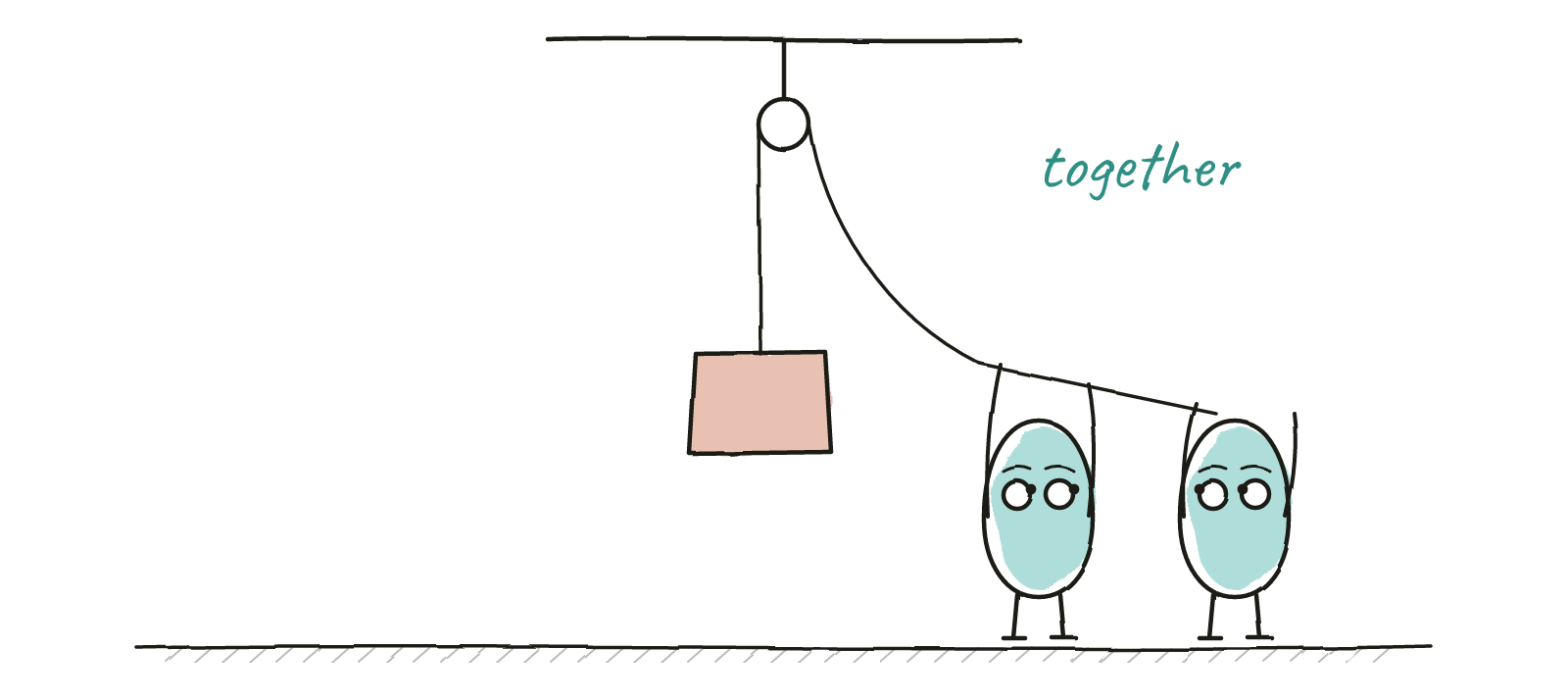
A disaster can become a clearer game
It would be too simple to say that a person who controls their mind will be happy whatever happens. A body can only take so much pain and hunger. Still, many people who have suffered terrible things go on to enjoy their lives.
Researchers in Milan studied young people paralyzed by accidents. Many named the accident as one of the worst events of their lives, and also one of the best. It gave them very clear goals and cut away choices that did not matter.
Lucio was a carefree twenty-year-old gas station attendant when a motorcycle crash paralyzed him from the waist down. He remembers his life before as aimless. Afterward he went to college, earned a degree in languages, and became a tax consultant. He became a regional archery champion, competing from his wheelchair. "When I became paraplegic, it was like being born again," he said.
Prisoners have found the same path. A pilot held for years in North Vietnam lost eighty pounds. When he was freed, he asked for a round of golf, and played superbly. Every day in prison, he had played eighteen holes in his head.
When people turn a disaster into a challenge, three steps keep showing up. First, calm trust in yourself, without making it about you. Picture a cold morning when you are late and the car will not start. Many people curse and pound the dashboard. But the car does not care that you are in a hurry. It follows its own rules. The calm move is to work with them, call a cab, or make a new plan for the morning.
Second, attention turned outward. People who handle hard times well spend little time thinking about themselves. They watch the world around them. On El Capitan, a huge rock wall in California, the climber Yvon Chouinard spent fifteen minutes watching a tiny red bug. Looking outward calms the storm inside you. It also shows you what is really wrong, like a flooded engine or a dead battery.
Third, a new solution. You can remove the obstacle, or you can step back and ask whether a different goal makes more sense. Think of two painters. One starts with a fixed picture and forces it onto the canvas. The other starts with a deep but open aim, and keeps changing course as colors and shapes appear. The second usually makes the better painting. A life is the same. Watch how events actually make you feel, and you may find that talking with your two-year-old beats golf with the company president.
The philosopher Bertrand Russell described how he became happy: "Gradually I learned to be indifferent to myself and my deficiencies; I came to center my attention increasingly upon external objects." The people who survive best have a strong purpose that is not about themselves.
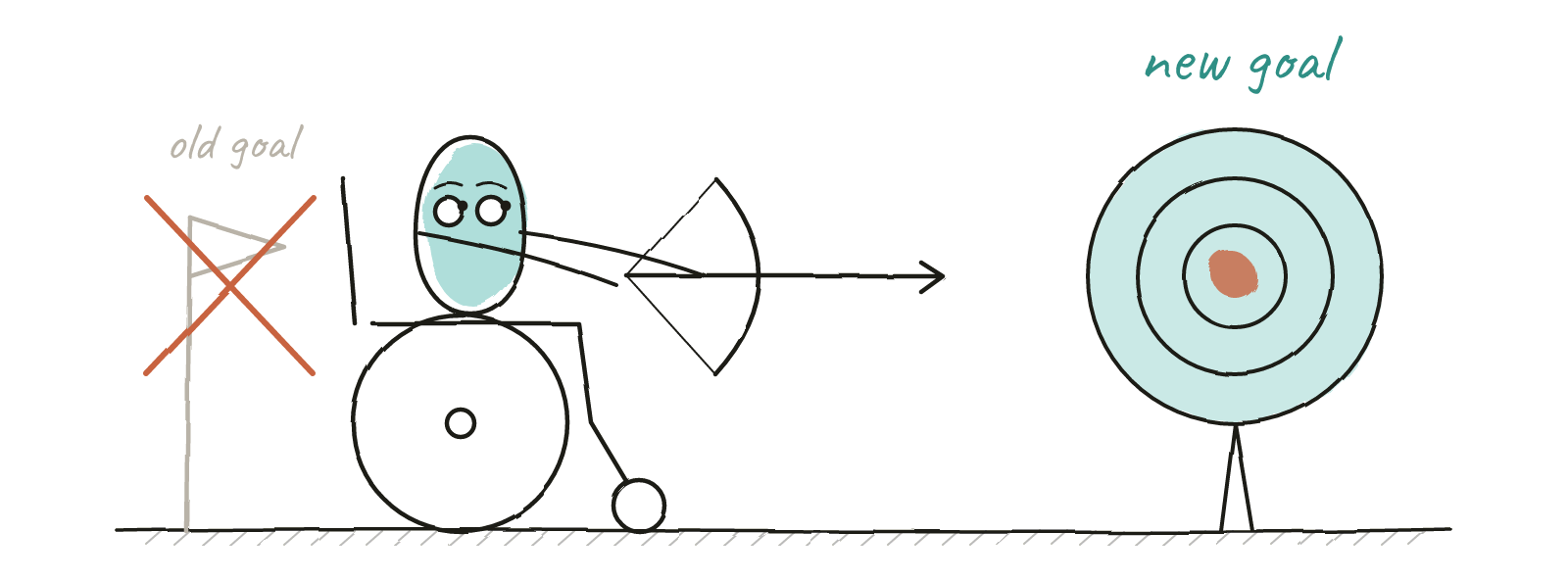
A life makes sense when one purpose ties it together
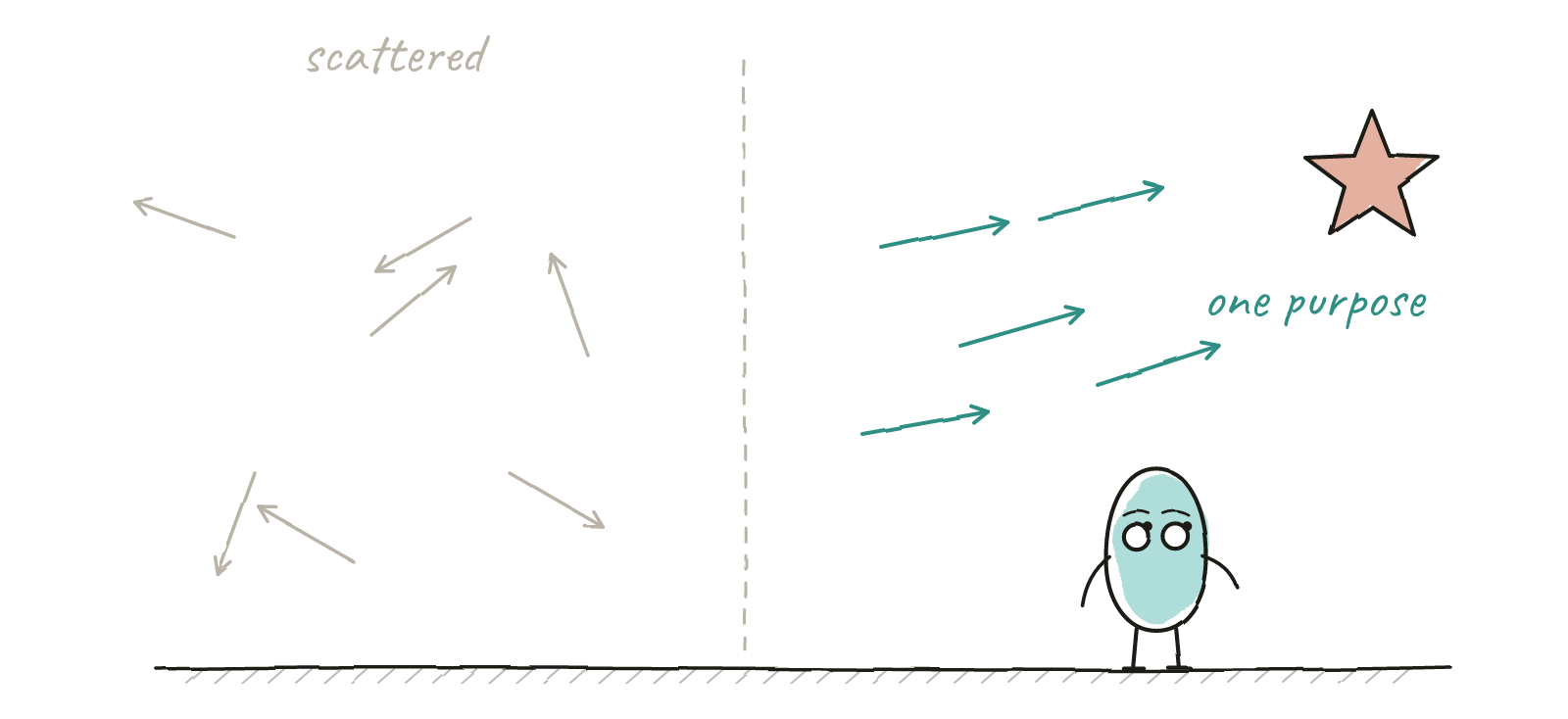
Flow in one part of life does not spill over by itself. Picasso loved painting, but put down his brushes and he was an unpleasant man. And even a great career or a loving family runs out one day. Work ends. Children leave. The last step is to tie your goals together under one purpose hard enough to organize a whole life.
Life has no meaning built into it, no single goal written into nature for everyone. But it does not follow that life cannot be given meaning. People lack wings, and they fly anyway.
It matters less what the purpose is than whether it is strong enough to give your effort a direction for a lifetime. The best beer-bottle collection in the neighborhood. A cure for cancer. Raising children who will thrive. Any goal can work if it gives you clear aims, clear rules and something to concentrate on.
Meaning then grows from three things. Purpose: one goal that the smaller goals serve. Resolve: sticking with it, which matters more than whether you reach it. And harmony: when what you feel, think and do line up, your energy is no longer wasted on doubt, regret, guilt and fear.
Resolve has a strange effect. At first, the goal makes the work feel worth it. Later, all the work you have put in is what makes the goal feel worth it. You marry because the other person seems worth sharing a life with. Unless you then act as if that is true, the marriage loses value.
This is harder today, with so many options. Endless choice breeds doubt, and doubt drains resolve, the way a game with loose rules is hard to concentrate on.
No one will tell you which goal deserves your life. Before you pour years into one, ask: Is this something I really want to do? Is it something I enjoy doing? Am I likely to enjoy it in the foreseeable future? Is the price that I, and others, will pay worth it? Will I be able to live with myself if I accomplish it?
A wound can become a purpose
Purpose often grows out of a wound. One boy grew up in New York, the son of poor immigrants. For his seventh birthday, his parents spent much of their savings on a bicycle. A few days later a car that ignored a stop sign hit him. The driver, a wealthy doctor, asked the family not to report it and promised to pay the hospital and buy a new bike. He never came back. The father borrowed to pay the bill, and began to drink.
At fourteen or fifteen, the boy read the Constitution and the Bill of Rights in school. He decided his family's misery came from not knowing their rights and having no one to speak for them. He became a lawyer, then a judge, and later served in the cabinet, helping the president with civil rights laws for people like his parents.
What mattered was not the injury but how he explained it. Had he decided, say, that rich people are simply cruel, there would have been nothing to do. He explained it as a problem he could learn to fight, and then he fought it for others too.
You do not have to invent a purpose from scratch. Music, art, poetry, philosophy and religion hold the order earlier generations found. Csikszentmihalyi once opened a class for executives lost in midlife with Dante's great poem, over six hundred years old. It begins with a man lost in a dark forest in the middle of his life. No group had ever talked so openly and seriously about the traps of midlife.
Happiness is something you prepare for
Rico on the line, Serafina in her orchard, Joe and his rainbows, Lucio with his bow. None of them waited to get lucky.
Happiness is not something that happens to you. It does not come from good fortune, and money cannot buy it. It is something you prepare for, grow and protect, in the way you use your attention every day.
It takes discipline. A relaxed, let-it-be approach is no defense against the chaos that fills an idle mind. But once you learn to set goals, build skills, read the feedback and lose yourself in what you do, almost anything can become a source of joy. A breeze on a hot day. A cloud reflected in the glass of a tall building. A child playing with a puppy. A glass of water.
Get the next one on Sunday.
A free weekly LongForm, in your inbox.