A LongForm
Dark Psychology and Manipulation by Joseph Griffith
Dark psychology starts from an uncomfortable idea: every person has a darker side. The people who act on theirs lean on a short list of moves you can learn to spot.
September 27, 2026
Picture this. A friend calls you, upset. They need $1,000 soon, and they tell you what will happen to them if they do not find it.
You want to help. But $1,000 is more than you can lend, so you say no, and you feel bad saying it.
Then they lower the number. Could you manage $200?
This time you say yes. Turning them down twice feels impossible, and part of you is glad to make up for the first refusal. You hang up feeling like a good friend.
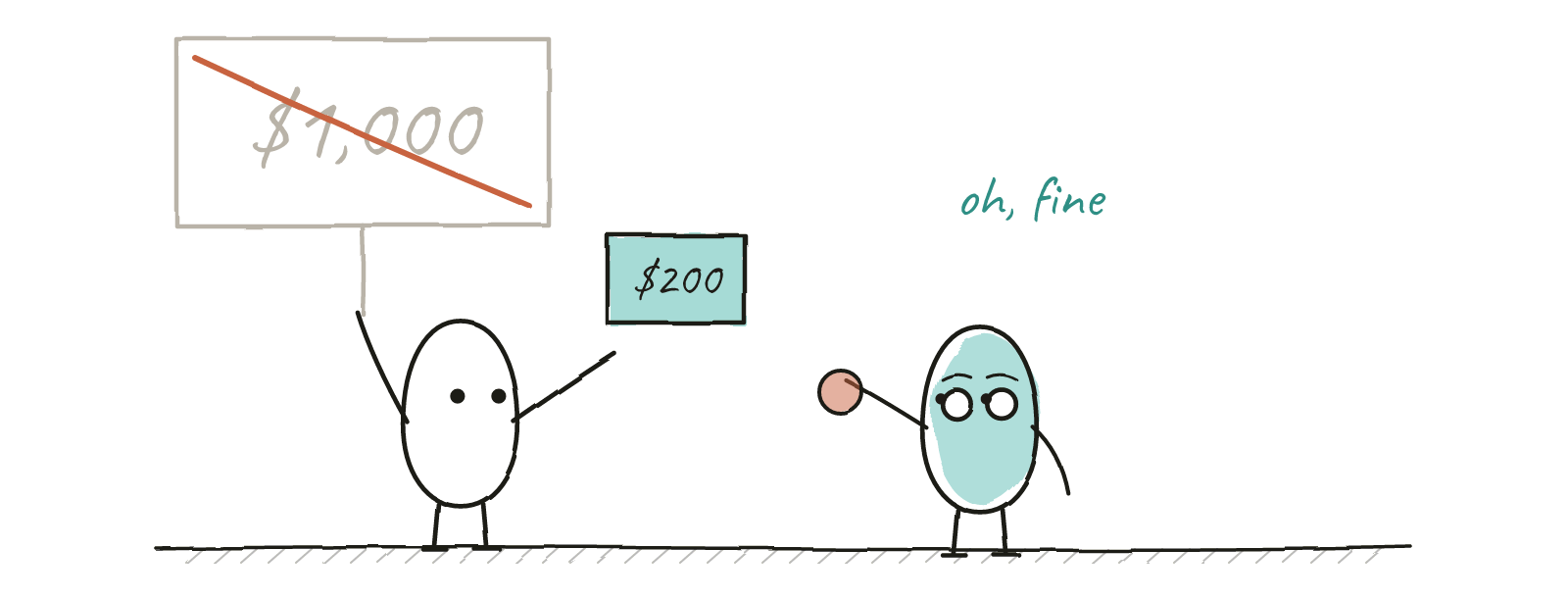
Here is what you could not see. The $200 was the goal from the start. The $1,000 was only there to make $200 feel small. And your friend never meant to pay it back.
That is one move: a big ask that makes the real one feel small. It belongs to a short list of moves people use to get what they want from you, and most people can be moved by them at some point. The person using one does not have to be a monster, either. The pull to use others is, to some degree, in everyone, and that is where this starts.
This LongForm teaches Dark Psychology and Manipulation by Joseph Griffith.
By the end, you will discover:
- why the urge to use others lives in everyone, and how the parts of yourself you refuse to see make other people get under your skin (1, 2, 3)
- which three traits sit behind the worst manipulators, and how their tactics differ (4)
- the everyday moves that make you doubt your memory, keep you from ever winning, or turn others against you (5, 6, 7)
- how mind control is built in four steps, from a friendly start to new beliefs locked in place (8)
- why a trance is only attention held tight, and how a sudden break in your thinking can be used against you (9, 10)
- how a big ask, a leading question or a slow long con hides what someone really wants (11)
- how to read a person against their own normal, and what to do fast once you see the move (12, 13)
You carry a dark side too
A lion kills an antelope for food. It is brutal, but it serves survival.
Dark psychology is the study of a different kind of harm: the human urge to prey on others. Its first claim is that humans may be the only creatures who harm one another for reasons that have nothing to do with food, survival, mating or territory. Some people do it with no clear goal at all. They hurt others simply to do it.
Its second claim is more personal. The potential for this is not limited to a few bad people. It is in every human being, to some degree. Some people hold the urge back. Others act on it.
If you are honest, you may remember a flash of wanting to hurt someone who had done nothing to you, even if you would never act on it. The difference between people is not whether such a thought comes. It is whether they act on it.
There is a use in knowing this. When you accept that the potential for harm is in you as well, you are in a better place to keep it out of what you do. And you stop picturing manipulators as strangers in dark coats. They can be a colleague, a partner or a relative, people who look completely normal.
What you refuse to see in yourself, you see in others
The darker side of your personality has a name: your shadow. It holds the impulses you would rather not own, such as greed, rage, selfishness, envy and the hunger for power.
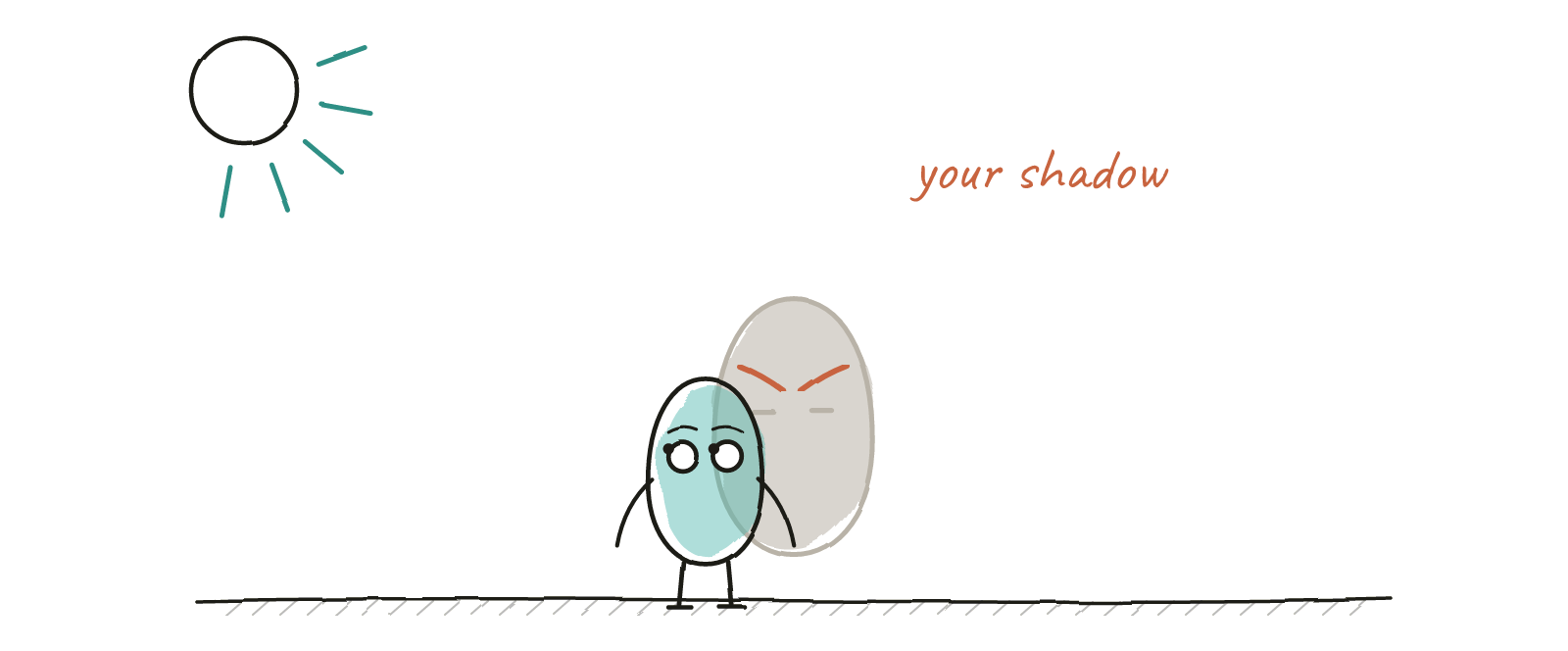
You were not born hiding it. Watch a child play and you will see love, kindness and generosity. Look a little longer and you will also see greed, anger and selfishness. Then the world reacts. A tantrum gets you sent to your room. A teacher shames an outburst. Each time, a basic need, like the need to belong, feels at risk. So the child learns to sweep those parts out of view.
Swept away is not gone. On this view, you cannot remove your shadow. It stays with you, like a darker brother or sister, and it acts when you are not looking. You say things you would not normally say. Your body shows feelings you would not admit to. Later comes regret.
Whatever you deny in yourself, you tend to see in other people. This is called projection. Say someone is rude to you and it bothers you far more than it should. That is often a sign you have not owned your own rudeness. The other person may still be rude. But if rudeness were no part of your own shadow, it would likely sting less.
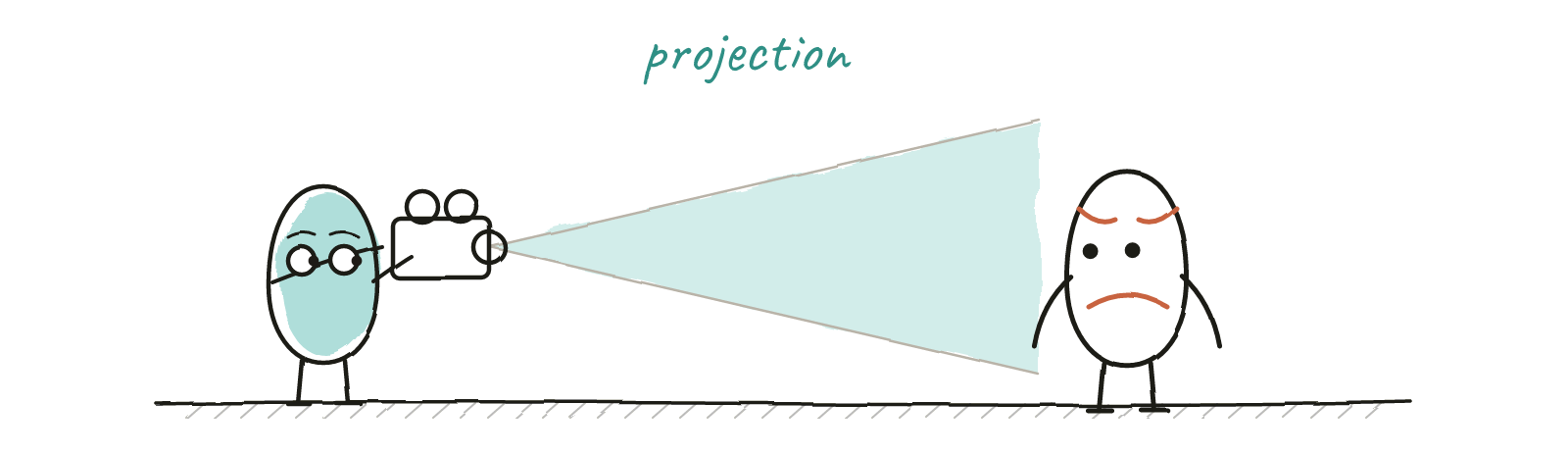
Projection happens without your noticing. It protects the picture you have of yourself as a good person, and it blurs your view of everyone else.
Everyone projects at some point. Some manipulators do it far more, blaming you for their own faults to dodge responsibility. It is the same habit, used as a weapon, and you will meet it again among the moves below.
Facing your shadow makes you clearer and calmer
Looking at your dark side is unpleasant. Nobody enjoys listing their flaws. But it pays off in ways that matter when someone tries to use you.
You see people more clearly. When you accept your own dark side, you find it easier to accept other people's. Their behavior triggers you less, so you can deal with it calmly instead of reacting.
You get a truer measure of yourself. You stop seeing yourself as too small, and you stop feeling morally above everyone else.
You also free up energy. Pushing part of yourself down all the time is tiring. Owning it lets that effort go somewhere better.
How do you start? Get calm, clear and neutral first, because shadow work done while upset turns into confusion and harsh judgment. Treat yourself as a friend would, since nobody can look at their darkness while they are busy feeling ashamed of it. Watch your thoughts and feelings without judging them. Be willing to see the unpleasant traits in your behavior. And write down what you find. Like a dream that slips away after waking, these discoveries fade fast unless you record them.
Three traits sit behind the worst manipulators
When someone behaves badly again and again, three traits often show up together. Together they are called the dark triad.
Narcissism is a complete focus on yourself. The narcissist believes they are special and that the usual rules do not apply to them. They may say they are sorry something happened without feeling anything behind the words. They do good things to look good, not because they are right.
Machiavellianism is the habit of using and tricking people to get or keep power. It is named after Machiavelli, an Italian diplomat whose book The Prince came to be read as praise for cunning and deceit. People with a lot of this trait think others follow morals only because they are not smart enough to get around them.
Psychopathy means not feeling sorry, not feeling what others feel, acting on impulse and for yourself alone, and breaking rules. A psychopath knows right from wrong. They simply do not care.
These traits also shape the tactics. People with a lot of Machiavellianism or psychopathy tend to use hard tactics, such as threats or sabotage. Narcissists tend to use soft ones, such as compliments and gifts, to get what they want.
Keep two things in mind. First, everyone shows a little of these traits at some point, and most people notice when the traits are hurting them. Second, there is a light triad too. It means treating people as people who matter, not as tools, respecting everyone, and believing people are basically good. The light and dark triads are not simple opposites. Each person carries some of both.
Some moves make you doubt your own memory
Many manipulators use the same moves, at home and at work. The first group goes after what you trust most: your memory of what happened.
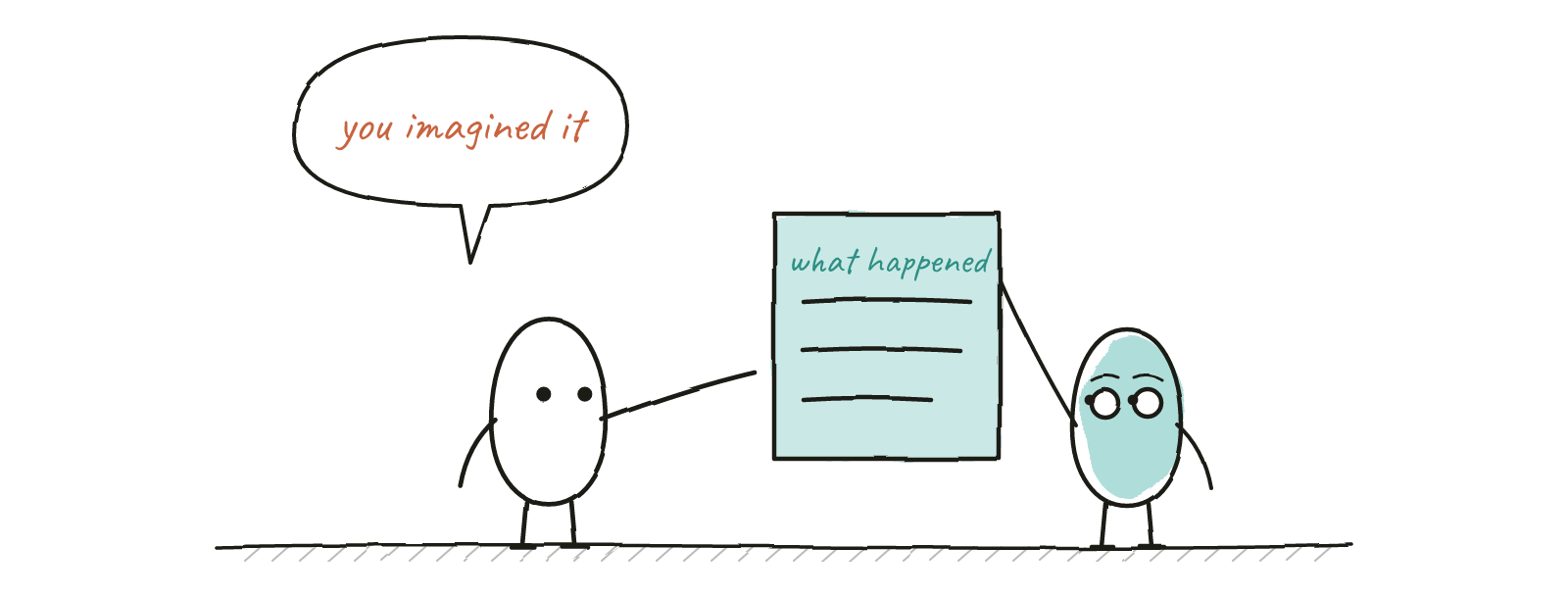
The best known is gaslighting. It sounds like three short phrases: "That did not just happen." "You imagined it." "Are you insane?" Said often enough, they wear away your ability to trust yourself. Once you doubt your own memory, you no longer feel you have the right to tell the person who hurt you that they were wrong.
The defense is to anchor yourself in what really happened. Write it down soon after. Tell a friend, or anyone in your support system, so someone else holds the record too.
A second move is projection used as a weapon. Everyone projects sometimes. Some toxic people do it constantly, on purpose or close to it. Every mess around them becomes your fault. Do not accept their faults as yours. And do not assume they feel the guilt and care you would feel in their place. If you assume they feel bad the way you would, they will only use you more.
A third is the blanket statement. You tell a coworker they sometimes miss the long-term effects of their money decisions. Soon they tell people you called them "a loose cannon," as if you said they were reckless. Then the boss hears you called the deal "a wreck." They did not misunderstand you. They had no interest in understanding you. Hold on to what you actually said, and do not let them turn your careful words into harsh ones.
Some moves make sure you can never win
A second group of moves is built so that you can never come out ahead.
With moving goalposts, you give the proof they asked for, and they ask for different proof. You meet the request, and a new one appears. The goal is to keep them always dissatisfied with you. You cannot win this game, so stop playing it. Their approval is not the measure of your worth.
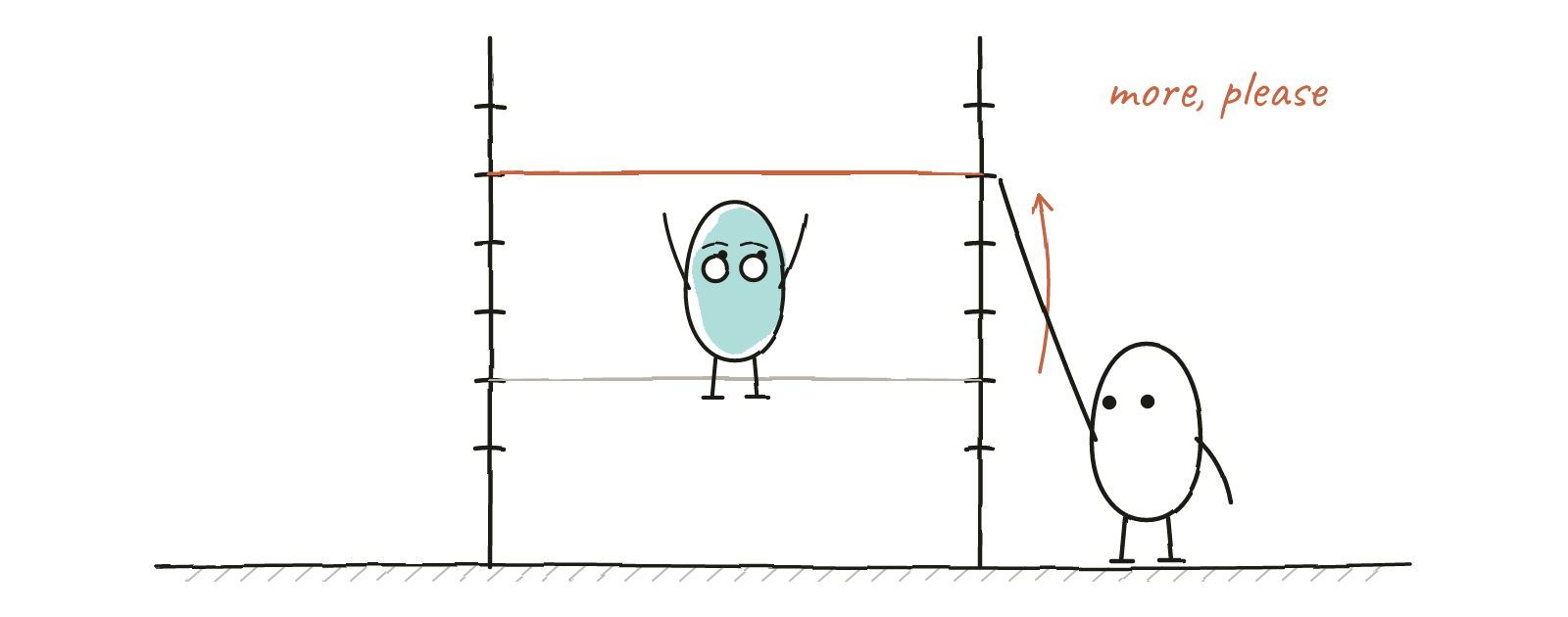
With changing the subject, every time you raise the real issue, the talk drifts somewhere else. It looks innocent. In a manipulator's hands it is a way to avoid taking the blame, and it can go on forever. The answer is the broken record. Calmly restate the facts and bring the talk back, every time. Tell them, in your own words, that this is off topic and you are sticking to the real issue.
With name-calling, the goal is to pull your attention away from what matters. You do not have to sit through it. End any conversation that turns to insults, and say that you will not accept it.
The aggressive joker says something cruel and wraps it as a joke. If you object, you are told you have no sense of humor. The problem was never your humor. It was what the joke was for.
Some moves work through the people around you
When a manipulator cannot control how you see yourself, they may try to control how others see you.
A smear campaign does this. They play the victim, and soon the people around you see you as the toxic one. Some go further and turn people against each other so they stay in charge. Keep a record of every incident, and do not take the bait. Sinking to their level is exactly what makes the smear stick.
Triangulation pulls in a third person. The manipulator tells you lies about what someone else said about you. Now you watch that person instead of the manipulator. Remember that the third person is being used too. Often the best move is to talk to them directly, or to find support from someone the manipulator does not influence.
Devaluation is a warning sign you can catch early. You start a new job as manager, and a colleague quickly starts running down the manager who had the job before you. Or a new partner keeps tearing down their ex. Over time, you may get the same treatment. The rule is simple: the way someone speaks about another person is often how they will speak about you, in private or later on.
Control is built in four steps
The moves above can stay small. But in families, workplaces, groups and cults, they can also be built into something larger: control over how a person thinks. That process tends to follow four steps.
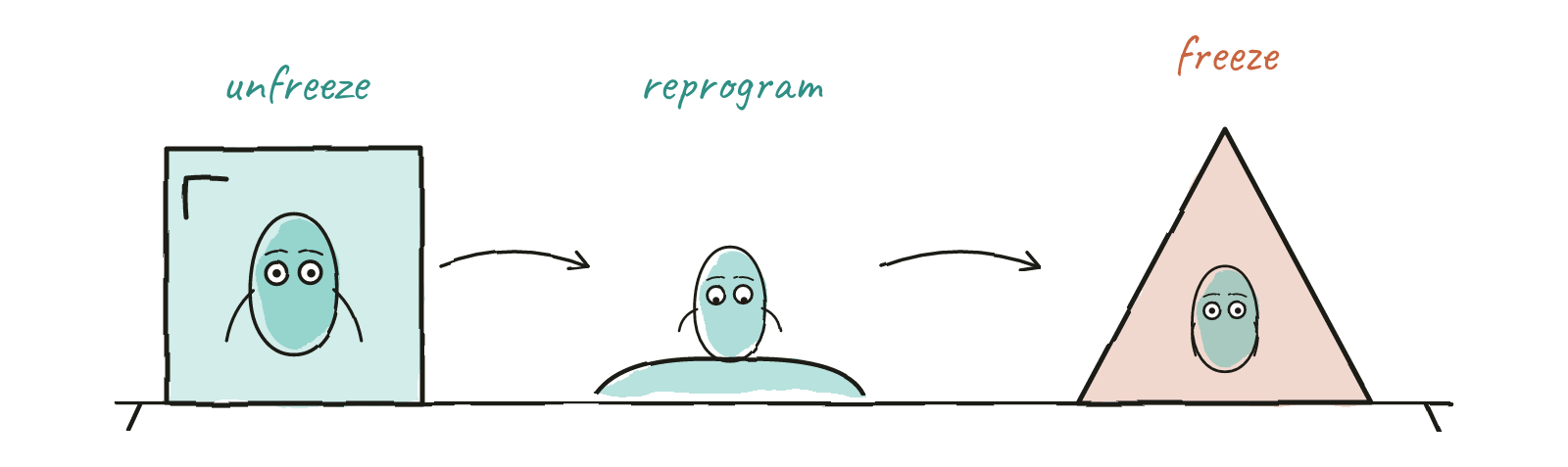
Step one: read the target. It starts with friendship or good intentions, because that is what lowers your guard. Then the manipulator studies you: how you talk, how you hold yourself, how steady your emotions are, how confident you are. They are deciding where to get in, and whether you are worth the effort.
Step two: unfreeze your beliefs. Think of your deepest beliefs as frozen solid, hard to move. Your core beliefs are part of who you are, and you defend them when they are attacked. But life sometimes loosens them for you. A breakup, a death or an eviction can leave you questioning what you thought was solid. Picture a friend, Matthew. Since his teens he has been sure that faith solves every problem. Then his mother's cancer keeps coming back, and he starts to doubt. A manipulator looks for moments like these, and tells you exactly what you want to hear.
Step three: reprogram. Now your old beliefs get painted as wrong, or as the cause of your troubles, and theirs are put in their place. To make this work, they cut you off from the outside world and make everyone else seem unimportant. Some cults even control what their followers eat, because a weakened person turns to whoever seems able to protect them.
Step four: freeze the new beliefs. Now the new ideas must set hard. They are locked in with reward and punishment, much as a dog is trained with treats. Obey and you are rewarded. Stray and you are punished, and the punishment is made to feel like justice. At the end, the person may start spreading the same views and recruiting others, often without realizing they have changed.
The process is slow. That is why it is hard to see from the inside, and why its effects can be so damaging once it sets.
A trance is only attention, held tight
Hypnosis sounds like a stage trick, with someone asleep and clucking like a chicken. It is much more ordinary than that. A trance is just a different state of mind. You are in one whenever you focus on one thing so hard that everything else fades. Zoning out at work or on the subway counts.
That ordinary state can be used to lower your guard. It tends to happen in four stages.
First, your attention is absorbed. Stories do this best. A vivid tale, full of detail and senses, pulls you in.
Second, the questioning part of you is slipped past. This is the part of your mind that flags what is impossible, unreasonable or unlikely, like a guard at a gate. Steady eye contact, a slower pace and a lower voice can help ease past it.
Third, you react without meaning to. It can be small: a laugh, a gasp, a stomach that growls at a vivid description of steak.
Fourth, you are led toward an outcome. Someone who wants you to go swimming might tell a story about cool, rushing water on an unbearably hot day.
None of this makes a person a puppet. But even a light trance can make you accept an idea more easily than you would if you stopped to think.
A sudden break in your thinking can be used against you
Much of what you do runs on patterns: getting up, brushing your teeth, shaking a hand. While a pattern runs, your mind is on autopilot.
Break a pattern suddenly and something odd happens. For a moment the mind is confused and searches for an explanation. In that gap, you are more likely to go along with an idea someone hands you.
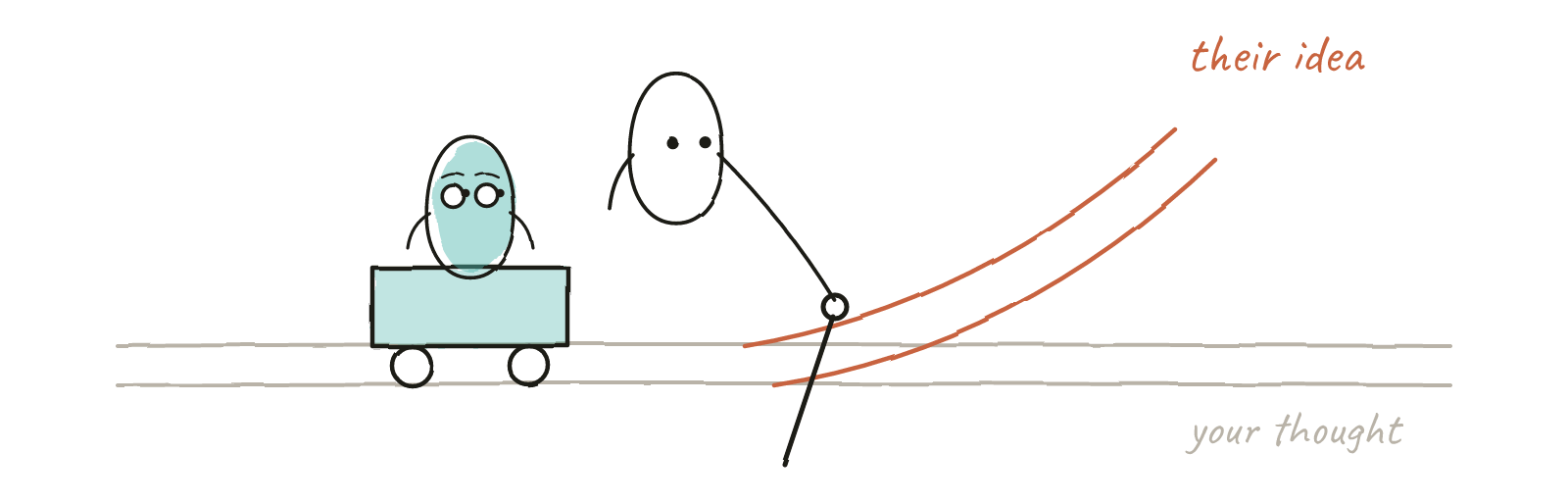
Picture someone walking down a winding corridor. You switch off the lights. They grope around for a switch and, in the dark, turn themselves around without noticing. When the lights come back, they walk off the wrong way. The path was the pattern. The darkness was the break.
The breaks can be tiny. A friend is in the middle of a story, and you cut in with an unrelated line: "I have always wondered what makes the moon so silvery." Now they are hanging on your next words. Or your partner is deciding what to cook, and you show them an appealing chicken recipe at just that moment. Your chances of chicken for dinner go up.
These breaks are not only for harm. Therapists use confusion to help people with a fear of flying. When the client's thoughts start spiraling toward crashes, the therapist interrupts with a confusing riddle about questions and answers. The fearful pattern breaks, and over time flying can feel lighter. The same tool helps or hurts depending on who holds it and why.
A big ask can be cover for a small one
Back to the $200. Many people find it hard to refuse two requests in a row, and someone who talks people into things to use them builds on that. Ask for the large amount first, with a moving reason. When you refuse, ask for the amount they wanted all along. Guilt over the first no does the rest.
Other moves hide the goal the same way. A leading question carries its answer inside it. "How bad do you think those people are?" assumes they are bad. A fair question would be "How do you feel about those people?" If you start to sense you are being led, a skilled persuader drops the tactic and tries another one later.
Some people are boomerangs: tell them to go one way and they go the other. A manipulator who knows this can use reverse psychology, pushing them toward the option they want them to reject.
The slowest version is the long con. A recently widowed woman is befriended by a kind, patient man, perhaps someone from her church or a relative. At first his advice really helps: a better bank account, lower bills. Each good result teaches her that his advice pays off. Then he asks to invest her money, and he takes everything. If he is skilled, she may even believe he tried to help and was simply unlucky.
Underneath all of these is the same shape: one small step, then another. A gang boss or cult leader never starts by asking for something terrible. They start with something minor, then raise it, until the person feels in too deep to turn back.
It helps to remember one thing. Ordinary persuasion still leaves the choice with you. A thousand car adverts will not make you buy a car you do not want or need. The dark versions work by making the choice feel like yours when it was shaped for you.
Read a person against their own normal
Your gut already reads people. You have probably felt uneasy around someone without knowing why. Instincts like that are built to keep you safe, and they can be right. But in most situations you are not in danger, and you can do better than react. You can slow down and work out what is putting you on edge.
There are four steps. People skip the first one most.
Find their baseline. Learn how this person acts when nothing is wrong. Someone shy may cross their arms and avoid your eyes all the time. Those are signs that can go with lying. In a shy person, they are just normal. Skip this step and you will think every shy person is deceiving you.
Spot the changes. Once you know their normal, notice what breaks from it, especially when you ask a question.
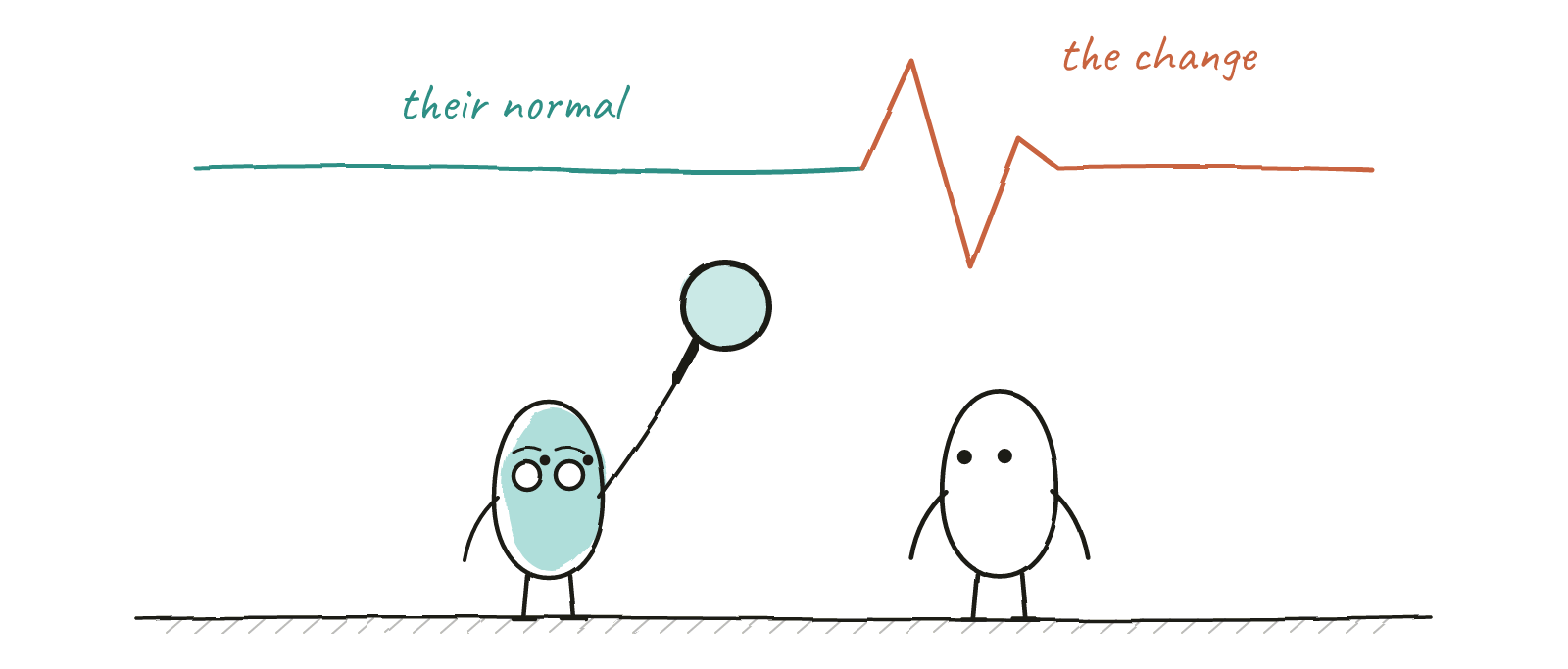
Look for several changes at once. One gesture can mean many things. Several changes together, at the same moment, tell you far more.
Then make sense of it. Trace the cluster back to the feeling behind it, and from the feeling to the thought.
The same reading is useful in other places. It helps you notice your own feelings. It also helps you see when an argument is too heated and it is time to walk away. It helps with people who speak with authority, too. A speaker on a stage or a screen is easy to trust just because of where they stand. Watch them as closely as you would anyone else.
Once you see the move, act fast
Seeing what is happening is the start, not the end.
First, stop believing the nice picture. A deal that seems too good to be true may be just that. When you ask questions, actually listen to the answers, not the ones you were hoping to hear.
Next, deal with the situation before you deal with your feelings. Anger may push you toward a quick move you later regret. Your feelings are real. Handle the practical steps first, and the feelings after.
Then move quickly. The longer you wait, the sooner you start telling yourself you got it wrong, that you misunderstood. That doubt leads you back into the manipulator's hands. Something as simple as telling a close friend the facts can start the way out.
Get a second opinion, the way you would after a frightening diagnosis. Choose someone who has shown, many times, that they care about your good. If the person hurt you online, bring in the police. If you decide to confront them, choose a time and place that gives you the upper hand.
Trust your instincts, but know the difference between instinct and fear. Low confidence turns every small doubt into a threat, and that is fear, not your gut. Calm makes the real signal easier to hear.
And then heal. Time gives distance, but it rarely heals on its own. Talk to a counselor, and take an active part in getting better. It will not happen overnight, but each step gets you closer.
Your shadow stays, so keep it in view
You will never get rid of your dark side. It stays behind you, just outside your view, the way a shadow does when you stand in the light.
That is not a reason for despair. Trouble comes when you fail to see it. When you know your own greed, envy and hunger for power, they steer you less. You see other people more clearly, without placing yourself above them or below them. And you are harder to fool. Once you know the moves and know yourself, the moves are much easier to spot.
Get the next one on Sunday.
A free weekly LongForm, in your inbox.