A LongForm
101 Essays That Will Change the Way You Think by Brianna Wiest
Much of what feels wrong in your life comes from how you think about it, and that is a problem you can work on.
August 30, 2026
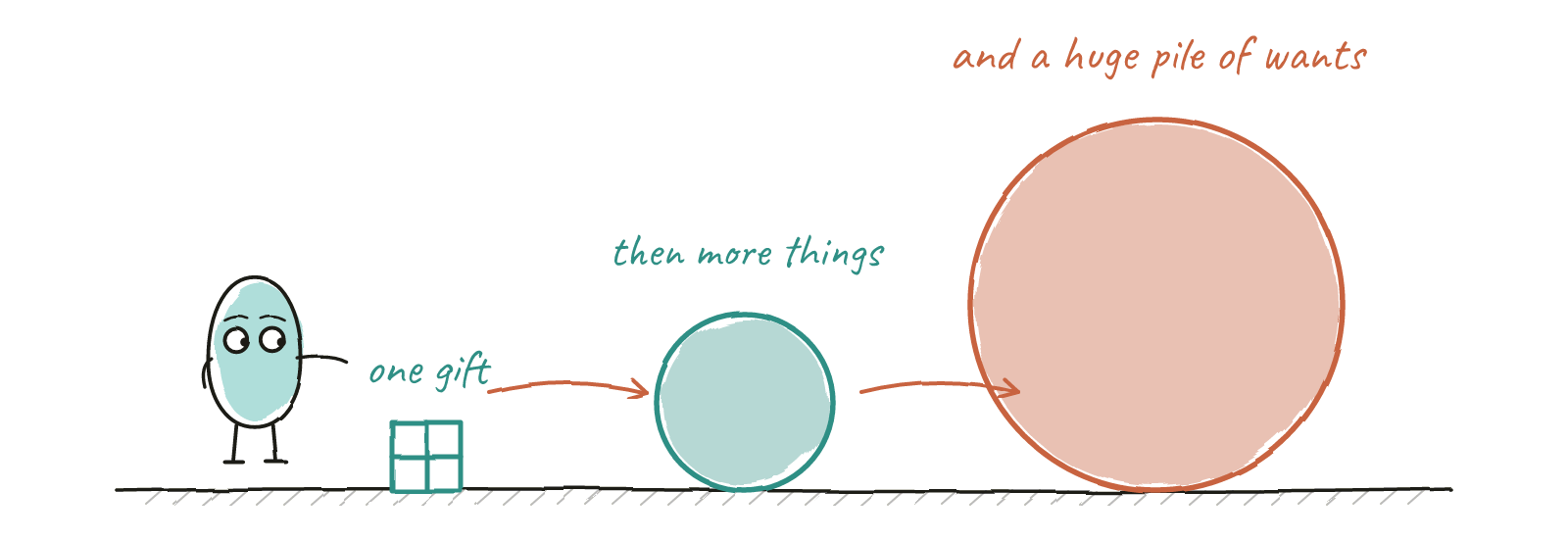
As the story goes, the philosopher Denis Diderot lived a very simple life, and he was happy. Then a friend gave him a gift: a gorgeous scarlet dressing gown.
He loved it. But the more he wore it around his small apartment, the more the apartment looked wrong. A man with a gown like that should not live in a place like this. So he wanted new furniture. Then new clothes. Then new wall hangings. He ended up in debt, working his life away to keep his home as grand as his gown.
The rooms had not changed. What changed was the picture in his head of how a life should look, and he spent years trying to make the world match it.
You do the same thing. You change the job, the partner, the city, the year, and you expect the feeling inside to change with it. Often it does not, because the feeling was never coming from there.
That is the thread through 101 Essays That Will Change the Way You Think by Brianna Wiest, a book of 101 short pieces. Most of them come back to one idea: the problem is not the problem. The problem is how you think about the problem.
By the end, you will discover:
- why you cannot predict what will make you happy, and why a new job, partner or year rarely changes how life feels (1, 2)
- what a feeling really is, why fighting it makes it last, and what your fear points at (3, 4, 5)
- why the people who annoy you most can show you something about yourself (6)
- how your mind bends what you see, and how to test a thought before you believe it (7, 8, 9)
- why thinking about your life is not living it, and where most people quit (10, 11)
- why you cannot win love, and what to do with the love left over (14, 15)
You want what you have known, not what would make you happy
Ask yourself what would make you happy, and an answer comes fast. A new job. A person who finally gets you. A home of your own.
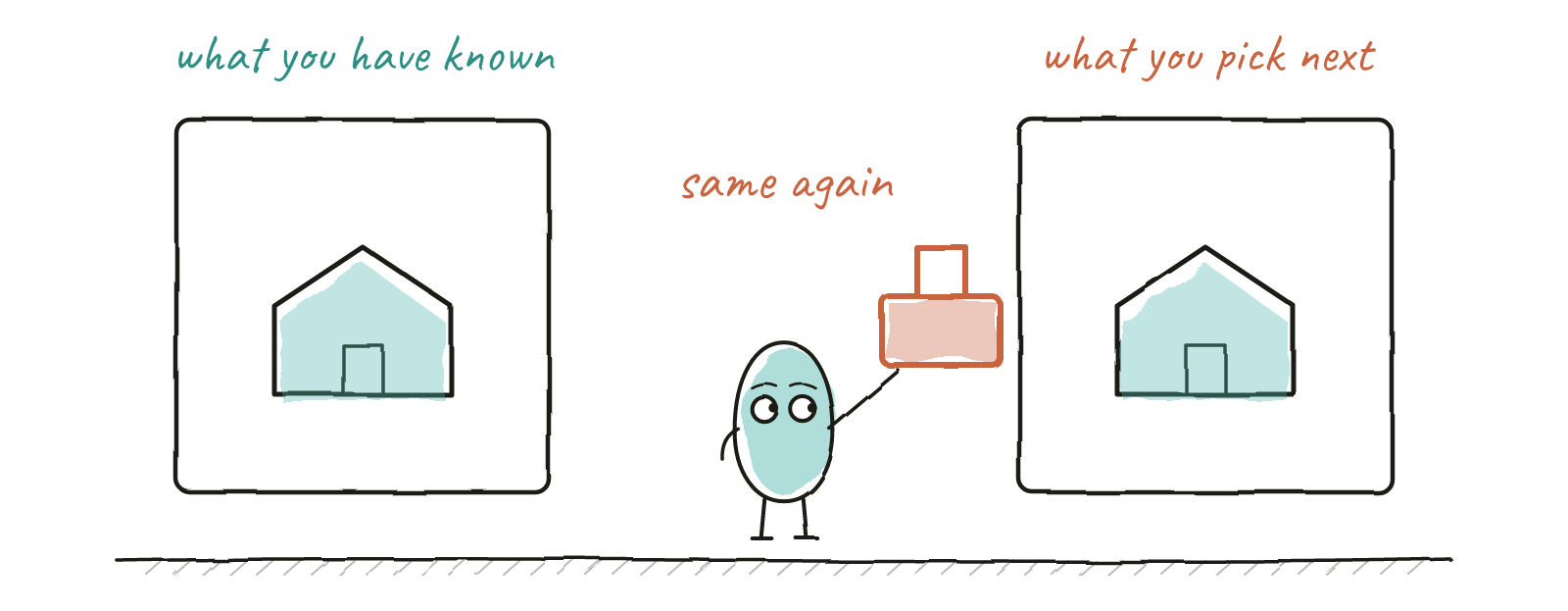
It feels like you are looking ahead. You are not. Your brain mostly pictures what it has already met. So when you choose what you want, you mostly pick a fix for something in your past. Say you want the opposite of the boss you had, or a copy of the love you lost.
That is why you cannot predict what will make you happy. And it is why the future so often feels wrong when it arrives. Say life hands you something good that looks nothing like your plan. Your brain may have no place to put it, so it marks it as bad. It may be better than what you pictured. It is just foreign.
Your brain also leans on comfortable and uncomfortable more than on good and bad, and a familiar discomfort can feel the same as comfort. This is why people stay in a job, a habit or a relationship they know is wrong for them. They are not choosing misery.
They are choosing what they know.
Most people do not move until staying put becomes the more uncomfortable choice. Before that, the discomfort gets louder for a long time. In Wiest's words: "The universe whispers until it screams, and happy people listen while the call is still quiet."
Happiness has a ceiling, and you set it
Everyone has a limit on how good they let themselves feel. Gay Hendricks calls it your upper limit. Others call the same thing your baseline: the happiness you drift back to, even after something big lifts your mood for a while. Say you have a wonderful week, and then you pick a fight over nothing. That may be you dragging yourself back under the limit. When life pushes past your limit, you may start to wreck it without knowing, so you can slide back to what is familiar.
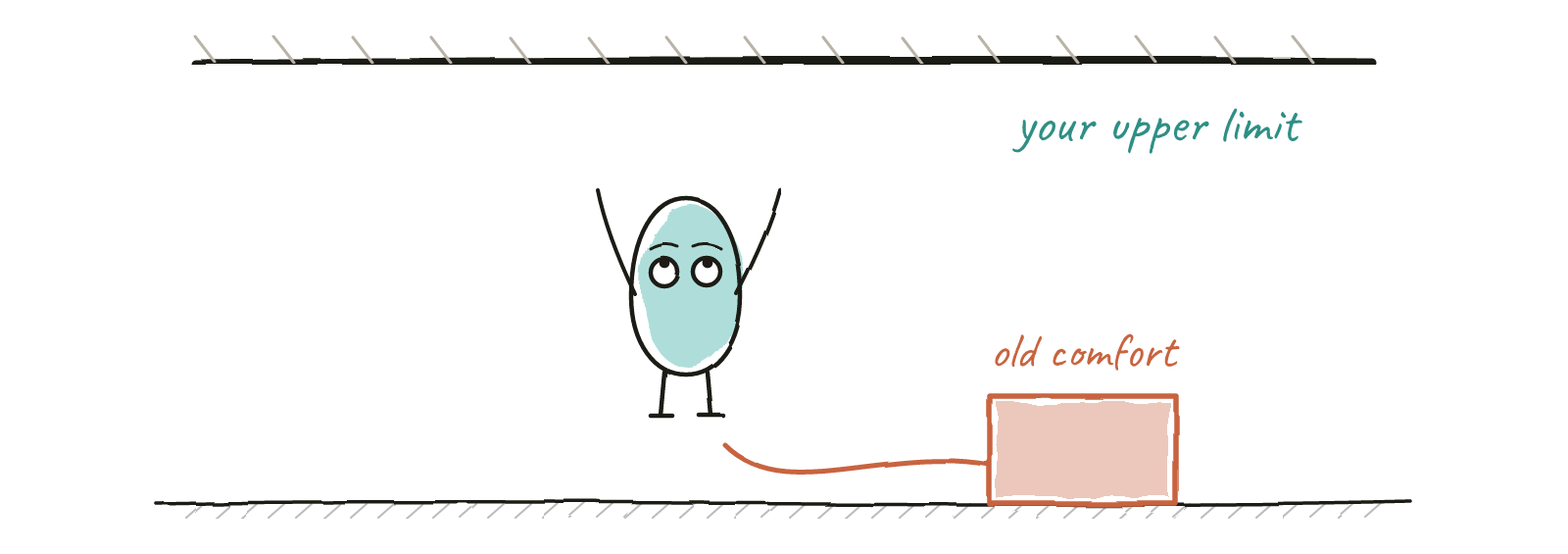
You also get used to good things fast. A raise, a move or a new love lifts you, then you adjust and want more. That is why stacking up good events never adds up to a lasting feeling of "good." Hoping for that is not only unhealthy. It cannot work. The way out is to lift the baseline itself.
You can practice that. When something good happens, stay in it. Hold the rush a few seconds longer. Think of what you are grateful for. Your limit can grow as you decide it can.
Why don't people do this? Many are afraid that being happy means giving up on getting more. Happiness feels like arriving, like the finish line, so they tie it to quitting. The opposite is true. A greater life is built from small pieces of joy and purpose, added bit by bit.
Eric Greitens says happiness comes in three kinds. Pleasure is a good meal when you are hungry. Grace is being thankful. Excellence is the joy of working toward something great, of falling in love with the hike and not just the summit. Like primary colors, you need all three, and one cannot stand in for another: "Lots and lots of red will never make blue. Pleasures will never make you whole."
So stop chasing happiness. It comes as a side effect of doing things that are challenging, meaningful, beautiful and worthwhile.
A feeling is a signal, not a verdict
The next time you are badly upset, ask one question: what do I actually feel in my body right now? Chances are it is a little tension or discomfort. The rest of the panic is everything you decided that sensation means.
A feeling in the body comes down to two things, tightness or openness. Then your thoughts pile meaning on top, and that is what makes it huge. No feeling lasts long on its own. It is the thought pattern that sets it off again and again. Check back after an hour or a day, and it is probably gone.
So treat a feeling as a signal. Pain is the clearest case. Put your hand on a hot stove, and pain tells you to move it before it burns. Emotional pain does the same job. It points at something that is not right. The emotion does not need to be fixed. The thing it points at does.
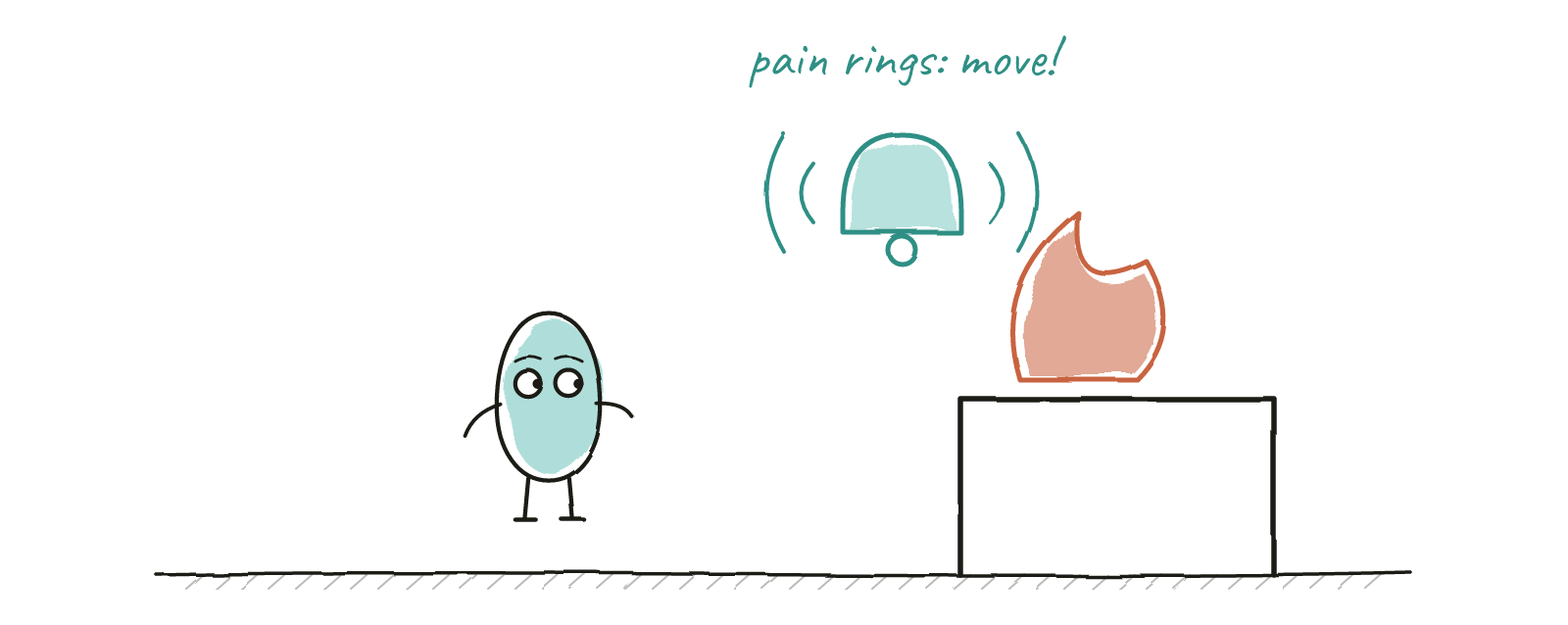
Pain and suffering are not the same. Pain is the signal. Suffering is what happens when you resist the signal or never listen to it.
This is also why you do not need to feel good all the time. Health means a whole range of feelings. Happy people are not the ones who feel good all the time. They are the ones who let a hard feeling guide them instead of freezing them.
Fighting a feeling is what makes it last
In a study by Daniel Wenger, one group was told to push thoughts of a white bear out of their minds. They thought about the bear more than a group that was allowed to think about anything, bears included. The saying that fits is: what you resist, persists.
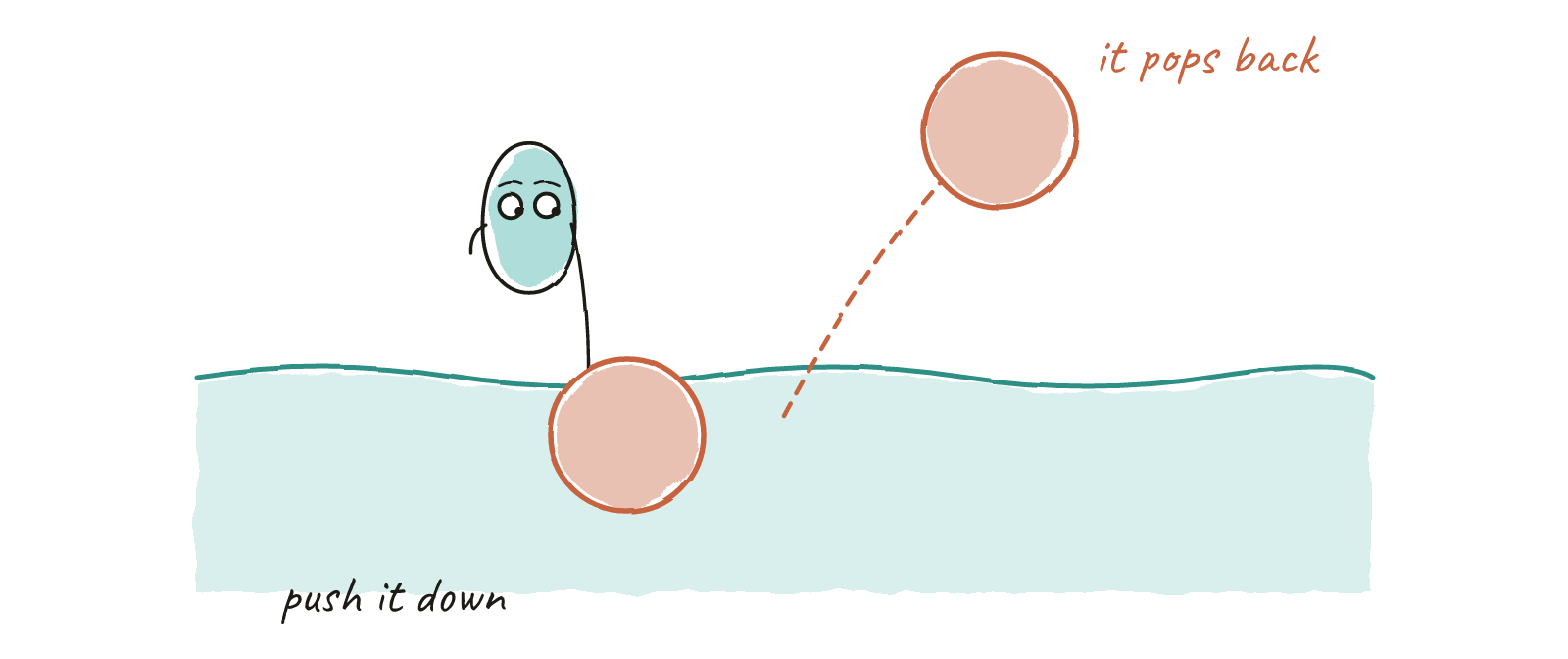
Feelings work the same way. You cannot deny them or shut them out. You can only ignore them, and then they leak out in strange ways. Wiest lists 16. You swing between thinking you are the greatest person alive and thinking you are worthless. You blow up over small things. You complain all the time. You cannot stand to be wrong. When someone succeeds, you pick at their faults instead of admiring them.
Suffering is the refusal to accept what is. So healing is letting yourself feel. It means going back to the losses and embarrassments you could not feel at the time, and allowing the feelings you had to push down just to keep going.
Each feeling carries a message. Sadness says, "I am still attached to something being different." Guilt says, "I fear I have done bad in someone's eyes." Shame says, "I fear I am bad in someone's eyes." Listen, but do not take the message at face value. Follow it down to what it points at.
Trying to change how you feel is like finding a road sign that points the wrong way and climbing out to turn the sign, when you should change your route.
Numbness is not feeling nothing. Numbness is all your feelings piled up and never dealt with. And you cannot numb only the hard feelings. Brené Brown says that when we numb them, "we numb joy, we numb gratitude, we numb happiness."
Most anxiety is a fear of the anxiety itself. People try to manage it by controlling everything else: their money, their looks, how others see them. They control the outside to avoid the inside.
Not resisting does not mean giving up. It means steering with the current, not against it, and spending your effort where you can actually steer.
Fear points at what you want
You read discomfort as a sign to stop. Often it is the opposite. Discomfort shows up when you are about to change.
Fear has two faces. One wants to run. The other wants to look closer. Nothing scares you unless some part of you also wants to understand it. When you consider something you truly love, fear shows up, mostly because loving it means being vulnerable.
Not caring either way is different. You do not agonize over a person or a path that is wrong for you. You simply never think about it. If your inner voice meant you were not interested, it would say nothing at all.
So if you do not know what you want, look straight at your deepest fear and ask what is on the other side of it. Ask what that fear tells you about your deepest desire.
Two examples make it real. Feeling lost can mean you are living less inside the story you planned and more in the moment you are in. Old childhood struggles coming back can mean you are finally seeing why you think and feel the way you do.
There is a limit, and it keeps this from being a slogan: not every feeling deserves your vote. Your first instinct may aim to protect you, not to grow you, and it may speak from fear or lack. Ask where the reaction comes from and where it leads in the long run.
What bothers you in other people lives in you
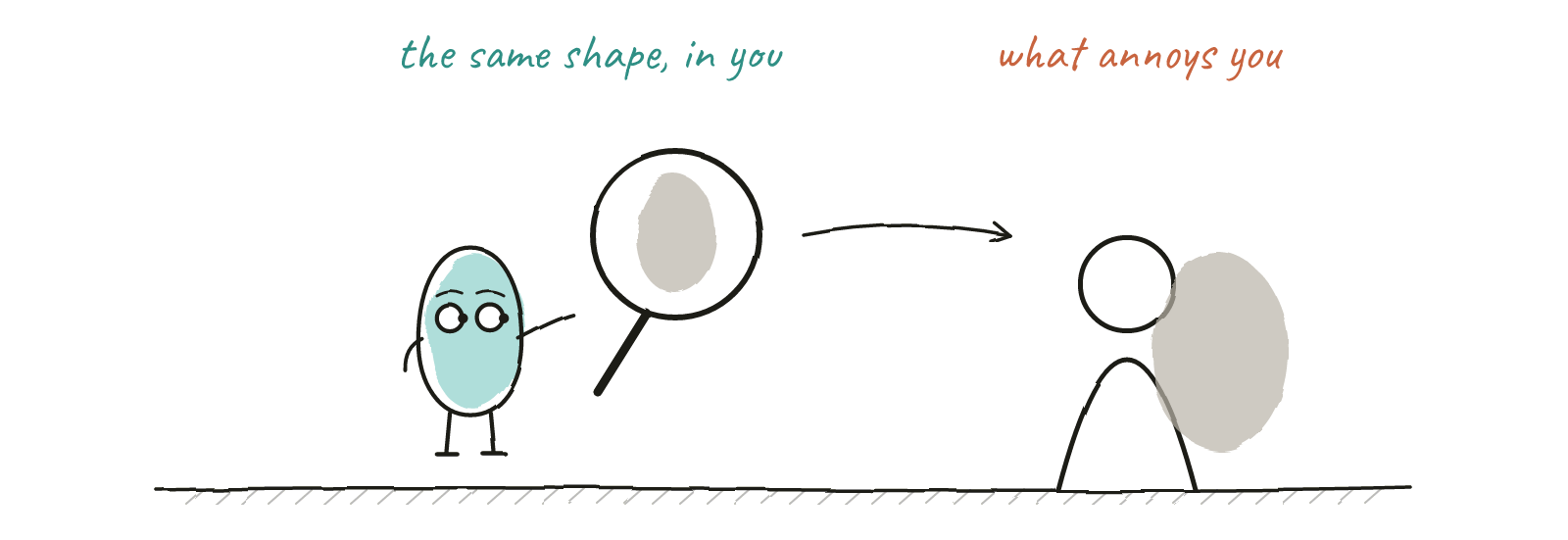
Some people drive you wild. The strength of your reaction is the clue. The traits you love in others are the ones you love in yourself. The traits you hate in others are often the ones you cannot see in yourself.
Here is how it works. As a child, you learned that some parts of you were not okay, so you pushed them away. These hidden parts are your shadow selves. When you see one in someone else, it infuriates you. Not because you truly dislike the trait, but because you have to fight the urge to take it back. If you truly disliked something, you would just walk away from it.
Hatred of a misinformed politician may be a fear of being unintelligent. A fierce dislike of a passive friend may point at your own habit of handing power to others.
Or take a neighbor who keeps asking you to lunch. You may not be bothered by the lunch. You may be bothered that she acts desperate for love, a need you feel too and hide because it seems embarrassing.
Jealousy works the same way. You are not jealous of the successful writer because you want praise. You are jealous because you know you are not doing the work.
So here is a tool. Write down what you hate about other people. It is a cheat sheet to what you need to look at in yourself. When someone gets under your skin, something in you has been recognized.
Your mind edits reality before you see it
You trust your picture of the world. But how sure you feel does not show you are right. Daniel Kahneman says your confidence is not a measure of the quality of evidence, but of the coherence of the story the mind has built. In plain words: a story that fits together feels true, whether it is or not.
The belief that you see the world exactly as it is has a name, naive realism. David McRaney puts the problem plainly: "Everything that's ever happened to you has happened inside your skull."
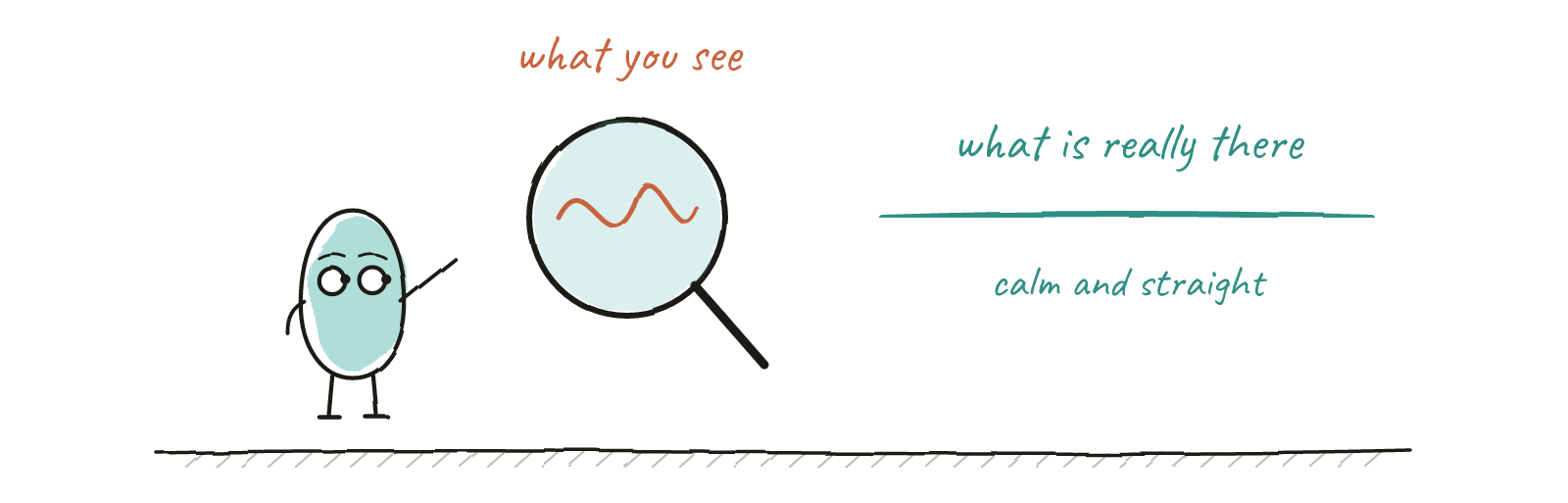
Watch for four edits. Extrapolation is stretching this one moment across your whole life. It is why a tragedy feels permanent and happiness feels fleeting.
Anchoring is leaning on the first piece of information you hear. Your view of the world is often your parents' view.
Clustering is seeing patterns in random events because you have decided to. Once you want a certain car, it seems to be everywhere.
Confirmation is listening only for what supports what you already think. It is how you protect your worldview. Negativity edits too: you give bad news more attention because you think it matters more, and you may even mistake it for depth.
Three writers named 15 thinking traps. Filtering means seeing only the bad and filtering out the good. Mind-reading means assuming you know what people feel about you. Catastrophizing means always expecting the worst, a sign you do not trust yourself to adapt. Emotional reasoning means thinking a feeling proves a fact: you feel unloved, so you are.
These traps feed themselves. If you were raised to believe you are an outcast, you keep finding proof that people dislike you.
You can learn to think about your thinking
The good news is that you can step back. The brain can think about its own thinking, which is called metacognition. Your thinking part can look at a feeling that makes no sense and decide to ignore it. These tools help:
- Ask: "Is this true? Can I absolutely know this is true?" Most of the time the answer to one or both is no.
- Do not decide anything while you are upset. Wait until you come back down to neutral.
- Say it out loud: "I am having a panic attack. I am having irrational thoughts." It starts to bring you back.
- Prove yourself wrong. Go to the doctor to confirm you are not dying. Ask someone how they feel about you. Do not live in the grey area when answers are available.
- Practice negative visualization, an old habit of the Stoics, the ancient thinkers who trained for hard times. List what you worry about most, imagine the worst outcome, then plan exactly how you would handle it. You will see you would live.
- Keep a notebook for junk. Write whatever ugly, embarrassing thought comes up, and letting it out releases it.
Behind all of this sits one fact. You call your heart your heart, not yourself. Your thoughts and feelings are the same: yours, not you. You are the one who has them, and you get to choose which to act on. One of 49 strangers asked for their most freeing thought wrote: "I get to choose what I think about."
You will never stop hearing the harsh voice. What matters is whether you act on it.
Most of your opinions came from someone else
Every generation has a monoculture: a set of beliefs everyone around you shares and accepts as true without ever deciding to. It is easy to spot in the Germany of the 1930s or the America of 1776. It is hard to see your own, because once you accept an idea as true, it stops looking like culture.
Most of the thoughts you have each day are not unique or self-made. Minds seek out, repeat and believe what they are told. People rarely notice, so they defend those thoughts hard, as if they were part of who they are. Eight steps test one opinion at a time:
- Find where it came from. Recall the first time you met it.
- Ask whether your evidence is emotion or reason, and whether the feeling is even yours.
- Ask who the opinion benefits.
- Try to see why the opposite view could be valid. This is the hardest step.
- Notice why you feel so strongly. Unless you are a trained expert, a strong feeling is usually personal.
- Research it, and follow reputable sources.
- Ask what would happen if everyone in the world thought as you do.
- Imagine what your best self would think.
When you argue, aim at the point and not the person. Wiest ranks seven ways to argue, from worst to best. Name-calling is at the bottom. Then attacking the person, attacking the tone, and plain contradiction. Then counterargument, then refutation. At the top is refuting the central point with sound reasoning. Most of the low ways do not work, and both sides leave more frustrated.
When someone shares a feeling, accept it. Accepting a feeling is not the same as agreeing with the idea behind it.
The cost of never checking is high. Wiest's piece on becoming your own worst enemy puts "never realize that you were conditioned at all," meaning trained to think a certain way, on its list of ways to get there.
Thinking about your life is not living it
Anxiety is usually bred out of inaction. Binge thinking is going over your life again and again without acting, until looking inward becomes a way to avoid a problem. Looking at your life is supposed to help you live it, not replace it.
You can spot the pattern. You picture your perfect life as how people would see it, not what your days would hold. Your goals are outcomes, like "be successful," instead of actions, like enjoying what you do each day. A wish for an outcome is only an idea. A thing you do is real.
Do make sense of your feelings. Trace your beliefs and check that they are yours. But stop trying to make sense of your whole life. Some things only make sense after you live them, and some never will.
Clarity comes from doing, not thinking about doing.
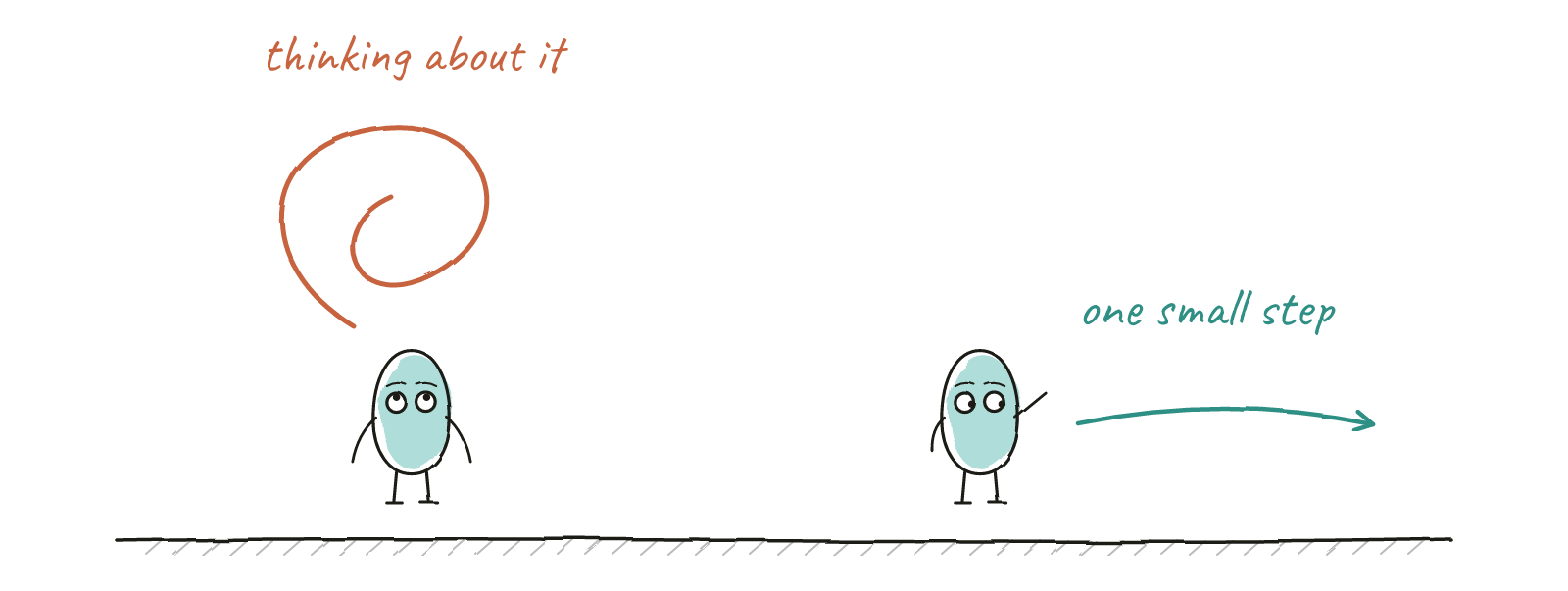
Jeffrey Pfeffer and Robert Sutton call this the knowing-doing gap: you know the best thing to do and you do something else. The real question is not what is good for you. It is why you choose otherwise. Most of the reasons come back to comfort.
One way across is to compare two discomforts: the discomfort of doing the thing, and the discomfort of never doing it. Picture living an average day on repeat for the rest of your life. Where do you end up?
You will never feel ready for the things that matter, and waiting to feel ready is how the gap widens. Motivation will not show up on schedule either. It comes once in a while, and you cannot summon it. Learn to work without it.
It is easier to act your way into a new way of thinking than to think your way into a new way of acting. So do one little thing today and let the momentum build.
Your habits make your mood, and the gap is where people quit
You may think moods come from stressful thoughts. Psychologist Robert Thayer argues they come from habits: how much you sleep, how often you move, what you think and how often you think it. One thought does not throw you. The pattern of having it again and again does. So your habits build your mood, and your mood is the filter on your whole life.
This is why routine matters. Many of the people we call geniuses kept rigid and specific routines. A routine can be anything, even traveling to a new country each month. What matters is that your mind learns what to expect. A steady day quiets the body's danger alarm, because you are no longer facing the unknown. A day with no routine leaves gaps where a voice says, "you can take a break now."
Success is more a product of habit than of skill. Self-control runs out each day, though practice stretches it. So cut small decisions, reduce distractions, and protect what matters.
Psychologists in the 1960s found that every new skill goes through three stages. In the first, you think through the task and make mistakes. In the second, it still takes effort, but less. In the third, you are on autopilot, sometimes so deep in the task that you lose track of time.
The danger is between the last two. You do the work often enough, but your idea of how good it should be is still far away. Ira Glass calls this the creative gap, and it is where most people give up. He describes it:
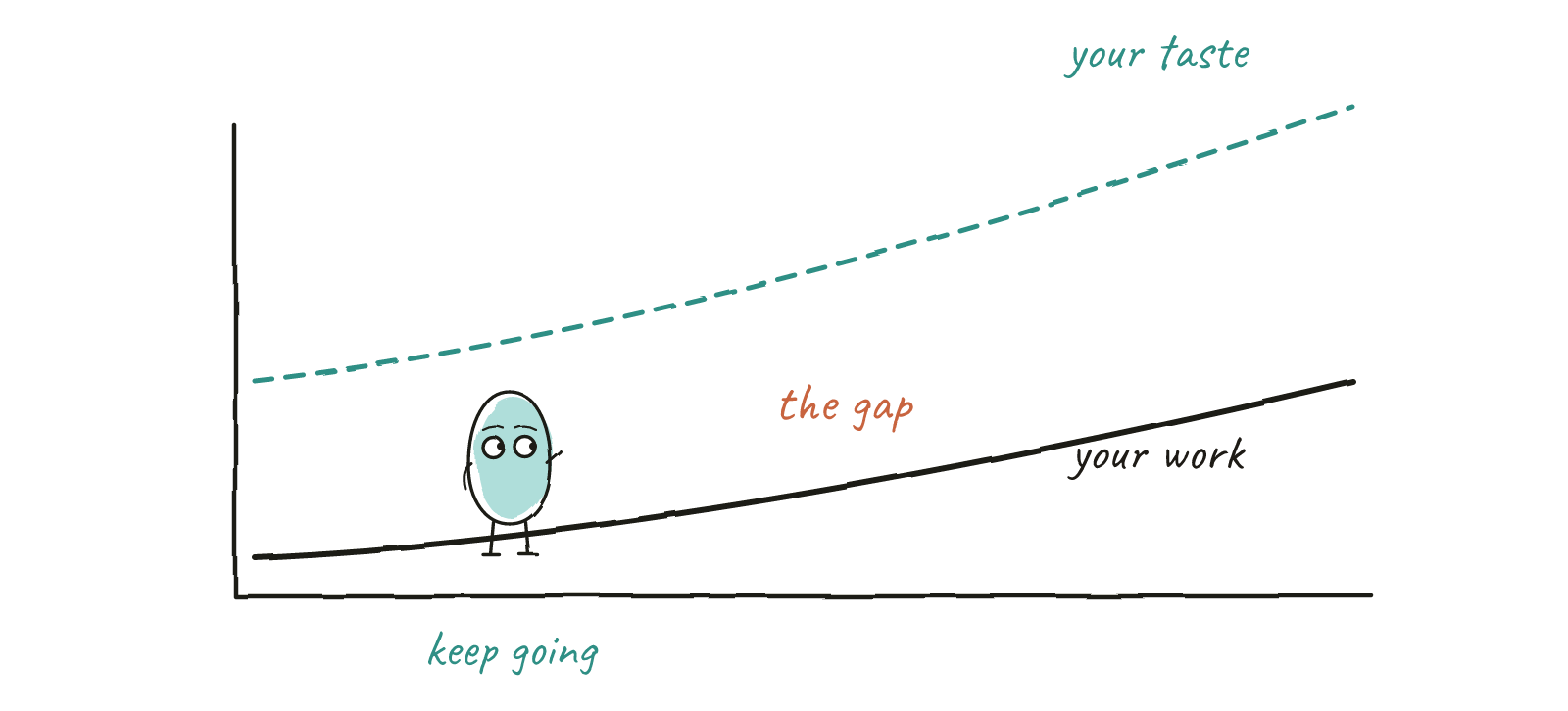
For the first couple years you make stuff, it's just not that good. It's trying to be good, it has potential, but it's not. But your taste, the thing that got you into the game, is still killer. And your taste is why your work disappoints you.
His answer is to do a lot of work. Set a deadline to finish one thing every week, because only a volume of work closes the gap. The people who get through are not more talented. They keep going when it is uncomfortable.
Pick the daily tasks, not the title
You choose a life by its title and its picture, not by its tasks. "I want to help people each day" sounds noble. But do you want to do what that takes, hour after hour? So ask: what do you want your daily tasks to be? How much paperwork, how much time at a computer, how many hours of rest?
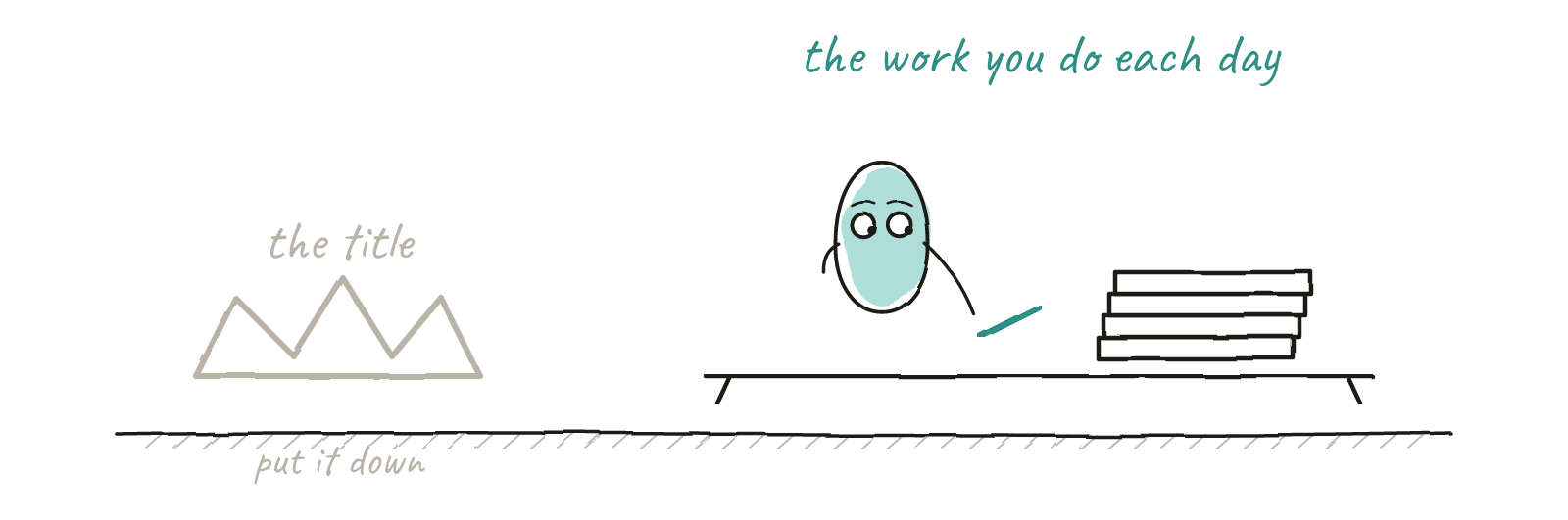
Then ask what kind of person you want to be while you do them. Kind? Attentive? Distracted? You are defined not by what you do but by how you do it.
Two tests help. If you had the life you want, what would tomorrow look like? Think of the daily routine, not the elevator speech. And if you lived tomorrow on repeat forever, where would you be? Which parts could you start tomorrow?
Why do people not do what they say they want most? The only reason is that something else is wanted a little more. You do not lack passion. You have competing wants, and you choose which one wins. Passion is the spark that lights the fire. Purpose is the kindling that keeps it burning all night.
You can also ask what comes easiest to you. People often believe that meaningful work must be hard, so they distrust what comes naturally. And ask what is worth suffering for. Everything is hard in some way. You choose your hard.
Your story does not need to flow like a novel. You can be a book of stories, and you do not have to be only what other people are comfortable with.
Then ask a short question every day: what do I want now? You owe nothing to your younger self. You do owe something to the adult you are today. Why don't you have what you once wanted? Because you don't want it anymore. Not badly enough.
Some expectations quietly do you harm
Wiest lists beliefs worth dropping, especially in your twenties. The first is that you can be whatever you want. You cannot. Without the IQ, you cannot be a rocket scientist. Without the coordination, you will not be a pro dancer. What you can do, with hard work and some luck, is find where what you are good at meets what you like, and be grateful for it.
Another is that hard work guarantees success. It does not. The point of hard work is who it makes you. You control that. You do not control what it gets you.
Another is that you can control what people think of you. You can control how you treat them. You cannot control what they think.
Wanting something badly enough does not qualify you for it. You have to want it enough to sacrifice, work and keep going through doubt.
Nor is there a right time. If you look for a reason it is not the right time, you will always find one. And you will not be ready when the love of your life, or your dream job, shows up.
Being busy is not a good thing in itself. Busyness is what happens when people are poor at managing stress. People who truly have a lot to do just do it.
Your purpose is not something profound. Your purpose is to be here and do whatever job you find yourself doing.
And you cannot save up your happiness like money in a bank. You feel it in the moment, or you miss it.
Even anxiety deserves a second look. It is one of the main forces that has kept our species alive. If it overwhelms you, you may not be listening to it.
Love is something you give, not something you win
We talk all the time about how to get love: how to land a date, win a commitment, be seen as admirable. We almost never talk about how to give it.
Here is the rule. You cannot convince someone to love you if they do not. When someone will not give affection, you have two choices. You can try to change that fact and stay stuck. Or you can keep giving love and move on.
If you live as though people owe you love, you will never experience it. If you live as though love is something you give, you will find it everywhere: in a stranger on the subway, in a three-date romance, in a six-year love affair that almost was "it." Each one teaches you how to love better.
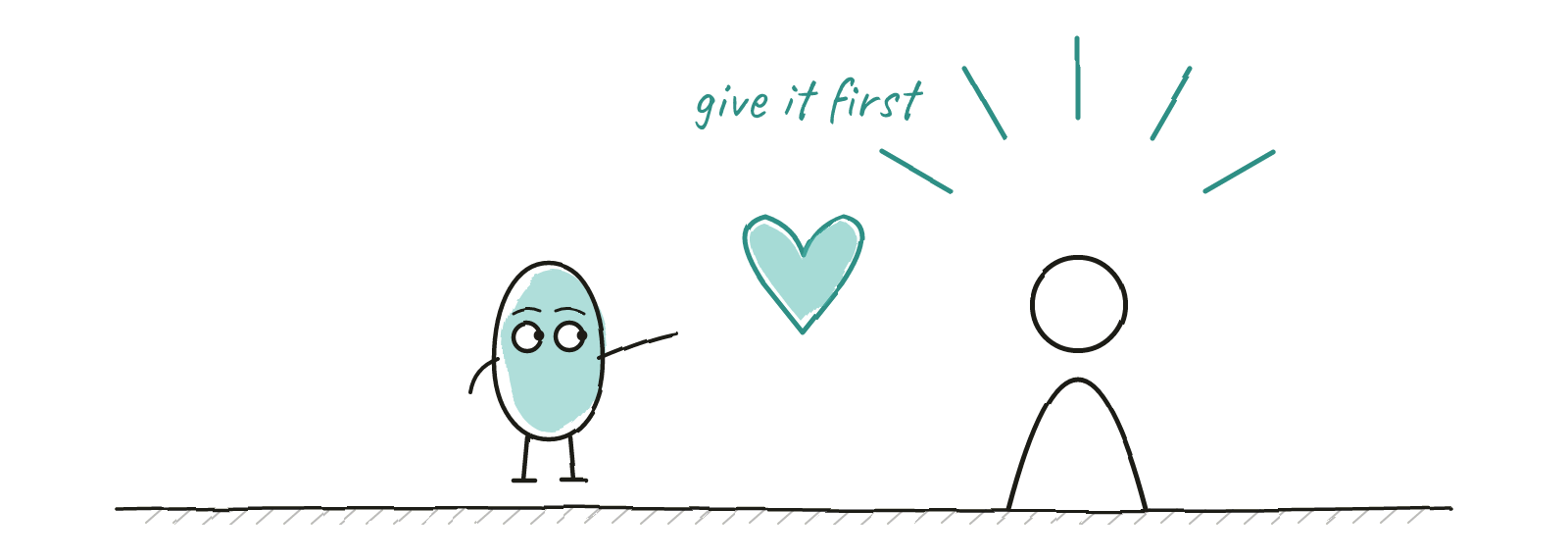
We also expect from others what we do not give: honesty, openness, a first move. And ask whether a great relationship is something you find or something you build over time.
So when you want to pity yourself over how little love you are getting, ask: how much are you giving?
Love is not just a good feeling. It is a daily commitment to love someone in small, practical, mindful ways. Kindness is the fabric of love, and honesty belongs with it, because fake kindness breeds resentment. Small acts deepen a bond: a plain Sunday morning together, a comfortable silence, a call when you are not okay. And love magnifies whatever is already most present in your life. If that is self-doubt, you will get more of it.
You have probably heard that you must love yourself first. That advice gets twisted into the idea that you are not ready for love yet. You will not be ready when the right person shows up. Nobody is. If you wait until you are, you miss the best growing tool there is. Loving yourself is an action, not a feeling: standing up for yourself, keeping going, and sometimes quitting.
Loving yourself is letting yourself be loved, too.
You often miss the idea of a person more than the person
When someone is gone, what you hold onto is often an idea. Using the idea of someone to fix something about yourself keeps you stuck. So ask what having this love would fix. What do I need them to prove? Who do I need them to look great in front of?
The things you cannot stop thinking about do not show what was meant to be. They show what you are still not okay with on your own. Loving someone you only used to know is like loving a book. It runs next to your life, and it ends how it ends. Some people who once knew everything about you become strangers, and something of them lingers anyway.
We decide how we feel about ourselves through other people. So when their view of us changes, our footing goes. We cannot lose people. We can only lose ourselves in an idea of them. Relationships do not exist to give you lasting happiness. They exist to make you more aware. Every relationship you have is with yourself. Often, the person who cannot love you back stands for a part of you that you do not love yet.
Letting go is not what it sounds like. It has little to do with giving someone permission to leave and everything to do with accepting that they already have. There is no such thing as letting go. There is only accepting what is already gone.
Moving on is not a choice you make. It happens when you stop forcing yourself to forget. You forget about them when you start thinking about you.
Many people spend their lives re-creating their first family relationships. The patterns fall into four attachment styles, four ways people tie themselves to others in love: secure, avoidant, anxious and disorganized. Each has its own trouble. A secure person may stay too long in a relationship that is only good enough. An avoidant person hides their needs. An anxious person clings and mistrusts at once. Knowing yours helps you see what you repeat. And not everyone loves in a way you recognize. Love can come out as fear or anger.
The love that is left over has nowhere to go but back to you.
Nobody watches you as closely as you do
Many people feel as if a spotlight follows them, as if everyone is watching and cares how their life turns out. They are not. Nobody is thinking about you the way you are thinking about you, or nearly as much. Everyone else is busy worrying about themselves.
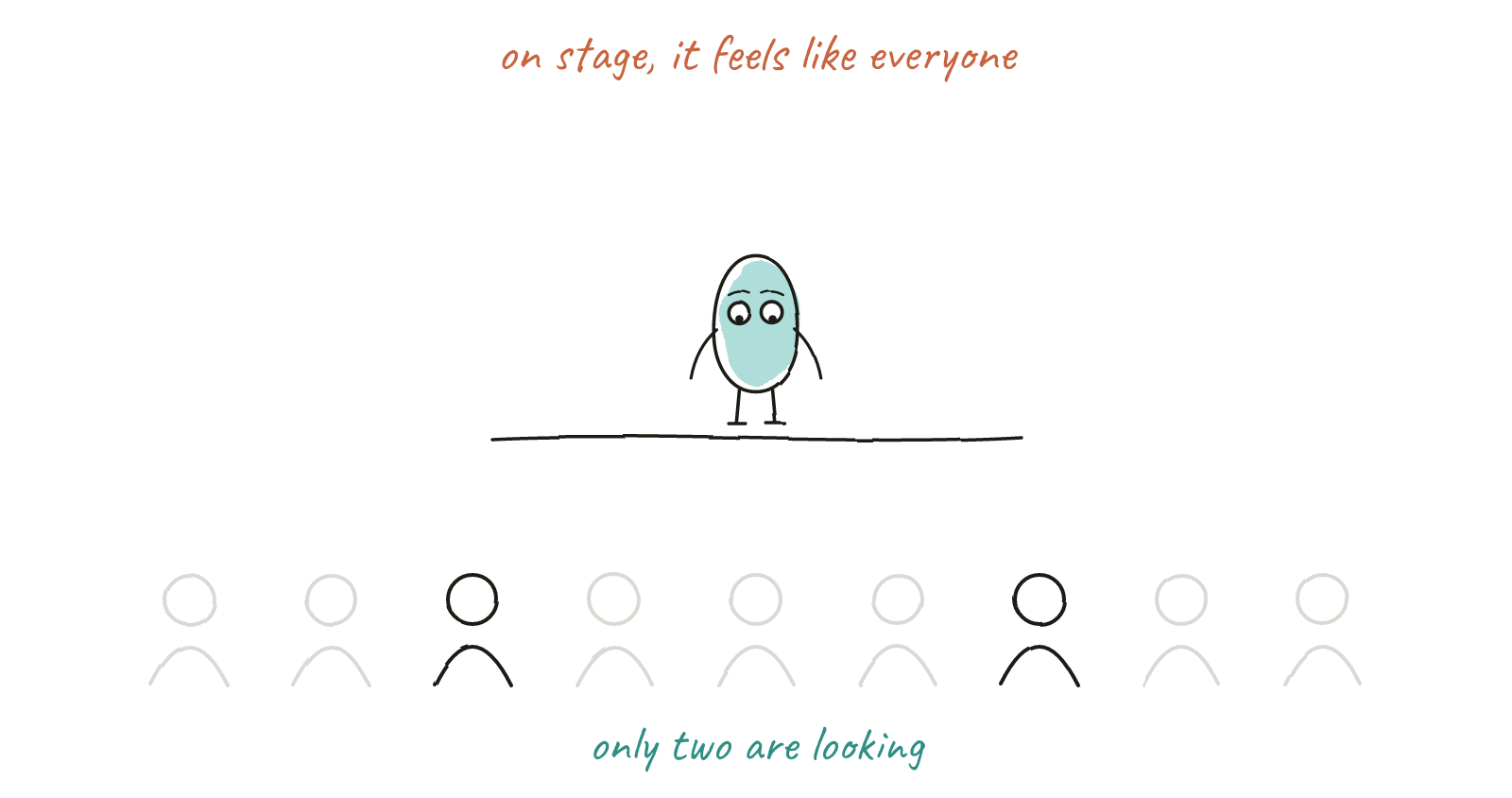
Try this. Put a face on the "people" you worry about. When you do, you will find the faceless crowd is really one or two people, very familiar to you: a parent, a near-relationship, someone you have wanted to impress for years. The crowd is you: your own worries, seen in other people.
Ask what you would do if no one could see. If social media did not exist, what would you do this Saturday? If the whole world were blind, how many people would you impress? Self-esteem is not confidence in how people see you. It is confidence that you can manage your life. Nathaniel Branden says it has two roots: "a sense of basic confidence in the face of life's challenges" and "a sense of being worthy of happiness." It is built over a long time, not wished into existence. Six practices build it, such as seeing what is really going on, accepting all of yourself, and standing up for yourself without getting defensive.
Be kind to yourself when it seems least deserved. Being cruel to yourself is not a shield. Telling yourself everything others could say does not make you immune to it. Narrate your life as someone who loves you would.
Wiest tells of being down about a piece of writing and about to text the one friend who always says keep going. Then came a question: why not say to myself what that friend would say?
The same logic runs through the pieces on the body. One list of things that matter more than how your body looks begins with how kind you are to people who cannot do anything for you. Body hang-ups often trace back to what your parents said, what you watch, and how your friends treat their bodies.
Stillness is work your mind needs
In a University of Virginia study, over 700 people were asked to sit alone with their thoughts for 6 to 15 minutes. A shock button sat in the room, to press if they wanted out. 67 percent of the men and 25 percent of the women shocked themselves rather than sit quietly and think.
We are trained to see stillness as inactivity and inactivity as failure. Yet doing nothing is work. At rest, the brain processes experiences, consolidates memories, reinforces learning and regulates attention and emotion. A study cited by Tony Schwartz found that too little sleep or do-nothing time was the highest predictor of burnout at work.
Tim Kreider puts it this way: "Idleness is not just a vacation, an indulgence or a vice; it is as indispensable to the brain as vitamin D is to the body." Creativity thrives in this space too.
When you do not stop and acknowledge what you feel, you give those feelings more power. Busyness often hides them. We also think far too much about things that do not matter, and leave no room for what is unknown.
Solitude helps for the same reason. Loneliness is an idea. You are only as alone as you think you are, and you can be more alone in a crowded room than in complete solitude. When you stop defining yourself by the roles you play for others, you stop judging yourself by comparison. You hear your own mind.
You do not need to like everyone for this to work. Wanting time alone, enjoying only a few people, and saying no to plans you do not want are normal. They are signs of a healthy reaction to being around people, not of something broken.
You make problems you know you can solve
Look at your own life honestly, and you may see how often your problems are of your own making. Why would you do that? Because when you make a problem, you are the one who can overcome it.
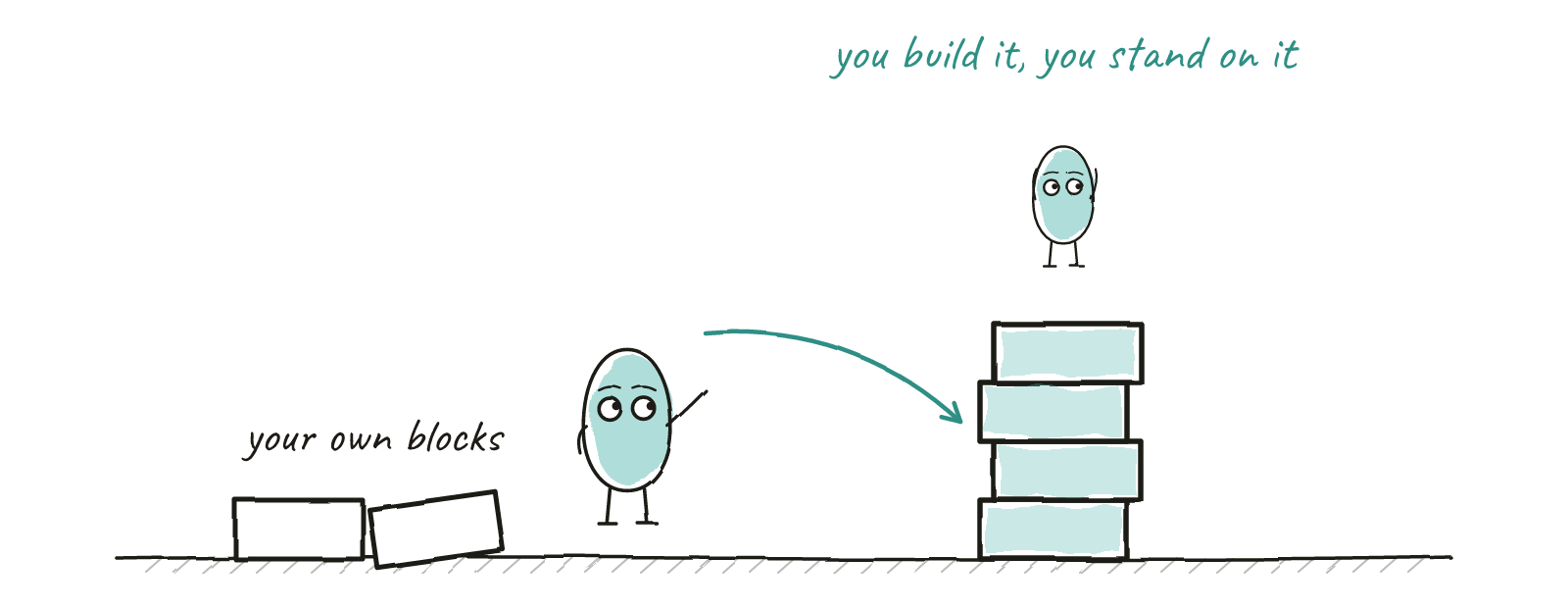
We stage small victories in our minds. Part of us knows we will get through it, but we entertain the suffering to feel that we have proven our strength. Wiest also suspects we create problems early to heal what we know would otherwise become issues outside our control. Either way, the point is to see what the problem is, and that you are asking yourself to heal it.
The opposite of pain is not joy. It is acceptance.
The same flip is old. Marcus Aurelius put it this way:
The impediment to action advances action. What stands in the way becomes the way.
A problem forces you to act. The action makes you think, behave and choose differently. The problem becomes a push toward the life you wanted.
You can see yourself as a victim of what happens, or as someone given a chance to change and grow. When you think your pain has a purpose, the discomfort dissolves. We do not know for certain that some higher plan makes obstacles help us grow. But the people who build happy lives here and now are the ones who think that way.
A breakdown is often a breakthrough you have not seen the other side of yet. People do not have breakdowns unless a breakthrough is close. Even the people who hurt you most can be teachers: they showed you a part of yourself that was keeping you from being loved.
Enough is smaller than you think
Goals can be about enjoying what you have instead of chasing what you do not. Finish the half-read books on your shelf. Eat what is in the cupboard. Wear what you own in new ways. Call an old friend.
Try a spend cleanse: buy nothing new and use only what you already have for a while, to show yourself you have more than you think. Give everything you own a home to return to each night. Write one sentence about each day before bed. Live within your means, because no matter how much you earn, the share you spend and the share you save tends to stay the same.
You may also be further along than you think. Among 20 signs: you paid the bills this month. You eat because you enjoy it, not only to survive. You have one or two truly close friends. You have a space of your own. You doubt your life, which shows you are still open to growth.
The worst happened, and then it passed. Life did not get easier. You got smarter.
Change two words. "I have to pay my bills" becomes "I get to pay my bills, which house me, clothe me, and feed me, and that I can pay for by myself."
Know what "enough" means to you: enough money, enough love, enough work. Fulfillment comes from knowing what enough is. Otherwise you keep seeking more.
Learn to like what costs little: simple food, a walk, a sunrise, a book, the company of a friend. You can buy your way into places, but you cannot buy the experience of them.
Even the chores may be the point. Maybe the plain tasks we want our lives to be better than are not beneath us at all. And some small joys have no name yet, like the space between raindrops, or a feeling of lightness in your whole body. "A good life is not how it adds up in the end, but what you're counting along the way."
Start where you are
Wiest comes back to one line more than once: start where you are, use what you have, do what you can. Nobody knows what they are doing with their lives. You cannot say where you will be in five years, and predicting your future does not make it more likely. It only closes you off. So swap the question. Stop asking, "What am I doing with my life?" and start asking, "What am I doing with today?"
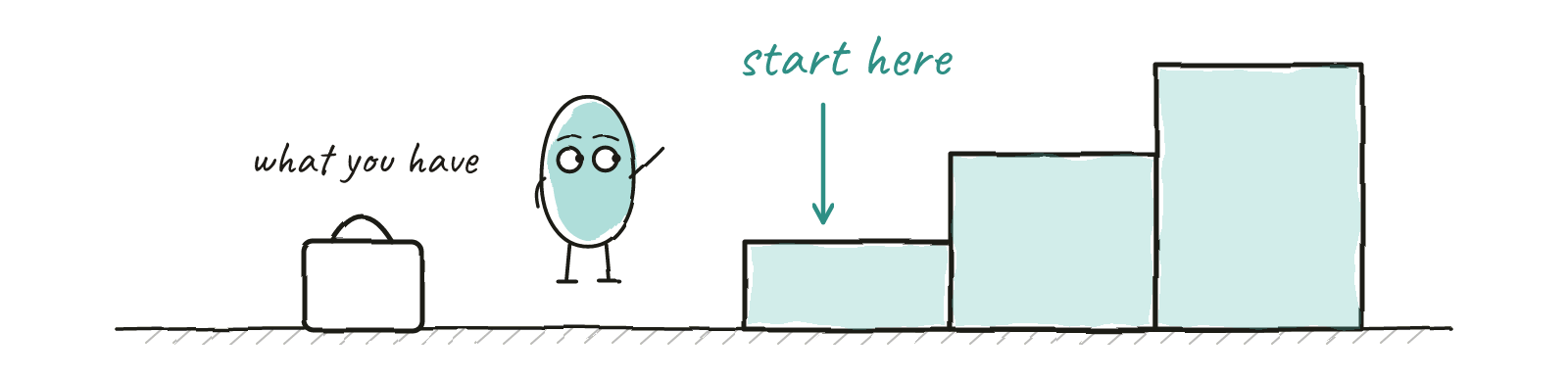
It is not too late to start over, and the next right step is the only way to guide your life. Tomorrow never changes you. Your job and your relationships do not either. The only change that has to happen is to you. Now is all you have, and chasing a happily ever after turns a whole life into a waiting game.
Be honest about the hard part. You will always have anxiety. The goal is not to remove it but to strengthen the mental muscle that lets you choose to be happy in spite of it. For some people that takes a shift in perspective. For others it takes years of medication and therapy and more effort than they have ever put into anything. It is the one fight worth picking. And change is in building what is next, not in tearing down what was.
Diderot could not see this from inside the debt. The gown was not the problem. The story he told about what a man with a gown should have was.
The problem is not the problem. The problem is how you think about the problem.
Get the next one on Sunday.
A free weekly LongForm, in your inbox.